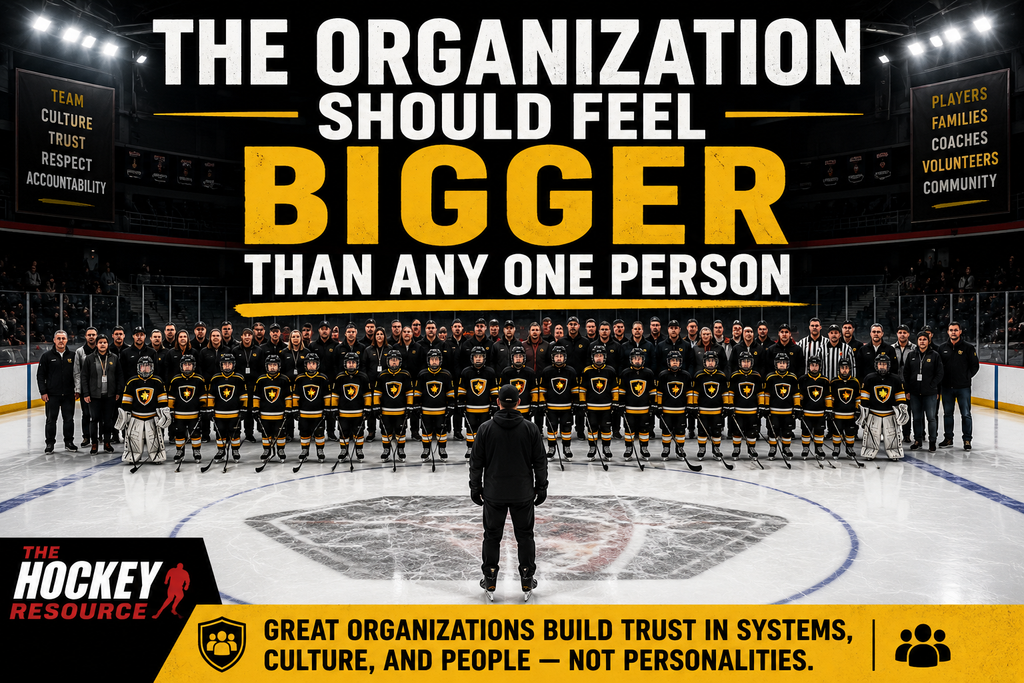
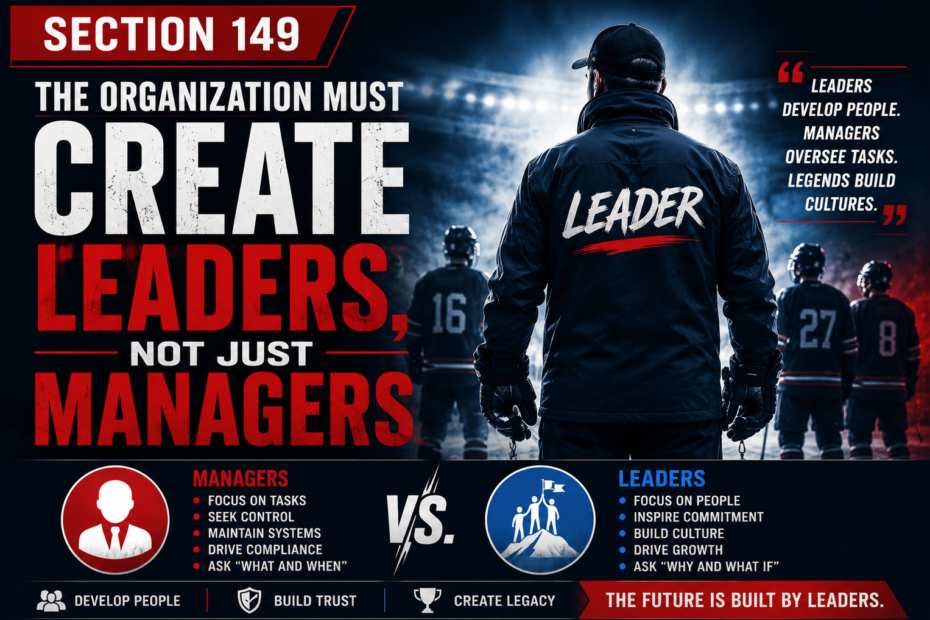
Every hockey organization needs management.
Schedules must be coordinated.
Budgets must be monitored.
Policies must be administered.
Programs must be organized.
These responsibilities are essential.
However, organizations that focus only on management often struggle to achieve their full potential.
Management keeps an organization operating.
Leadership helps an organization improve.
The strongest organizations understand the importance of both.
Managers Maintain Systems
Managers play a critical role.
They ensure responsibilities are completed.
oversee processes.
help maintain stability.
Without effective management, organizations can quickly become disorganized.
Yet management alone is not enough.
Following existing processes does not automatically create innovation, growth, or cultural improvement.
Those outcomes often require leadership.
Leaders Create Direction
Leadership focuses on the future.
A leader asks different questions.
How can we improve?
What challenges are approaching?
What opportunities are emerging?
How can the organization become stronger?
These questions encourage progress rather than simply maintaining the status quo.
Organizations benefit when individuals think beyond operational requirements and focus on long-term success.
Leadership Exists at Every Level
Leadership is not limited to board positions.
A team manager can demonstrate leadership.
volunteer can demonstrate leadership.
coach can demonstrate leadership.
committee member can demonstrate leadership.
Influence does not require a title.
People who contribute ideas, solve problems, and support others often become informal leaders regardless of their position within the organization.
Development Should Be Intentional
Future leaders rarely appear by accident.
Most grow through experience.
Responsibilities help build confidence.
Mentorship helps build knowledge.
Opportunities help build capability.
Organizations that intentionally develop leadership create stronger succession plans and greater long-term stability.
Without development, leadership gaps often emerge unexpectedly.
Culture Reflects Leadership Quality
Strong cultures do not happen automatically.
Leadership influences culture every day.
Decision-making influences culture.
Communication influences culture.
Behaviour influences culture.
Organizations that develop strong leaders often experience healthier environments because positive behaviours are reinforced consistently throughout the structure.
Problem Solvers Become Valuable Leaders
Every organization encounters obstacles.
Strong leaders do more than identify problems.
They seek solutions.
They encourage collaboration.
They focus on improvement.
This mindset creates momentum and helps organizations navigate challenges more effectively.
Over time, solution-oriented individuals often become some of the most influential contributors within the organization.
Leadership Creates Sustainability
Programs change.
Board members change.
Volunteers change.
Coaches change.
Sustainable organizations continue succeeding because leadership continues developing.
A strong leadership pipeline ensures knowledge, experience, and organizational values are transferred from one generation to the next.
That continuity helps protect the future.
Final Leadership Reality
Management is necessary.
Leadership is essential.
One keeps the organization functioning.
The other helps it grow.
Organizations that invest in leadership development create stronger cultures, stronger governance, and stronger futures.
The goal should never be simply filling positions.
The goal should be developing people capable of leading the organization forward.
One-Line Truth:
Managers keep the organization running; leaders help it become something better.
This article is part of the Foundations of Modern Hockey Leadership series.
About The Hockey Resource
PRESENTED BY: thehockeyresource.com and thehockeytournamentresource.com
As always, thank you for being part of The Hockey Resource community.
YOU CAN FIND ALL THE HOCKEY MOMENTS CARDS AT thehockeytournamentresource.com
GUMROAD – ALL FREE HOCKEY EBOOKS https://thehockeyresource.gumroad.com/
CLICK LINK FOR AWESOME HOCKEY PRODUCTS https://thehockeyresource.com/discount-hockey-products-amazon/
SEE MY INTERVIEW WITH THE MENTAL HEALTH ACADEMY https://www.buzzsprout.com/1824112/episodes/13519482
SEE MY INTERVIEW ON PODCAST WITH CONSTANT SPORTS
https://www.youtube.com/watch?v=_8VJUTfAGp
Mark Hetherman
Executive Director
The Hockey Resource
mark@thehockeyresource.com
thehockeyresource.com
thehockeytournamentresource.com