Few youth hockey subjects create arguments faster than playing time.
Parents notice shifts.
Players notice shifts.
Coaches manage shifts.
And everyone remembers the shift that did not happen.
But the real question is not whether a youth coach should ever shorten the bench.
The better question is:
When does competitive bench management begin interfering with player development?
What Does Shortening the Bench Mean?
Generally, shortening the bench means increasing playing time for certain players while reducing playing time for others.
That might happen:
late in a close game;
during a penalty kill;
on a power play;
during playoff elimination;
after an injury;
because of discipline;
because particular players are performing especially well.
Context matters.
Equal Development Does Not Always Mean Identical Ice Time
At introductory levels, broad participation should carry tremendous importance.
As players get older and competitive levels increase, deployment naturally becomes more performance-based.
That does not mean developmental responsibility disappears.
The question becomes whether each player continues receiving enough meaningful hockey to improve.
Repetition Drives Development
Ice time produces experience.
Players learn from:
puck touches;
defensive situations;
pressure;
faceoffs;
transitions;
board battles;
mistakes;
recovery;
decision-making.
Repeatedly removing the same players removes many of those repetitions.
Over an entire season, the difference can become substantial.
Double-Shifting Can Create a Developmental Feedback Loop
Suppose the strongest player receives 25 percent more meaningful game repetitions.
That player may improve faster.
Then the coach sees even more reason to play them.
Meanwhile, a developing player receives fewer repetitions.
Improvement slows.
That can widen the original difference.
The coaching system may begin reinforcing the depth chart it inherited.
The Top Players Can Also Be Affected
Overusing top players is not automatically good development either.
A player repeatedly relied upon to carry a team may:
develop poor habits because mistakes carry few consequences;
become overextended;
receive fewer opportunities to develop complementary roles;
learn that individual production matters more than team structure.
Development should challenge top players too.
When Shortening the Bench May Be Reasonable
Competitive sport includes competitive decisions.
A coach may reasonably manage personnel more aggressively:
during playoffs;
in championship situations;
on special teams;
late in close games;
at older elite levels.
The important issue is proportion.
Is this an occasional competitive decision?
Or the team’s normal operating model?
Age Matters
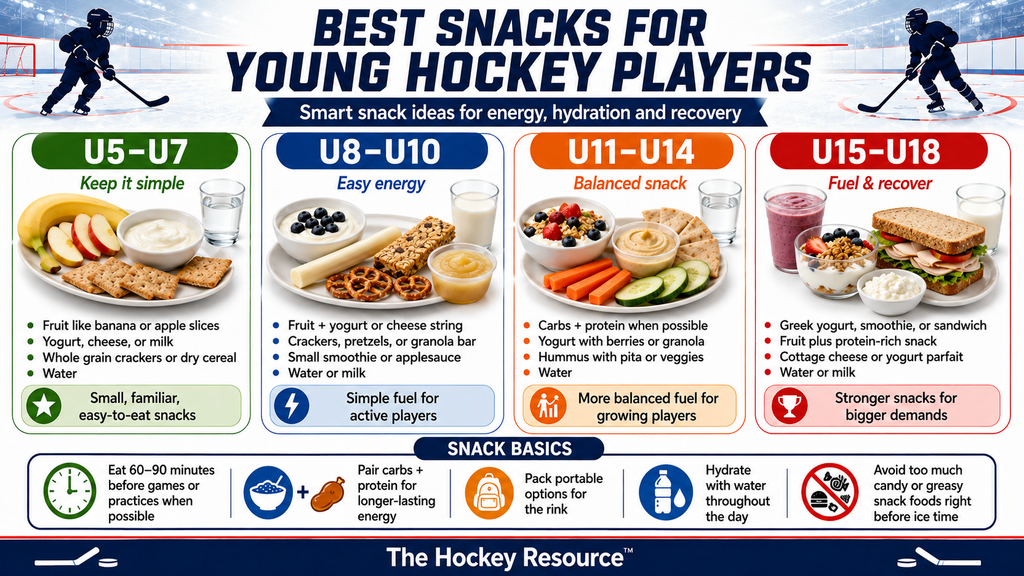
U5-U7
Participation, fun, learning and broad involvement should dominate.
U8-U10
Players need extensive repetitions and opportunities to explore the game.
U11-U14
Competition increases, but development remains central. Roles may begin emerging without permanently limiting players.
U15-U18
Performance and role specialization become more significant. Players should nevertheless understand expectations and have meaningful opportunities to progress.
Communication Matters
Playing-time frustration becomes worse when players have no idea why roles exist.
A player should increasingly understand:
what
their role is;
the coach expects;
they need to improve;
whether improvement can lead to additional opportunity.
Uncertainty creates helplessness.
Clarity creates a developmental pathway.
Parents Should Ask a Different Question
Instead of:
Why isn’t my child getting more shifts?
Try:
What does my child need to improve to earn greater responsibility?
That moves the discussion from entitlement toward development.
It also produces a more useful answer.
The Hockey Resource Takeaway
Shortening the bench is not automatically poor coaching.
Competitive hockey requires decisions.
But repeated bench shortening can become a developmental problem when the same players consistently lose the repetitions they need to improve.
The key distinction is between:
situational deployment
and
systematic developmental exclusion.
Those are not the same thing.
FAQ
Is equal ice time required in youth hockey?
Policies and philosophies vary by age, level and organization. Developmental opportunity matters even where identical ice time is not expected.
Is double-shifting always wrong?
No. It may be appropriate in particular situations. Frequent reliance on the same players deserves greater scrutiny.
Does more ice time automatically create development?
Not automatically. Quality coaching, practice repetitions and meaningful situations all matter.
Should parents ask coaches about playing time?
When appropriate, the discussion should focus on expectations, development and what the player can improve.
thehockeytournamentresource.com
As always, thank you for being part of The Hockey Resource Community.
AMAZON Hockey
NEW Tournament Search APP
https://play.google.com/store/apps/details?id=com.hockeyresource.hockeytournamentapp&hl=en_CA&pli=1
NEW!!! The Hockey Moments Cards
GUMROAD – eBooks
https://thehockeyresource.gumroad.com
SEE My Interview with the Mental Health Academy
https://thehockeyresource.com/category/blog/hockey-career-starts-here
SEE My Interview on Podcast with Constant Sports
https://www.youtube.com/watch?v=_8VJUTfAGp