
LISTEN FIRST. INVESTIGATE SECOND.™ When a child says, “My hockey coach doesn’t like me,” the instinct is often to defend immediately. However, Hockey Mom Yvonne™ recommends gathering the whole story before turning one difficult moment into a verdict.
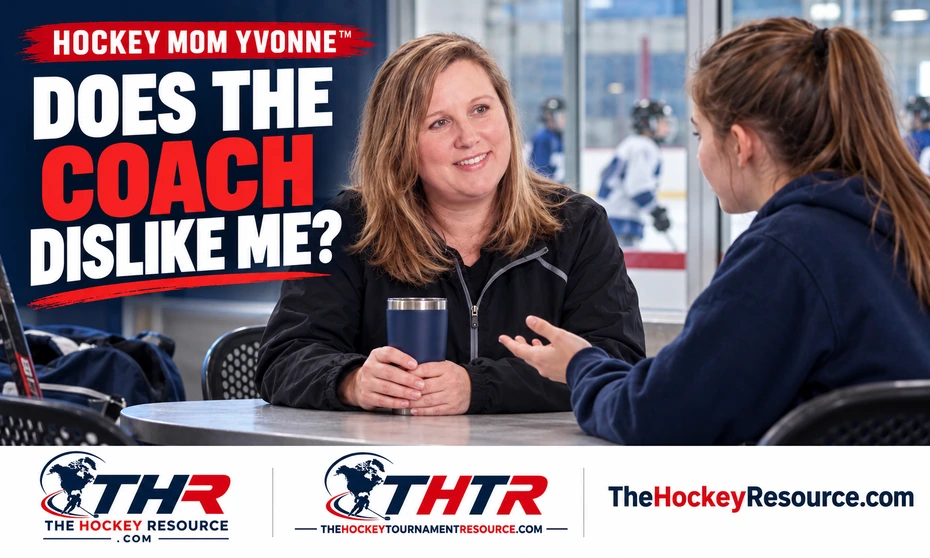
Hockey Coach: HOCKEY MOM YVONNE™ BY AGE
U5-U7 • U8-U10 • U11-U14 • U15-U18 • Junior
U5-U7 + U8-U10 — Hockey Coach: Ask What Happened
Young Players may use “doesn’t like me” to describe correction, fewer shifts, a stern voice, or one upsetting moment.
WHAT WOULD YOU DO?
What should you ask first?
U11-U14 — Hockey Coach: Look for a Pattern
Separate one hard coaching moment from a repeated pattern of unfair, demeaning, or inappropriate treatment.
WHAT WOULD YOU DO?
What matters most before deciding there is a problem?
U15-U18 + Junior — Encourage Direct Communication
Older Players should increasingly learn to ask Coaches about role, expectations, and improvement.
WHAT WOULD YOU DO?
What is often the best first step for an older Player?
Feelings Are Real, Interpretations Can Be Wrong
A Player’s feeling of being disliked deserves attention, but it does not automatically establish the Coach’s intent. Understand what happened and whether this is a Hockey issue, communication problem, or something more serious.
Ask for Examples
Specifics change the conversation. Repeated humiliation is different from normal correction. A useful discussion starts with what was said, when it happened, and whether there is a pattern.
Know When a Parent Should Step In
Safety concerns, bullying, harassment, discrimination, or treatment the child cannot reasonably handle alone require adult involvement.
5 Smart Steps When Your Child Says the Hockey Coach Does Not Like Them
A difficult relationship with a Hockey Coach deserves attention, but the first job is understanding what actually happened. Feelings matter. They also need context before a family decides what the Coach intended.
1. Ask for the Specific Moment
Ask what was said, when it happened, who was there, and what happened immediately before it. Specific examples are far more useful than a general conclusion that the Coach dislikes the Player.
2. Separate Correction From Humiliation
A Hockey Coach can correct effort, positioning, or decision-making without disliking the Player. Repeated humiliation, threats, discrimination, or personal attacks are different and deserve adult attention.
3. Look for a Pattern
One difficult practice can be a bad interaction. Repeated behaviour over days or weeks gives the family better evidence about whether there is a real relationship problem.
4. Let Older Players Speak When Appropriate
U15–U18 and Junior Players should increasingly learn to ask about role, expectations, and improvement. Parents can help prepare the conversation without automatically having it for them.
5. Step In When the Issue Is Bigger Than Hockey
Safety concerns, bullying, harassment, discrimination, or behaviour the Player cannot reasonably handle alone require adult involvement. Development of independence does not mean leaving a child alone with a serious problem.
Hockey Mom Yvonne’s Takeaway
Protect your child, but investigate before declaring war on Tuesday night. LISTEN FIRST. INVESTIGATE SECOND.™
Hockey Coach Conflict: Start With the Facts
A Hockey Coach and a Player will not agree on everything. First, listen for specific examples. Then separate one difficult interaction from a pattern before deciding whether the Hockey Coach situation needs a Player conversation, a parent conversation, or simply time.
For another parent decision, read what to do when your child wants to quit Hockey mid-season. Hockey Canada also provides official resources for Hockey parents.
Part of Hockey Mom Yvonne™ and Hockey Parent Intelligence™. Presented by The Hockey Resource™.