
ASK ABOUT THE ROLE BEFORE YOU ARGUE ABOUT THE MINUTES.™ Hockey ice time affects development, confidence, touches, production, and enjoyment. Therefore, Hockey Mom Yvonne™ treats the issue seriously, but the best first question is usually not, “Why isn’t my child playing more?”
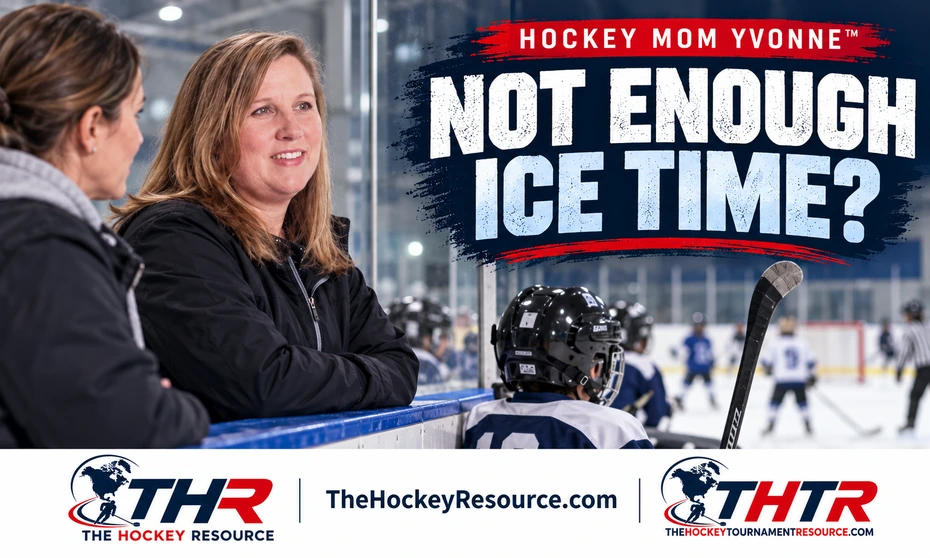
Hockey Ice Time: HOCKEY MOM YVONNE™ BY AGE
U5-U7 • U8-U10 • U11-U14 • U15-U18 • Junior
U5-U7 + U8-U10 — Hockey Ice Time: Development Comes First
At younger ages, consistently reduced participation deserves attention.
WHAT WOULD YOU DO?
What should matter most at younger ages?
U11-U14 — Ask What the Player Can Control
Ask the Coach what specific habits, decisions, or skills would earn greater opportunity.
WHAT WOULD YOU DO?
What is the most useful question?
U15-U18 + Junior — Opportunity Is Part of the Decision
Playing time becomes a multiplier. Evaluate role, special teams, trust, development, and whether the Player gets meaningful repetitions.
WHAT WOULD YOU DO?
What should families evaluate beyond Team level?
Ice Time Is Not a Trivial Concern
A Player cannot develop every game skill from the bench. Equal minutes are not required in every setting, but meaningful opportunity matters.
Talk About Role, Not Accusations
Ask what the Coach expects and what the Player can do. Keep the conversation tied to Hockey instead of motives that may be impossible to prove.
Age and Level Change the Answer
Younger and recreational Hockey should emphasize participation. Competitive older Hockey often includes differentiated roles.
5 Smart Questions About Hockey Ice Time
Hockey Ice Time matters because it affects repetitions, touches, confidence, special-teams opportunities, production, and development. The useful conversation, however, usually starts with role and expectations rather than accusations.
1. What Role Was the Player Given?
Ask what the Coach expects from the Player and whether the current minutes match that role. A Player cannot improve an undefined responsibility.
2. What Can the Player Control?
Effort, preparation, defensive reliability, shift length, practice habits, and response to coaching can influence trust. Families should identify controllable behaviours before assuming the issue is personal.
3. Does Age and Level Change the Answer?
Hockey Ice Time should be viewed differently in House League than in U16 AAA, Junior, or College. Competitive environments increasingly assign minutes according to role, performance, special teams, and game situation.
4. Should the Player Ask First?
Older Players should increasingly ask, “What do I need to improve to earn more opportunity?” That builds independence and usually produces more useful information than a parent demanding more minutes.
5. Is This Environment Still Developing the Player?
If the Player receives very little opportunity over a long period with no clear development plan, the family can reasonably evaluate whether another Team or level would provide better repetitions and growth.
Hockey Mom Yvonne’s Takeaway
Minutes matter, but role tells you why. ASK ABOUT THE ROLE BEFORE YOU ARGUE ABOUT THE MINUTES.™
Hockey Ice Time: Ask About the Role
Hockey ice time can affect development, confidence, touches, and opportunity. First, understand the Player’s role and what the Coach expects. Then decide whether the Hockey ice time concern belongs with the Player, the parent, or a longer-term Team decision.
For another parent decision, read what to do after a Player is cut from a Team. Hockey Canada also provides official resources for Hockey parents.
Part of Hockey Mom Yvonne™ and Hockey Parent Intelligence™. Presented by The Hockey Resource™.