
REAL CURRENT QUESTIONS – REAL CURRENT RESEARCH – REAL CURRENT ANSWERS.™
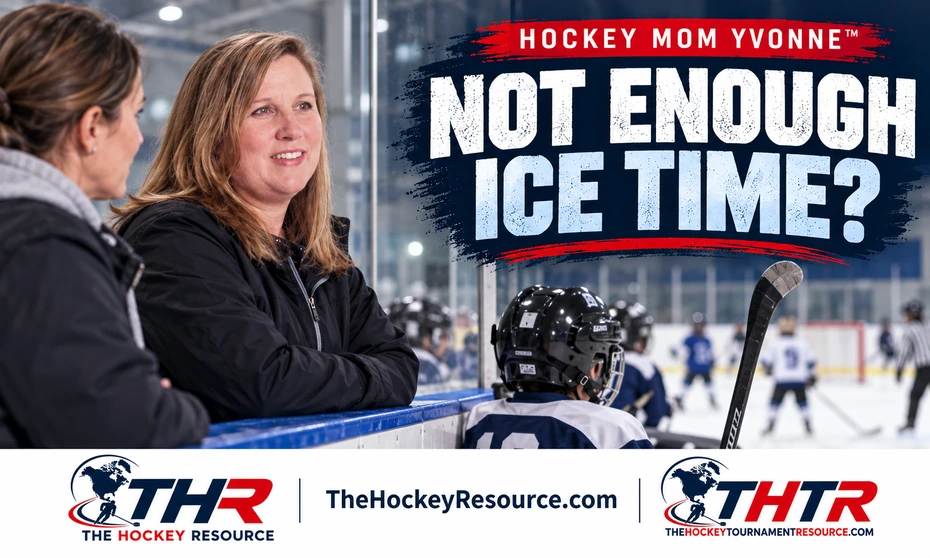
Should a young Hockey Player choose a higher competitive level with fewer opportunities to play, or a lower level where they may receive more meaningful ice time? The answer depends on age, quality of Coaching, role, confidence and the actual development opportunities on each Team. Neither the highest level nor the most minutes automatically produces the best development.
THE HOCKEY RESOURCE ANSWER™
Choose the environment where the Player can learn, participate meaningfully, practise good habits and still enjoy Hockey. For many younger Players, frequent involvement and appropriate challenges matter more than the label on the jersey. For older Players pursuing advanced competition, a higher level can provide valuable pace and instruction, but only if the Player has a realistic role and a development plan.
WHY ICE TIME MATTERS
Game participation gives Players opportunities to read situations, handle the puck, make decisions, recover from mistakes and build confidence. Sitting for long stretches limits those opportunities. However, minutes alone are not the whole answer: ten minutes of purposeful participation, good practice and feedback may offer more than additional shifts in an unsuitable environment.
WHY THE HIGHER LEVEL CAN MATTER
Playing against stronger opponents can increase decision-making speed and expose skills that need development. Better Coaching, appropriate practice design and positive teammates can also make a difference. But the letters AAA or AA do not guarantee superior instruction. Parents should examine the actual Coach, practice environment and likely role rather than assume the higher classification is automatically better.
THE ANSWER BY AGE
U5–U7: ENJOYMENT AND PARTICIPATION FIRST
Prioritize skating, confidence, puck touches and wanting to return to the rink. A child at this age does not need to sacrifice enjoyment for a prestigious Team label.
U8–U10: MEANINGFUL INVOLVEMENT
Look for regular participation, chances to try different situations and a Coach who teaches at the child’s level. Ask whether the Player will be actively developing rather than mainly watching.
U11–U14: CHALLENGE WITHOUT LOSING CONFIDENCE
Compare both Teams’ Coaching, practice quality, expected ice time and opportunities to make decisions. Physical maturation varies considerably, so today’s Team ranking is not a reliable prediction of the finished Player.
U15–U18: ROLE AND PATHWAY MATTER MORE
A stronger league can be valuable for a motivated Player who can earn meaningful shifts, receive quality instruction and understand a clear development plan. If a Player rarely plays, ask what measurable progress and future opportunities justify that situation.
JUNIOR: EVALUATE THE REAL OPPORTUNITY
At Junior, competition level, special-teams opportunities, the Coach’s trust, development support and future pathways all matter. A nominally higher level with almost no playing opportunity is not automatically the better choice.
FIVE QUESTIONS TO ASK BEFORE DECIDING
- Who is the better qualified Coach for this Player’s needs?
- How much meaningful participation is realistically available?
- Will the Player be challenged without becoming discouraged?
- What skills and decisions will practices actually develop?
- What does the Player want, and will they still enjoy the game?
WHEN TO RECONSIDER
Review the decision if the Player is regularly disengaged, rarely involved, losing confidence or no longer enjoying Hockey. One poor game or a short difficult stretch does not automatically mean the level is wrong. Talk with the Player and Coach before making a change.
RELATED HOCKEY ANSWERS
Also read Should My Child Play AAA or AA? and When Should a Parent Talk to the Coach About Playing Time?.
HOW WE REACHED THE HOCKEY ANSWER™
We weighed meaningful game involvement, practice quality, the level of competition, age, confidence and the Player’s goals. The evidence and individual circumstances do not support a universal rule that higher level is always better or that more minutes always wins. The better decision is the one that gives this Player the strongest overall opportunity to develop.
DON’T CHOOSE THE JERSEY LABEL. CHOOSE THE DEVELOPMENT OPPORTUNITY.™