
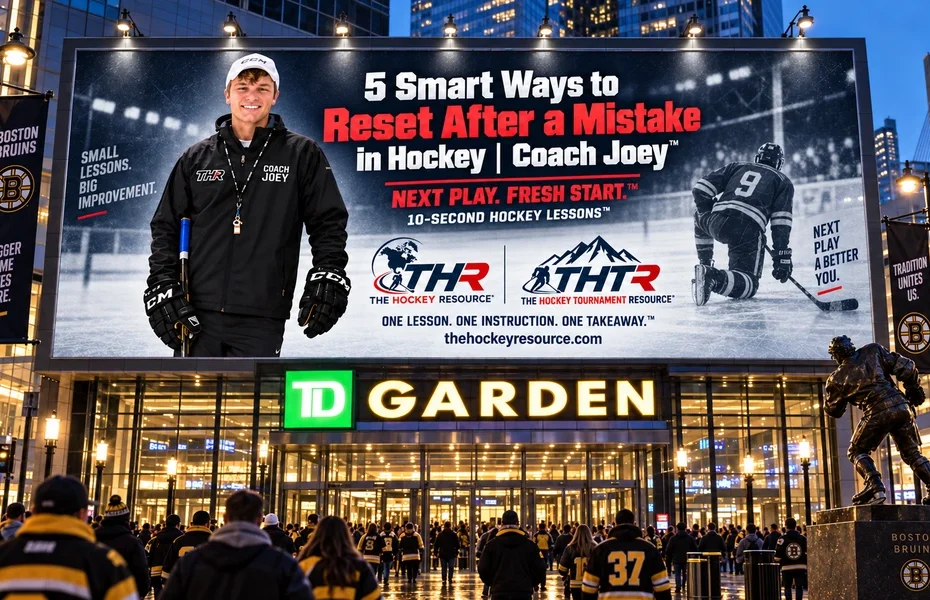
NEXT PLAY. FRESH START.™ A quick reset in Hockey helps you respond to a mistake and stay ready for the next play. You cannot replay a missed pass, but you can choose what you do next.
COACH JOEY™ BY AGE
U5-U7 • U8-U10 • U11-U14 • U15-U18 • Junior
U5-U7 + U8-U10 — Find the Next Play
Mistakes happen. Look at the puck, find your next job, and get moving again.
WHAT DID YOU LEARN?
After a mistake, what should you think about first?
U11-U14 — Use a Simple Reset
Use one short cue such as NEXT JOB or FEET MOVING. Then make one simple, useful play.
WHAT DID YOU LEARN?
What is a good reset after a mistake?
U15-U18 + Junior — Reset Without Forcing
Read the situation, make the next useful decision, and save the deeper review for the bench. One mistake does not need a second risky play.
WHAT DID YOU LEARN?
What should an older Player avoid after a mistake?
A puck slips off your stick. A shot misses the net. You arrive late to a passing lane. These moments happen, so build a simple response you can practice before a game gets difficult.
This Coach Joey™ 10-Second Hockey Lessons™ topic gives Players five practical ways to reset. Start with the immediate job, then review the lesson when play allows.
1. Reset by Finding Your Next Job
First, look at what is happening now. Where is the puck? Who needs support? Which area or Player are you responsible for?
After a turnover, your next job may be to recover your position or protect an inside lane. Follow your Team’s system and your Coach’s instructions. However, chasing the puck without reading the play can pull you away from that job.
Keep your eyes on the action and move your feet. For example, a hard recovery can help a teammate even when you cannot win the puck back yourself.
2. Choose One Short Reset Cue
Next, pick a few words that bring your attention back to the game. Useful cues include “Next job,” “Feet moving,” or “Find my Player.” Choose a cue that matches your responsibility.
Practice the same cue so it becomes familiar. During live play, use it while you keep skating and reading the action. Save a longer conversation for a stoppage or the bench.
At a safe break in play, take a steady breath and repeat your cue. Then identify one useful action for your next turn. A simple plan gives you something clear to do.
3. Make One Simple, Useful Play
You may feel tempted to fix a mistake with a difficult rush or a risky pass. Instead, look for the option that the play gives you.
For example, offer a passing target, support the puck carrier, or make an available pass. Your next contribution can be small and still help the Team.
Once you complete that action, read the play again. Build from one useful decision to the next rather than trying to force a highlight.
For a practical example, revisit Coach Joey’s lesson on getting open and making a target. Moving into a useful position gives a teammate another option.
4. Help Your Team With Clear Communication
Meanwhile, keep talking about the play. A short call can help a teammate understand pressure, find support, or prepare for a change. Use the words your Team practices.
If you caused confusion, acknowledge it briefly when the situation allows. Then focus your next message on the job ahead.
For instance, tell a teammate where you can help instead of giving a long explanation while the puck is moving. Clear information keeps the conversation useful.
Build this habit with Coach Joey’s five ways to communicate better in Hockey. A reset becomes easier to put into action when teammates understand each other.
5. Learn One Thing When You Reach the Bench
Finally, use the bench to review one specific part of the play. Ask yourself what you saw, what you chose, and what you could change next time.
For example, a rushed pass might remind you to look before receiving the puck. A missed assignment might mean you need to ask your Coach to explain your coverage.
Choose one adjustment and listen to the answer. Afterward, watch the game and prepare for your next shift. Carry the useful lesson back onto the ice.
A Simple Reset Routine for Players
Use this short routine in practice so you can recognize it during a game:
- Read the play. Find the puck, your teammates, and your immediate responsibility.
- Name your next job. Use one short cue that fits the situation.
- Take one useful action. Recover, support, communicate, or make the available play.
- Review at the right time. On the bench, choose one adjustment with your Coach.
During live play, keep doing your job. Then use the next safe break to reflect. The routine should support your awareness, not distract you from the game.
How Coaches Can Teach a Better Reset
Before a drill, explain what Players should do after losing possession or missing an assignment. Give them a clear recovery task and a cue they can remember.
In a small-area game, watch the next action after a mistake. For example, recognize a Player who recovers into position, gives useful support, or makes a clear call.
After the repetition, ask one question: “What was your next job?” Let the Player answer before adding a brief correction. Then give them another chance to practice it.
Keep feedback specific and useful. A younger Player may need one simple task, while an experienced Player can discuss more of the decision. In both cases, make the next action clear.
Coach Joey’s Takeaway
NEXT PLAY. FRESH START.™ Read the play, choose your next job, and make one useful action. Then learn one thing before your next shift.
ONE LESSON. ONE INSTRUCTION. ONE TAKEAWAY.™
Part of Coach Joey™ 10-Second Hockey Lessons™.
Presented by The Hockey Resource™.
Explore the Coach Joey introduction and visit TheHockeyResource.com for more Player development information, Coach Leadership™, Hockey Parent Intelligence™, and practical Hockey answers.
More From The Hockey Resource™
Explore Hockey products on Amazon, browse The Hockey Resource’s eBooks, and find the Tournament Search app on Google Play.
Discover Hockey career resources and hear the Mental Health Academy interview.
As always, thank you for being part of The Hockey Resource Community.