
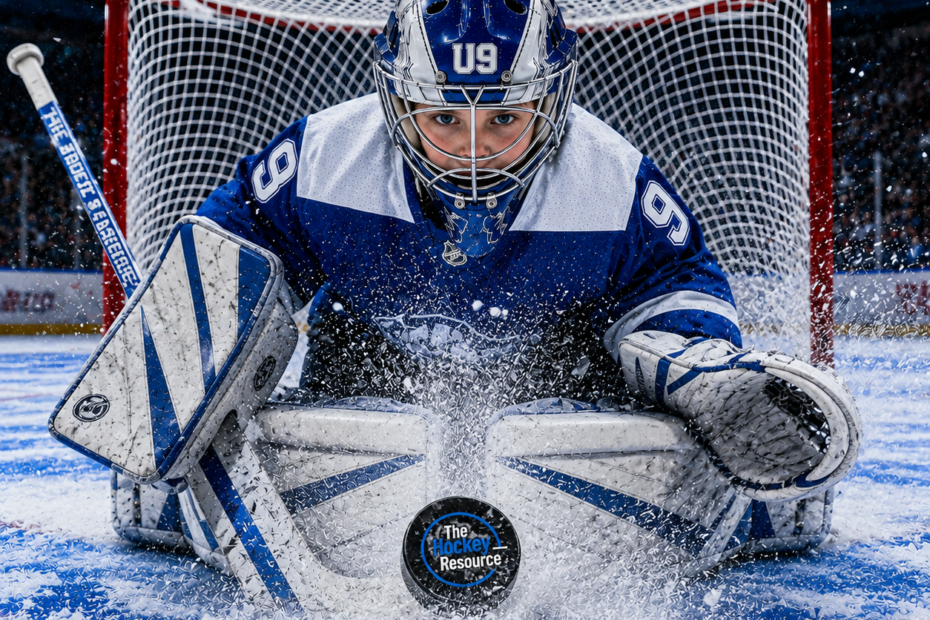
U07–U08 Goalie Playing Time: What Builds Better Goalies?
U07-U08 goalie playing time should focus on development, rotation, confidence, and meaningful game experience rather than simply identifying which young goalie currently stops the most pucks.
At this age, goalies are still learning how to move, track the puck, recover after goals, communicate with teammates, and decide whether they even enjoy the position. Therefore, every game and practice opportunity should help build those skills.
Hockey Canada treats U7 and U9 as fundamental development stages. Its goaltending pathway recommends no full-time goalies at these ages, rotation through the position, and fair or equal ice time.
The central question is not:
Which goalie gives the Team the best chance to win today?
Instead, Coaches should ask:
What combination of playing time, instruction, and experience will help this young goalie develop?
Why U07-U08 Goalie Playing Time Matters
Young goalies learn by experiencing real Hockey situations.
For example, they need opportunities to face:
- shots from different angles
- rebounds
- lateral movement
- breakaways
- traffic around the net
- changing puck speeds
- goals against
- difficult saves
- pressure situations
In addition, young goalies need to learn what happens after the play.
They must learn to reset after allowing a goal, remain engaged after making a mistake, and prepare for the next shot.
Those are developmental skills too.
Therefore, U07-U08 goalie playing time matters because game experience provides lessons that practice alone cannot completely reproduce.
More Starts Do Not Automatically Mean Better Development
It is easy to count starts.
It is much harder to measure development.
A goalie may start many games and still receive poor development if the environment lacks:
- age-appropriate Goalie coaching
- quality practice repetitions
- useful feedback
- confidence-building instruction
- movement development
- puck-tracking work
- opportunities to handle the puck
Consequently, parents should not judge development only by asking:
How many games did my child start?
A better question is:
What did my goalie learn from those starts?
A young goalie who starts 30 games with little meaningful instruction may develop less than a goalie who plays fewer games but receives better coaching, better practice repetitions, and a healthier development environment.
How U07-U08 Goalie Playing Time Should Be Rotated
At these ages, rotation should remain an important part of development.
Hockey Canada’s U7 guidance says there should be no full-time goaltenders and that all players should have opportunities to defend the goal.
Similarly, Hockey Canada’s U9 guidance says players should rotate through the goalie position throughout the season rather than specializing too early.
Therefore, Coaches should be cautious about creating a permanent number-one and number-two goalie structure at U07–U08.
The purpose of rotation is not merely fairness.
It also helps children:
- explore the position
- develop broad Hockey skills
- avoid premature specialization
- learn whether they enjoy goaltending
- gain confidence through experience
At U9, Hockey Canada also emphasizes smaller-ice Hockey because it creates more action, more engagement, and more opportunities for young goalies to face shots and make decisions.
Should a U07–U08 Team Have a Number-One Goalie?
Generally, no.
A permanent number-one goalie creates a competitive hierarchy at an age when the priority should still be development.
For example, imagine two young goalies.
Goalie A appears stronger in October.
Goalie B is less experienced.
If the Coach gives Goalie A most of the starts because the Team has a better chance of winning, Goalie A receives more:
- game repetitions
- pressure situations
- puck-tracking opportunities
- chances to recover after goals
- experience facing better shooters
Meanwhile, Goalie B receives fewer of those same development opportunities.
By February, the difference between the two goalies may have become larger.
However, part of that gap may have resulted from the playing-time decisions themselves.
That is why U07-U08 goalie playing time should not simply reward whichever goalie looks strongest first.
Quality of Goalie Coaching Matters More Than Team Level
At U07–U08, parents can become overly focused on the competitive level of the Team.
However, a stronger Team does not automatically provide better Goalie development.
A young goalie may benefit more from:
- a knowledgeable Goalie Coach
- regular age-appropriate instruction
- strong skating development
- proper movement fundamentals
- confidence-building feedback
- good practice design
- meaningful game opportunities
Therefore, when families compare Hockey opportunities at these ages, the quality of Goalie development should carry significant weight.
A prestigious Team name means very little if the goalie spends most practices serving as a target while everyone else works on drills designed only for skaters.
The Hockey Resource has addressed this same principle at older ages in Goalie Workload: How Much Training Is Too Much at U15–U18?. The age changes, but the larger principle remains: more activity is not automatically better development.
What Should U07-U08 Goalie Coaching Look Like?
Young goalies need simple, understandable coaching.
For example, Coaches can focus on:
- balanced stance
- basic crease movement
- puck tracking
- staying square to the puck
- recovery after saves
- getting back into position
- simple puck handling
- confidence
However, Coaches should resist overwhelming a seven- or eight-year-old with constant technical corrections.
At this age, too much information can turn the position into homework.
Instead, instruction should be clear, positive, and age-appropriate.
The goal is to build good habits while preserving enjoyment.
Important Games Should Not Suddenly Change the Philosophy
Tournaments create an interesting test.
A Team may rotate goalies fairly throughout the regular season. Then, when an important tournament begins, the Coach may suddenly decide that only the stronger goalie should play.
That sends a very different message.
The developing goalie effectively hears:
You were part of our development plan until winning became important.
At U07–U08, that is difficult to defend.
Hockey Canada’s U9 guidance explicitly says all players and goaltenders should receive fair and as-close-to-equal-as-possible ice time and that shortening the bench to win is not permitted.
Therefore, competitive pressure should not erase the development philosophy followed throughout the season.
Young Goalies Need to Learn How to Allow Goals
Nobody enjoys allowing goals.
Still, learning how to respond to them is part of Goalie development.
Young goalies need experience:
- allowing a goal
- resetting mentally
- returning to position
- focusing on the next shot
- staying confident
- continuing to compete
For example, a goalie who never plays difficult games may not learn how to respond when things go badly.
Meanwhile, a goalie who is removed or criticized after mistakes may begin playing afraid to fail.
Therefore, Coaches should treat goals against as teaching opportunities rather than proof that a young goalie cannot handle the position.
U07-U08 Goalie Playing Time Should Build Confidence
Confidence at this age does not mean convincing a child that every save was perfect.
Instead, it means helping the goalie believe:
I can learn this position.
A Coach can build that confidence through:
- clear instruction
- consistent opportunities
- patience after mistakes
- appropriate challenges
- recognition of improvement
- predictable rotation
In contrast, inconsistent opportunities can create anxiety.
A young goalie who never knows whether one bad goal will cost the next start may become focused on avoiding mistakes rather than developing skills.
Therefore, U07-U08 goalie playing time should create security around learning, not fear around performance.
What Parents Should Measure Instead of Wins
At U07–U08, goalie statistics have limited value.
Save percentage can be affected by Team strength, shot quality, scorekeeping accuracy, and the number of meaningful shots a goalie actually faces.
Instead, parents should ask:
- Is my child enjoying playing goal?
- Is movement improving?
- Is puck tracking improving?
- Is confidence growing?
- Does the Coach provide age-appropriate feedback?
- Is my child receiving meaningful game opportunities?
- Does the Team practice include Goalie development?
- Does my child want to play goal again?
Those questions reveal far more about development than a young goalie’s win-loss record.
For the broader Team-playing-time issue, see Does Shortening the Bench Hurt Youth Hockey Player Development?.
The Hockey Resource Answer
U07-U08 goalie playing time should emphasize development, rotation, confidence, and meaningful experience rather than creating an early number-one goalie.
At these ages, children need opportunities to explore the position, learn fundamentals, face real Hockey situations, and recover from mistakes.
Furthermore, the goalie who appears strongest today may not be the strongest goalie several years from now.
Development is not linear.
Therefore, Coaches should avoid allowing short-term winning to determine long-term development opportunities.
More starts can certainly help a young goalie.
However, better development matters more than simply accumulating starts.
THR Goalie Development Standard™
At U07–U08, build goalies before building a depth chart.
Frequently Asked Questions
Why Does U07-U08 Goalie Playing Time Matter?
Young goalies need game repetitions to develop puck tracking, movement, confidence, decision-making, and the ability to recover after mistakes.
Should U07–U08 Teams Have a Full-Time Goalie?
Generally, no. Hockey Canada recommends no full-time goaltenders at U7 and rotation through the goalie position at U9.
Should the Better U07–U08 Goalie Get More Starts?
Not simply because that goalie currently performs better. At this stage, development opportunities should remain broad enough to allow multiple players to learn and experience the position.
Is More Playing Time Always Better for a Young Goalie?
No. Playing time matters, but quality coaching, useful practice repetitions, confidence, and age-appropriate development matter just as much.
Should Goalies Rotate During Tournaments?
At these ages, Coaches should be cautious about abandoning a fair rotation simply because tournament games feel more important. Hockey Canada’s U9 guidance supports fair and close-to-equal goalie ice time.
SEO PACKAGE — GOALIE DEVELOPMENT
Focus Keyphrase:
Learn what matters more
SEO Title:
H1:
U07–U08 Goalie Playing Time: More Starts or More Development?
Slug:u07-u08-goalie-playing-time
Meta Description:
U07-U08 goalie playing time should focus on rotation and development. Learn what matters more than simply getting the most starts.
Image Alt:
U07-U08 goalie playing time and development
Categories:
Goalie Development; Search for the Hockey Answer™
Schema:
Article + Breadcrumb + FAQPage
Internal-link strategy
Once both are published, cross-link them:
From Coach Leadership™:
Goalie playing time requires a different development approach. Read U07–U08 Goalie Playing Time: More Starts or More Development?
From Goalie Development:
For the broader team-playing-time question, read U07–U08 Hockey Bench Shortening: Does It Hurt Development?
As always, thank you for being part of The Hockey Resource Community.
AMAZON Hockey
NEW Tournament Search APP
https://play.google.com/store/apps/details?id=com.hockeyresource.hockeytournamentapp&hl=en_CA&pli=1
NEW!!! The Hockey Moments Cards
GUMROAD – eBooks
https://thehockeyresource.gumroad.com
SEE My Interview with the Mental Health Academy
https://thehockeyresource.com/category/blog/hockey-career-starts-here
SEE My Interview on Podcast with Constant Sports
https://www.youtube.com/watch?v=_8VJUTfAGp