Short Answer
ALMOST EVERYTHING.
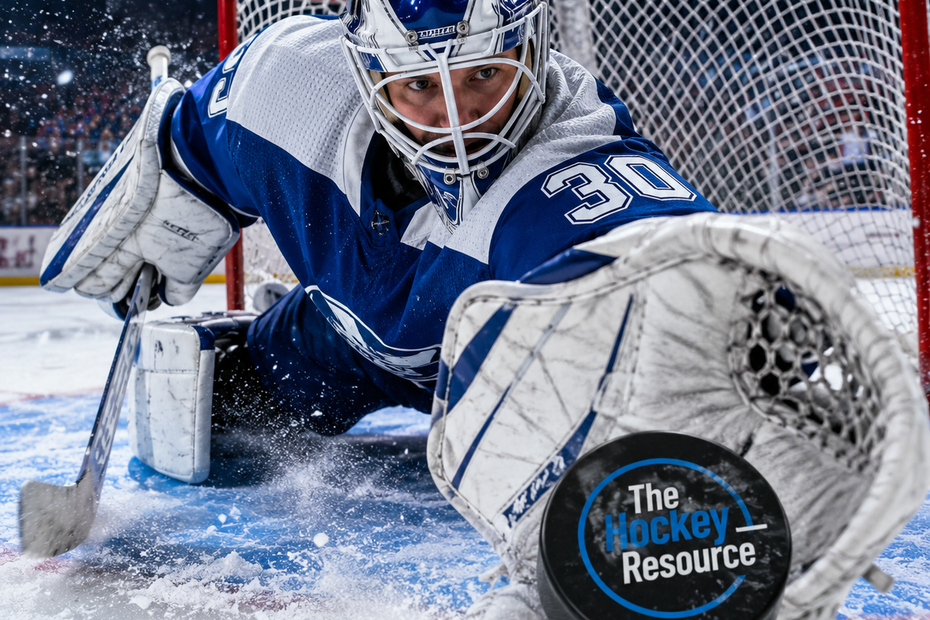
The U16- U18 goalie pathway can be the point where being a successful minor-hockey goalie no longer automatically means that the next level will be available.
Until this stage, goalies have generally competed against players relatively close to their own age.
Now the pathway begins to narrow.
Starting and backup roles become more meaningful. AAA exposure becomes increasingly important. Junior scouts begin evaluating future roster possibilities, while physical development and projection become harder to ignore.
Most importantly, the goalie is approaching a completely different competitive environment.
YOUR U16-U18 Goalie Pathway IS ABOUT TO COMPETE AGAINST OLDER GOALIES FOR VERY FEW POSITIONS.
That changes almost every development decision the family makes FOR U16-U18 Goalie Pathway
Why Trust This Hockey Answer?
Our hockey development people include a former owner of the Kenesky Goalie School, along with decades of minor hockey coaching and player-development experience.
Our hockey-management experience also includes Junior hockey ownership and management, providing direct experience evaluating goalies attempting to move from minor hockey into Junior competition.
That combination matters here.
This isn’t simply a question about teaching butterfly technique.
It is about understanding what happens when minor-hockey goalie development collides with the realities of the Junior hockey roster.
However, we don’t rely solely on experience.
Before publishing this Hockey Answer, we tested the underlying conclusions against established goalie-development guidance, high-performance evaluation structures and real-world goalie pathways.
What Did We Find for the U16- U18 Goalie Pathway?
The independent information reviewed strongly supported the central premise that U16–U18 represents an increasingly advanced and specialized stage of goalie development.
Established national development guidance specifically identifies U15–U18 as a stage where goaltending coaches should guide the developmental process for Rep goalies. High-performance programs also evaluate elite goalies across U17, U18 and U20 groups rather than treating development as isolated single-year age categories.
In other words:
THE GOALIE WORLD IS GETTING BIGGER WHILE THE NUMBER OF AVAILABLE POSITIONS IS GETTING SMALLER.
Why Does the U16-U18 Goalie Pathway cHANGE?
At younger ages, development is largely about becoming a better goalie.
Improve skating.
Develop positioning.
Learn rebound control.
Become stronger technically.
Build confidence.
At U16–U18, those things still matter. However, another question enters the conversation:
WHERE CAN THIS GOALIE REALISTICALLY PLAY NEXT?
That’s different.
A technically strong U14 goalie may have several minor-hockey levels and teams available.
The older goalie begins moving toward Junior hockey, where multiple birth years can compete for the same limited goalie positions.
Suddenly, development isn’t the only consideration.
Projection matters.
The Competition Is About to Get Older FOR U16-U18 Goalie Pathway
This may be one of the biggest changes parents don’t anticipate.
A 15- or 16-year-old goalie has spent years competing primarily against goalies around the same age.
Junior hockey changes that.
The younger goalie may soon be competing for a roster position against goalies who are several years older.
Those players may have:
Greater physical maturity
More strength
Additional game experience
Experience facing older shooters
Established Junior performance
More emotional maturity
More developed goalie technique
The younger goalie doesn’t simply need to be good.
THE GOALIE HAS TO BE GOOD ENOUGH TO TAKE ONE OF VERY FEW POSITIONS FROM THAT COMPETITION.
Goalies Face a Different Roster Problem Than Skaters
This deserves special attention.
A hockey roster can accommodate many forwards and several defencemen.
Goalies don’t have that luxury.
There are usually only a very small number of goalie positions available.
Consequently, an organization can be interested in several forwards and find different roles for them.
The same flexibility doesn’t exist in goal.
Once the goalie positions are filled, another talented goalie may simply have nowhere to play.
THERE ARE FEWER CHAIRS WHEN THE MUSIC STOPS.
That makes projection unusually important for the position.
Size Becomes Harder to Ignore
SIZE MATTERS.
We should not soften this reality simply because it is uncomfortable.
As goalies approach elite Junior, college and professional pathways, larger goalies have a natural advantage:
THEY COVER MORE NET.
At higher levels, shooters become extraordinarily accurate.
They can find openings that younger players couldn’t consistently exploit.
A larger goalie can cover significant portions of the net while maintaining technically efficient positions. Meanwhile, a smaller goalie may need greater athleticism, positioning, anticipation and recovery ability to defend the same space.
This doesn’t mean a smaller goalie cannot advance.
Exceptional smaller goalies clearly exist.
However:
BUILDING YOUR CHILD’S PATHWAY AROUND BECOMING AN EXCEPTION IS VERY DIFFERENT FROM ACKNOWLEDGING THAT EXCEPTIONS EXIST.
Physical projection therefore becomes one part of an honest U16–U18 assessment.
Athleticism Still Matters Enormously for U16-U18 Goalie Pathway
Size alone doesn’t create a high-level goalie.
A large goalie who cannot move effectively won’t automatically advance.
Higher-level goalies need:
Explosive movement
Strong edge work
Fast recoveries
Excellent tracking
Coordination
Balance
Reaction ability
Body control
And sometimes they simply need to make a save that causes everyone in the rink to wonder:
HOW DID THAT STAY OUT?
Those saves matter.
Athleticism can separate one technically competent goalie from another.
For a smaller goalie, exceptional athleticism may become even more important because the player has less natural net coverage.
Great Statistics Don’t Automatically Mean Great Projection – U16-U18 Goalie Pathway
This is another difficult lesson.
A goalie can have an extraordinary win-loss record and still receive limited higher-level interest.
Our Junior hockey management experience included a goalie who went approximately:
32 WINS AND 1 LOSS.
On paper, that looks like an extraordinary prospect.
However, scouts understood something important:
HE PLAYED BEHIND THE BEST TEAM IN THE LEAGUE.
They evaluated the goalie, not merely the record.
That goalie did not advance beyond Junior hockey.
Parents therefore need to understand:
U16-U18 Goalie Pathway – SCOUTS EVALUATE THE GOALIE IN CONTEXT
How strong is the team?
How many difficult opportunities does the goalie face?
Can the goalie steal a game?
What happens when the team is being outplayed?
How does the goalie handle traffic?
What happens after allowing a bad goal?
A 25–10 goalie on a weaker team could potentially demonstrate more than a 32–1 goalie protected by a dominant roster.
U16-U18 Goalie Pathway – AAA Exposure Starts to Matter More
At U16–U18, AAA can become increasingly important because higher-level coaches and scouts are more likely to evaluate players within elite competitive environments.
That creates a difficult goalie decision.
What if the choice is:
AAA BACKUP
or:
AA STARTER?
At younger ages, this question may barely exist because organizations generally emphasize meaningful development opportunities for both goalies.
At U16–U18, a true starting and backup hierarchy can emerge.
Therefore, the answer begins depending on the individual goalie.
That’s why Starting AA or Backing Up AAA deserves its own Search the Hockey Answer™ post.
Your Goalie Coach Becomes More Important – U16-U18 Goalie Pathway
At this stage, simply having a goalie coach isn’t enough.
Families need to ask:
IS THIS THE RIGHT GOALIE COACH FOR WHERE OUR CHILD IS TRYING TO GO?
A famous playing résumé doesn’t automatically provide the answer.
Playing goalie and teaching goalie are different skills.
Parents should investigate:
Who has this coach developed?
Where did those goalies eventually play?
Has the coach developed Junior goalies?
College goalies?
Goalies with a similar physical profile?
Can the coach provide references?
The more serious the pathway becomes, the more important those questions become.
Showcases and Tournaments Start Meaning Something Different for U16-U18 Goalie Pathway
At younger ages, tournaments are largely competitive experiences.
At U16–U18, certain tournaments, combines and showcases may become evaluation opportunities.
However, not every event advertised as a showcase provides meaningful exposure.
Families should eventually ask:
Who is actually attending?
Which birth years are being evaluated?
Are goalies being specifically evaluated?
How much game action will each goalie receive?
Does the event have a legitimate history of advancement?
Again, that’s another Hockey Answer.
The important point here is that the U16–U18 goalie pathway begins extending beyond the regular team schedule.
U16-U18 Goalie Pathway – Junior Interest Becomes Information
If Junior organizations are contacting the goalie, inviting the player to camps, watching games or discussing future opportunities, that information matters.
Likewise, a complete absence of higher-level interest can also be information.
That doesn’t mean a 16-year-old should quit.
Players develop at different rates.
Nevertheless, families should begin distinguishing between:
What we hope will happen
and:
What the hockey world is actually telling us.
That’s an uncomfortable distinction.
It’s also extremely valuable.
College Can Become an Important Goal – U16-U18 Goalie Pathway
Not every talented goalie will play professional hockey.
That does not make the hockey journey unsuccessful.
For some players, Junior hockey may become a pathway toward college or university hockey.
That can provide:
Higher-level competition
Education
Financial-aid opportunities
Personal development
Connections
A continuing hockey experience
Therefore, the family should eventually determine what success actually means.
THE NHL DOESN’T HAVE TO BE THE ONLY DESTINATION THAT MAKES THE JOURNEY WORTHWHILE.
Goalie Coaching Can Become a Career Too – U16-U18 Goalie Pathway
Years spent learning this specialized position can eventually have value beyond playing.
Goalie coaching can create opportunities through:
Private instruction
Goalie schools
Minor hockey organizations
AAA programs
Junior teams
College programs
Camps
Video analysis
Professional hockey
However, being a goalie doesn’t automatically make someone a goalie coach.
Teaching is a separate skill.
A young goalie interested in coaching should eventually learn not only how to perform a technique, but why it works and how to teach it to somebody else.
What Changes at U16–U18? Our Hockey Answer
ALMOST EVERYTHING.
The goalie is no longer simply trying to become better than other goalies of roughly the same age.
The player is approaching a hockey environment where:
Older goalies compete for the same positions.
Roster opportunities shrink dramatically.
Size and physical projection matter more.
Athleticism becomes increasingly important.
AAA exposure can affect scouting.
Goalie coaching quality matters more.
Showcases and tournaments can become evaluation opportunities.
Junior interest begins providing real pathway information.
College hockey may become an important objective.
Most importantly:
A GOOD MINOR-HOCKEY GOALIE IS NOT AUTOMATICALLY A FUTURE JUNIOR OR COLLEGE GOALIE – U16-U18 Goalie Pathway
That isn’t an insult to the player.
It’s the reality of a position with an exceptionally narrow advancement funnel.
At U16–U18, families should therefore begin asking a different question.
Not simply:
HOW GOOD IS MY GOALIE?
But:
WHAT IS THE BEST HOCKEY PATHWAY FOR THE GOALIE WE ACTUALLY HAVE?
That question will lead to many more Hockey Answers.
We Report What the Research Finds
Hockey rarely produces 100% agreement.
Before publishing, Search the Hockey Answer™ tests experience-based conclusions against established independent hockey information.
For this answer, established development guidance supports increasingly specialized goalie development at U15–U18 and shows high-performance goalies being evaluated across U17, U18 and U20 environments.
Current development guidance also emphasizes that age and skill level should shape a goalie’s development plan, with advanced goalies requiring increasingly complex tactical and position-specific training.
The evidence therefore supports our central conclusion:
U16–U18 IS A MAJOR TRANSITION POINT IN THE GOALIE PATHWAY.
EXPERIENCE IDENTIFIES THE QUESTION.
RESEARCH TESTS THE ANSWER.
WE REPORT WHAT WE FIND.
Have Another Hockey Question?
Maybe your goalie is entering U16.
Perhaps AAA, Junior, college or a different pathway is becoming part of the conversation.
Contact The Hockey Resource™ with your hockey question.
Your question may become another Search the Hockey Answer™ and help another goalie family facing the same decision.
Search Other Hockey Answers
USE GOALIES AS YOUR SEARCH TERM:
Are Your Hockey Practices Actually Developing Them?
Should
Younger Goalies Practise With Older Teams?
Your Goalie Move Up When Scheduled to Be the Backup?
U16–U18 Teams Have a Clear Starting Goalie?
As always, thank you for being part of The Hockey Resource Community.
AMAZON Hockey
NEW Tournament Search APP
https://play.google.com/store/apps/details?id=com.hockeyresource.hockeytournamentapp&hl=en_CA&pli=1
NEW!!! The Hockey Moments Cards
GUMROAD – eBooks
https://thehockeyresource.gumroad.com
SEE My Interview with the Mental Health Academy
https://thehockeyresource.com/category/blog/hockey-career-starts-here
SEE My Interview on Podcast with Constant Sports
https://www.youtube.com/watch?v=_8VJUTfAGp
TheHockeyResource.com