
TEAM CULTURE IS AN ADULT RESPONSIBILITY TOO.™ Problems with Hockey teammates can turn the rink into a lonely place even when the Player still loves the game. Therefore, Hockey Mom Yvonne™ starts by understanding exactly what is happening.
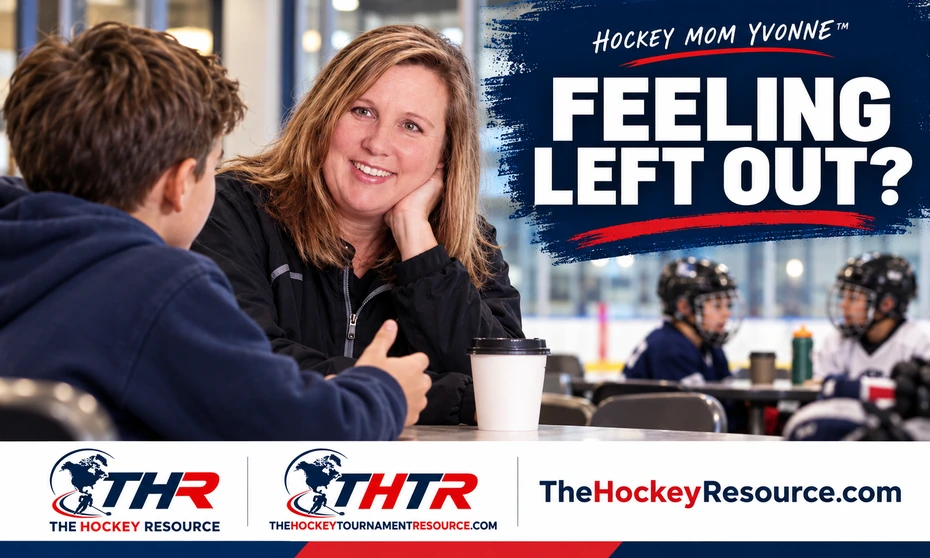
Hockey Teammates: HOCKEY MOM YVONNE™ BY AGE
U5-U7 • U8-U10 • U11-U14 • U15-U18 • Junior
U5-U7 + U8-U10 — Hockey Teammates: Help Adults Notice
Young children may exclude others without understanding the effect. Coaches and parents can deliberately create inclusive habits.
WHAT WOULD YOU DO?
What is a useful adult response?
U11-U14 — Hockey Teammates: Separate Conflict From Exclusion
Not every disagreement is bullying. Ask who is involved, what happens, how often, and whether the Player is deliberately targeted.
WHAT WOULD YOU DO?
What information matters?
U15-U18 + Junior — Support Direct Skills and Intervention
Older Players can address some conflict directly, but repeated harassment or targeted exclusion may still require adult or organization involvement.
WHAT WOULD YOU DO?
When should adults step in?
Belonging Affects Participation
A child can love Hockey and still dread the Team environment. Social problems can affect attendance, confidence, and retention.
Get Specific
Ask whether the issue is ignored messages, exclusion, insults, targeted jokes, or ordinary friendship changes.
Coaches Shape Culture
Coaches do not control every friendship, but they do control Team standards, room behaviour, leadership expectations, and how exclusion is handled.
5 Smart Steps When Hockey Teammates Leave Your Child Out
Hockey Teammates can shape whether a child feels connected to the rink or isolated from it. Parents should take exclusion seriously without assuming every missed invitation or awkward interaction is intentional bullying.
1. Ask What Being Left Out Actually Means
Find out whether the issue is happening in the dressing room, at school, in group chats, during travel, or on the ice. Specific examples help separate loneliness from repeated exclusion.
2. Look for a Pattern
One forgotten invitation is different from weeks of mocking, deliberate isolation, or coordinated exclusion. Patterns tell parents much more than one disappointing moment.
3. Encourage One Healthy Connection
A Player does not need to be best friends with every teammate. One or two positive relationships can make a Team feel much safer and more enjoyable.
4. Know When Adults Need to Step In
If Hockey Teammates are repeatedly humiliating, threatening, excluding, or harassing a Player, the adults responsible for Team culture need to know. Children should not be expected to solve serious misconduct alone.
5. Protect the Player Without Making the Team the Enemy
Respond to the actual behaviour rather than labeling every teammate as cruel. A measured response keeps the focus on fixing the environment and protecting the Player.
Hockey Mom Yvonne’s Takeaway
A Team is more than matching jerseys. TEAM CULTURE IS AN ADULT RESPONSIBILITY TOO.™
Hockey Teammates: Take Exclusion Seriously
Hockey teammates can shape whether the rink feels welcoming or lonely. First, learn exactly what is happening. Then decide whether the issue involves ordinary friendship changes, repeated exclusion, bullying, or Team culture that needs adult attention from Coaches and parents.
For another parent decision, read how to respond when a Player blames the referee. Hockey Canada also provides official resources for Hockey parents.
Part of Hockey Mom Yvonne™ and Hockey Parent Intelligence™. Presented by The Hockey Resource™.