

NCAA five-year eligibility rule is the phrase many hockey families are using for the NCAA’s new age-based eligibility model.
However, there is an important correction immediately:
It is not simply a guaranteed “five years to play five seasons” rule.
The NCAA itself says calling it “5 for 5” is inaccurate because age and college-enrollment timing determine how much of the five-year period remains available.
The Question
Hockey players often spend one or more years in Junior after high school.
Therefore, families want to know:
Can an 18-, 19-, or 20-year-old keep playing Junior without affecting college eligibility?
Under the new system, age now matters much more.
How the New Rule Works
For athletes governed by the new age-based model, the five-year eligibility period begins at the earlier of:
Initial full-time college enrollment.
The age-based NCAA trigger following the athlete’s 19th birthday.
The NCAA explains that if an athlete turns 19 before September 1, the period begins at the start of that regular academic year. If the 19th birthday occurs on or after September 1, the trigger moves to the following academic year unless the athlete enrolls full time earlier.
Once the clock begins, it generally runs continuously.
Why Hockey Families Should Care
A Junior player may traditionally have thought:
“I’ll stay in Junior another year and enter college when the best opportunity appears.”
That may still be appropriate.
However, the new model means waiting can use part of the eligibility window even before full-time college enrollment.
The NCAA specifically warns prospective athletes that delaying college beyond age 19 may reduce available eligibility.
Fall 2026 Is Transitional
Families also need to know that implementation is not identical for everyone.
For prospects initially enrolling during the 2026-27 academic year, schools can apply the previous rules or the new age-based model, whichever is more beneficial to the student-athlete.
For prospects first enrolling full time in fall 2027 or later, the age-based model is the governing system.
Therefore, birth date and enrollment date matter.
Do not rely on another family’s calculation.
What Happens to Redshirts and Waivers?
The new model simplifies many traditional eligibility concepts.
The NCAA says it eliminates athletics redshirt rules, delayed-enrollment rules, seasons-of-competition rules and several waiver categories, replacing them with the continuous age-based period and limited exceptions.
Limited exceptions remain for areas such as pregnancy, active-duty military service and official religious missions when conditions are met.
Again, this is why generic hockey advice can be dangerous.
Does Playing Junior at 19 Still Make Sense?
Absolutely, for some players.
- 19-year-old with:
- legitimate NCAA opportunity developing.
- major Junior role.
Strong coaching.
Meaningful academic planning.
Clear communication with prospective schools.
may have an excellent reason to continue.
Another 19-year-old might be:
Paying substantial money.
Playing limited minutes.
Receiving little recruiting interest.
Delaying the education they actually want.
For that player, another Junior season deserves harder questions.
What About Age 20?
Age 20 does not automatically make the player ineligible for NCAA hockey.
However, under the age-based system, the five-year period may already be running.
That makes the remaining eligibility calculation essential.
A 20-year-old should not assume:
“I haven’t enrolled in college, so my NCAA clock hasn’t started.”
That assumption can now be wrong.
The Answer
The new NCAA rule does not eliminate older Junior hockey.
It changes the calculation.
The important questions become:
When does this player’s five-year period begin?
How much eligibility will remain when they enroll?
Does another Junior season improve the hockey opportunity enough to justify the eligibility used?
Those questions should be answered with the NCAA Eligibility Center and prospective college compliance staff when a real college decision is involved.
The Hockey Resource
For 18, 19 and 20-year-old players:
Know
Birth-Date Trigger
Do not estimate.
Enrollment Rules
Full-time college enrollment can start the period earlier.
Transition Rules
2026-27 prospects may be treated differently from fall 2027 prospects.
Calculate Before Delaying
Do not wait another year based on outdated hockey advice.
Evaluate the Actual Hockey Benefit
A year of meaningful development can be valuable.
A year spent merely hoping may not be.
SEARCH FOR THE HOCKEY ANSWER™
The new question is not:
“How long can I play Junior?”
It is:
“HOW DOES ANOTHER JUNIOR YEAR AFFECT MY DEVELOPMENT, EDUCATION AND REMAINING NCAA ELIGIBILITY?”
That is the whole answer.
The Hockey Resource™
Search Other Hockey Answers
7: How Have CHL and NCAA Changes Altered the Pathway?
10: When Does Chasing the Next Level Stop Making Sense?
12: What Is the Best Hockey Path for Ages 15-18?

As always, thank you for being part of The Hockey Resource Community.
AMAZON Hockey
NEW Tournament Search APP
https://play.google.com/store/apps/details?id=com.hockeyresource.hockeytournamentapp&hl=en_CA&pli=1
NEW!!! The Hockey Moments Cards
GUMROAD – eBooks
https://thehockeyresource.gumroad.com
SEE My Interview with the Mental Health Academy
SEE My Interview on Podcast with Constant Sports
https://www.youtube.com/watch?v=_8VJUTfAGp
https://thehockeyresource.com/wp-admin/post.php?post=43253&action=edit
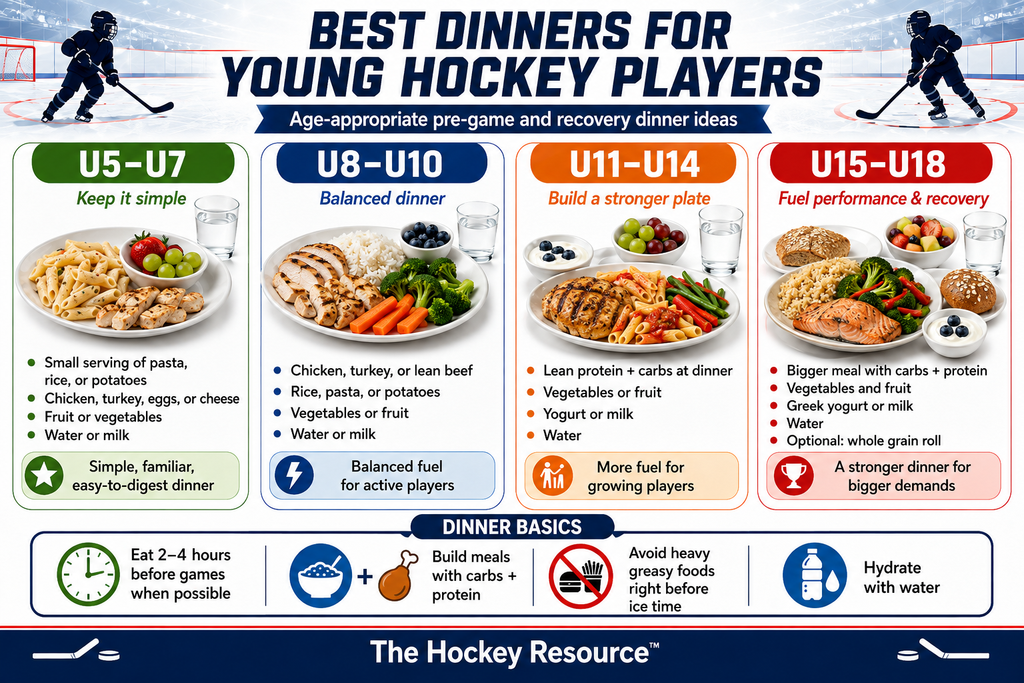
The Hockey Resource Dinner Basics