
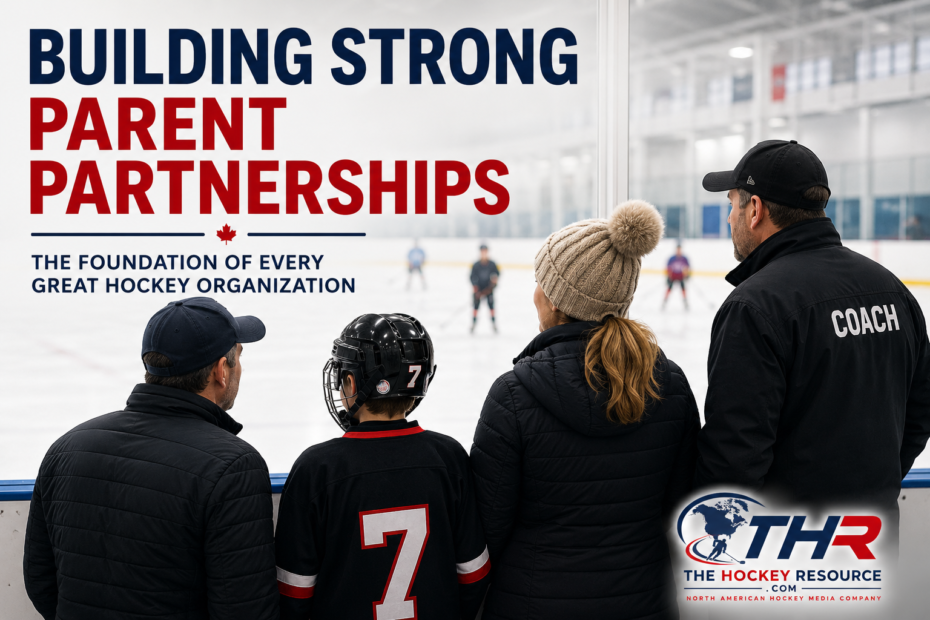
Helping Young Athletes Navigate Competition, Confidence, and Character During the Teen Years
Article – MENTAL PREP
The U13 to U14 years are among the most challenging—MENTAL PREP and, most importantly, in a young Hockey player’s development.
Players are entering adolescence. Physical differences become more noticeable. Competition for roster spots increases. Body checking may be introduced depending on the league, and many players begin thinking about high school hockey, AAA programs, junior hockey, or future opportunities.
At the same time, confidence can fluctuate dramatically.
This is where parents have an opportunity to become a stabilizing influence.
Your role is no longer to solve every problem. Your role is to provide encouragement, perspective, and support while allowing your child to develop independence and resilience.
MENTAL PREP – Competition Is Healthy—Pressure Is Not
Competition helps athletes improve.
Pressure without perspective often does the opposite.
Children should understand that earning opportunities requires effort, preparation, and commitment—not fear of making mistakes.
Parents who emphasize learning over perfection help young athletes become more confident competitors.
Success Is Bigger Than Ice Time
As players get older, ice time naturally becomes more competitive.
Instead of making every conversation about playing time, ask questions like:
- Did you compete hard?
- Were you a good teammate?
- Did you improve this week?
- What did your coach teach today?
These conversations reinforce habits that players can control.
MENTAL PREP – Help Players Learn to Handle Adversity
Every athlete experiences setbacks.
- Being cut from a team.
- Losing confidence.
- Injuries.
- Reduced ice time.
- Slumps.
- Tough losses.
These moments often become the greatest opportunities for personal growth.
Parents should resist the temptation to immediately fix every problem.
Sometimes the greatest lesson is helping your child learn how to respond.
Encourage Responsibility
At this age, players should begin taking ownership of:
- Packing their equipment.
- Managing nutrition.
- Hydration.
- Sleep.
- Communicating respectfully with coaches.
- Practicing independently.
These habits prepare athletes for success both on and off the ice.
Let Coaches Coach
Parents and coaches should work together—not compete for influence.
Avoid coaching from the stands or dissecting every shift after games.
Instead, reinforce the messages being taught by the coaching staff whenever possible.
Consistency builds trust.
Mental Strength Matters
As hockey becomes more competitive, mental skills become increasingly important.
Help your child learn:
- How TO
- recover after mistakes.
- stay positive.
- focus on effort.
- control emotions.
- handle disappointment.
Mental resilience often separates players who continue developing from those who become discouraged.
Keep Hockey in Perspective
MENTAL PREP – Remember that hockey is only one part of your child’s life.
Support friendships.
Encourage academic success.
Promote family time.
Celebrate kindness and character.
The goal isn’t simply to develop a better hockey player.
It’s to help develop a confident, responsible young adult.
Parent Partnership Tip
MENTAL PREP – As your child grows older, become more of a mentor than a manager.
Listen more.
Ask thoughtful questions.
Allow them to solve appropriate challenges on their own while knowing you’re always there to support them.
Key Takeaways
- Competition should inspire growth, not fear.
- Focus on effort rather than outcomes.
- Help players develop independence.
- Build mental resilience.
- Support coaches through positive communication.
- Keep hockey in perspective as part of a balanced life.
Internal Links (Actual URLs)
- Building Strong Parent Partnerships (SECTION 151)
https://thehockeyresource.com/section-151-building-strong-parent-partnerships/ - Helping Your Child Fall in Love with Hockey (SECTION 151A)
https://thehockeyresource.com/section-151a-helping-your-child-fall-in-love-with-hockey-u7-u9/ - Building Skills & Confidence (SECTION 151B)
https://thehockeyresource.com/section-151b-building-skills-confidence-u10-u12/ - Preparing for Junior Hockey, College & Life Beyond Minor Hockey (SECTION 151D) (publish when available)
https://thehockeyresource.com/section-151d-preparing-for-junior-hockey-college-life-beyond-minor-hockey/
External Authority Links
- Hockey Canada Parent Resources
https://www.hockeycanada.ca/en-ca/hockey-programs/safety - USA Hockey Parent Resources
https://www.usahockey.com/parents - Positive Coaching Alliance
https://positivecoach.org/ - Respect Group – Respect in Sport for Parents
https://respectgroupinc.com/ - Canadian Centre for Ethics in Sport
https://cces.ca/
Frequently Asked Questions
How involved should parents be during the U13–U14 years?
Parents should remain supportive while encouraging athletes to take increasing responsibility for their own development, communication, and preparation.
Is it normal for confidence to change during adolescence?
Yes. Physical growth, increased competition, and social changes often affect confidence. Positive encouragement and patience are essential.
Should parents discuss ice time with coaches?
If necessary, conversations should be respectful, constructive, and focused on player development—not emotions immediately following games.
What qualities matter most at this age?
Work ethic, coachability, resilience, teamwork, leadership, and a willingness to continue learning.

AMAZON Hockey
https://thehockeyresource.com/hockey-products-amazon/
NEW Tournament Search APP
https://play.google.com/store/apps/details?id=com.hockeyresource.hockeytournamentapp&hl=en_CA&pli=1
NEW!!! The Hockey Moments Cards
thehockeyresource.com
GUMROAD – eBooks
https://thehockeyresource.gumroad.com/
SEE My Interview with the Mental Health Academy
https://www.buzzsprout.com/1824112/episodes/13519482
https://thehockeyresource.com/category/blog/hockey-career-starts-here
SEE My Interview on Podcast with Constant Sports
https://www.youtube.com/watch?v=_8VJUTfAGp