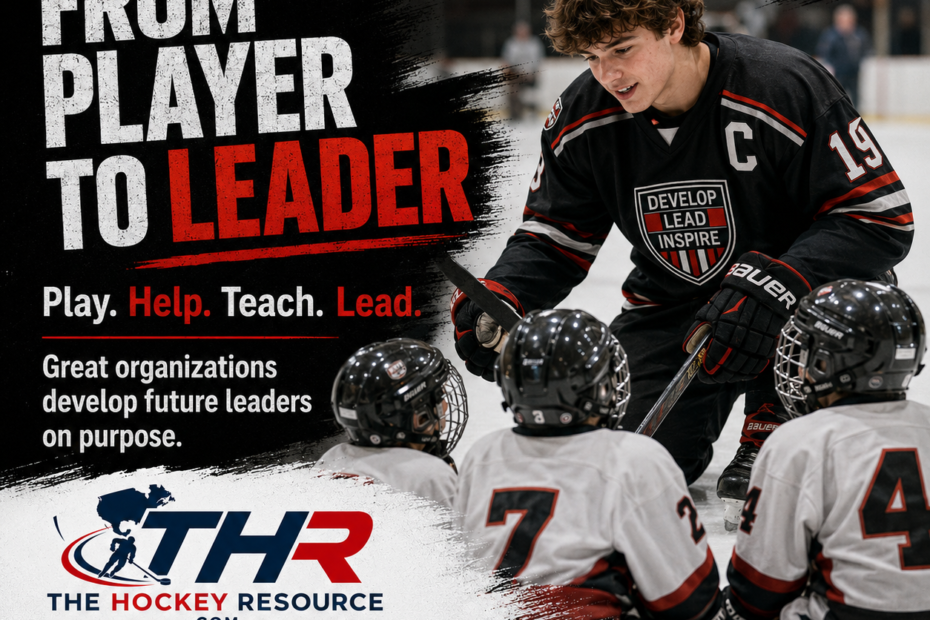
One of the greatest leadership responsibilities in hockey:
building an organization that remains healthy long after current leaders are gone.
Weak organizations often operate:
season-to-season.
Strong organizations think:
generation-to-generation.
This changes:
leadership behavior
decision-making
culture protection
volunteer development
and organizational priorities completely.
Healthy organizations understand:
they are not simply managing:
today’s teams.
They are protecting:
the future health of:
the players
the families
the volunteers
the coaches
and the game itself.
WHAT “BUILDING FOR THE NEXT GENERATION” ACTUALLY MEANS
It means leadership asks:
What systems will still help this organization five years from now?
What culture are today’s players inheriting?
Are future volunteers being developed?
Are healthy leadership habits being normalized?
Are we strengthening the game long-term —
or simply surviving this season emotionally?
Strong organizations think beyond:
immediate pressure.
They protect:
organizational legacy and sustainability intentionally.
IN SIMPLE TERMS
Healthy leadership asks:
“What are we leaving behind for the next group?”
Not just:
“How do we survive this year?”
THE BIGGEST SHORT-TERM THINKING FAILURE IN HOCKEY
Many organizations unintentionally sacrifice:
long-term organizational health
for:
short-term emotional comfort.
Examples:
avoiding accountability to prevent conflict
tolerating unhealthy behavior because someone wins
ignoring burnout because “we need people”
failing to develop future leaders
and operating without structure because:
“that’s how we’ve always done it”
These decisions often temporarily reduce:
tension.
But they slowly weaken:
future organizational stability.
IMPORTANT REALITY
Every leadership decision either strengthens:
the future organization —
or weakens it quietly.
THE ROLE OF LEGACY THINKING
Legacy is not:
championship banners alone.
Real organizational legacy includes:
healthy culture
sustainable leadership
emotional stability
strong systems
volunteer retention
and positive player experience
Strong organizations want future leaders to inherit:
something healthier —
not something more damaged.
Legacy thinking creates:
organizational maturity.
THE ROLE OF YOUNG LEADER DEVELOPMENT
Future leaders should be developed intentionally.
Examples:
mentoring younger coaches
onboarding future board members
teaching communication skills
sharing operational knowledge
and modeling emotional maturity
Weak organizations often rely too heavily on:
current leadership personalities.
Strong organizations prepare:
the next generation continuously.
IN SIMPLE TERMS
Organizations become healthier when:
leadership development never stops.
THE ROLE OF CULTURE TRANSFER
Culture transfers:
generation-to-generation.
Players become:
future coaches,
future volunteers,
future parents,
and future leaders.
What they experience now influences:
how they will eventually lead others.
Healthy organizations understand:
today’s culture becomes:
tomorrow’s leadership style.
This is why:
organizational behavior matters so deeply.
IMPORTANT REALITY
Players often coach later the way:
they were coached emotionally.
THE ROLE OF LEADERSHIP EXAMPLE
Current leadership teaches:
future leadership behavior.
Examples:
how
conflict is handled
pressure is managed
accountability works
communication feels
and how emotionally healthy the environment becomes
Future leaders absorb:
what current leaders normalize repeatedly.
Leadership behavior creates:
organizational inheritance.
THE ROLE OF SUSTAINABILITY
Organizations should operate:
sustainably enough that future volunteers WANT to participate.
Toxic,
chaotic,
emotionally exhausting environments eventually create:
leadership shortages.
People stop volunteering because:
the emotional cost becomes too high.
Strong organizations protect:
future participation by creating:
healthier current environments.
IN SIMPLE TERMS
The future strength of the organization depends heavily on:
whether today’s environment feels healthy enough for people to stay involved.
THE ROLE OF SYSTEM BUILDING
Strong organizations build:
systems that outlast people.
Examples:
operational manuals
onboarding systems
leadership standards
communication protocols
cultural expectations
and documented organizational philosophy
Without systems:
organizations restart emotionally every leadership transition.
Strong systems preserve:
organizational continuity.
THE DANGER OF “WE’LL FIX IT LATER”
Some organizations delay:
important structural improvement because:
they are too busy surviving current issues.
Examples:
delaying leadership training
avoiding communication improvement
postponing policy clarity
ignoring culture problems
and tolerating emotional instability
Eventually:
small ignored weaknesses become:
major organizational problems.
Strong organizations improve proactively —
not only during crisis.
IMPORTANT REALITY
Future organizational problems are often created by:
today’s tolerated dysfunction.
THE ROLE OF PLAYER EXPERIENCE
Organizations should ask:
“What relationship with hockey are we helping create?”
Because players remember:
emotional atmosphere
coach behavior
leadership treatment
and organizational culture
Long after:
wins and losses disappear.
Healthy organizations strengthen:
long-term connection to:
the game
teamwork
leadership
and community
That strengthens:
the future of hockey itself.
THE ROLE OF PARENT EXPERIENCE
Parents also become:
future volunteers,
future board members,
and future organizational ambassadors.
Organizations that create:
healthy family experiences
build:
stronger future leadership pools.
Organizations that create:
stress,
politics,
fear,
or exhaustion
often lose:
good future contributors.
Parent experience matters long-term.
IN SIMPLE TERMS
Today’s hockey parent may become:
tomorrow’s leader.
THE ROLE OF LONG-TERM REPUTATION
Organizations build:
multi-year emotional reputation.
Communities eventually say:
“That organization is healthy.”
“Leadership there is stable.”
“People are treated well.”
“The culture feels strong.”
“Families enjoy being there.”
Or:
the opposite.
Strong organizations understand:
reputation compounds over time.
Leadership must protect it intentionally.
THE ROLE OF ORGANIZATIONAL PATIENCE
Building healthy organizations takes:
time.
Strong organizations resist:
short-term emotional overreaction.
They understand:
lasting improvement happens through:
consistency
structure
culture protection
leadership development
and long-term commitment
Healthy organizations grow steadily —
not emotionally erratically.
IMPORTANT REALITY
Strong organizations are usually built slowly —
through repeated healthy decisions over time.
THE ROLE OF VALUES
Values should survive:
leadership change,
competitive pressure,
and difficult seasons.
Strong organizations ask:
Are our values real under pressure?
Will future leaders understand them clearly?
Are we modeling them consistently?
Are systems protecting them operationally?
Values become:
organizational inheritance.
THE ROLE OF ORGANIZATIONAL STEWARDSHIP
Leadership should think like:
stewards,
not owners.
Stewardship means:
protecting the organization responsibly for:
future generations.
This creates:
humility
long-term thinking
and healthier decision-making
Weak leadership often becomes:
emotionally possessive or short-term focused.
Strong leadership protects:
future organizational health intentionally.
IN SIMPLE TERMS
Leadership should leave the organization:
healthier than they found it.
THE MOST IMPORTANT GENERATIONAL QUESTION
Leadership should constantly ask:
“Will future players, families, volunteers, and leaders benefit from the decisions we are making today?”
That question reveals:
organizational maturity immediately.
THE HARD TRUTH ABOUT LONG-TERM ORGANIZATIONAL HEALTH
Many organizations slowly weaken because:
leadership becomes trapped inside:
current season pressure
emotional survival
short-term conflict
and reactive decision-making
Strong organizations rise above:
seasonal emotion.
They intentionally build:
systems,
culture,
leadership,
and sustainability
for the future.
HOW STRONG ORGANIZATIONS BUILD FOR THE NEXT GENERATION
Strong organizations:
develop future leaders
protect healthy culture
build sustainable systems
reinforce organizational values
reduce burnout
and prioritize long-term organizational health over short-term emotional relief
Over time:
the organization becomes:
more stable
more respected
more sustainable
and more trusted across generations
That becomes:
true organizational success.
FINAL PRINCIPLE — BUILD FOR THE NEXT GENERATION
Strong hockey organizations understand:
their responsibility is not simply:
running today’s season successfully.
Their responsibility is:
protecting the long-term future of the organization,
the people inside it,
and the game itself.
Because ultimately:
great organizations are not measured only by:
what they achieve today.
They are measured by:
what kind of culture,
leadership,
and experience they leave behind for the people who come next.
PRESENTED BY: thehockeyresource.com and thehockeytournamentresource.com – mark@thehockeyresource.com
As always, thank you for being part of The Hockey Resource community.
Helping Hockey families make better Hockey decisions.
Mark Hetherman
Executive Director
The Hockey Resource
thehockeytournamentresource.com
PRESENTED BY: thehockeyresource.com and thehockeytournamentresource.com – mark@thehockeyresource.com
As always, thank you for being part of The Hockey Resource community.
CLICK LINK FOR AWESOME HOCKEY PRODUCTS – https://thehockeyresource.com/discount-hockey-products-amazon/
https://www.buzzsprout.com/1824112/episodes/13519482
Mark Hetherman
Executive Director
The Hockey Resource
thehockeyresource.com
thehockeytournamentresource.com
As always, thank you for being part of The Hockey Resource Community.
AMAZON Hockey
NEW Tournament Search APP
https://play.google.com/store/apps/details?id=com.hockeyresource.hockeytournamentapp&hl=en_CA&pli=1
NEW!!! The Hockey Moments Cards
GUMROAD – eBooks
https://thehockeyresource.gumroad.com
SEE My Interview with the Mental Health Academy
https://thehockeyresource.com/category/blog/hockey-career-starts-here
SEE My Interview on Podcast with Constant Sports