Every hockey organization eventually faces a difficult situation.
A controversial decision is made.
conflict develops.
coaching change occurs.
An unexpected incident creates concern throughout the community.
During those moments, leadership often hopes members will trust the organization.
The problem is that trust cannot be created overnight.
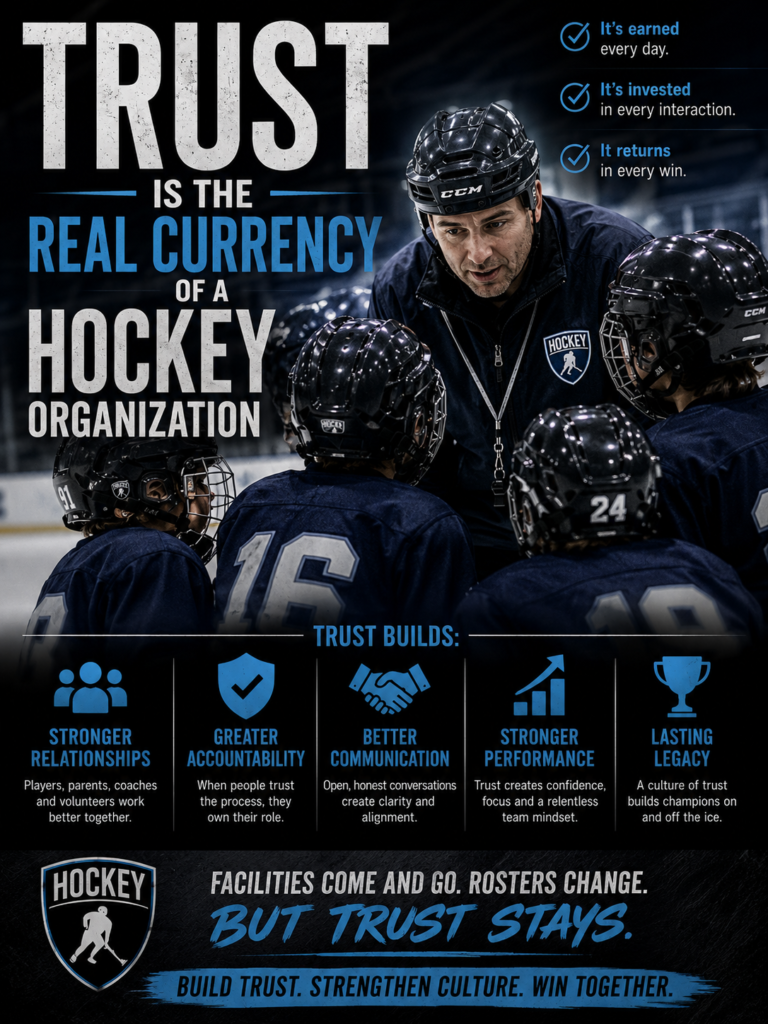
Trust is not built during a crisis.
Trust is built before a crisis.
Organizations that invest in relationships, communication, and credibility during normal times are often better positioned when challenges arise. Those that neglect trust-building frequently discover that even small problems can become major issues.
Trust Is Earned Through Consistency
Many people assume trust is created through major accomplishments.
A successful season.
large tournament.
significant organizational achievement.
While these moments can strengthen confidence, trust is usually built through much smaller interactions.
A phone call returned promptly.
concern handled respectfully.A promise fulfilled.
An explanation is provided when questions arise.
Over time, these experiences accumulate and shape how members view the organization.
Consistency creates credibility.
Credibility creates trust.
Relationships Matter Before Problems Appear
Strong relationships are often tested during difficult situations.
That is why they should be developed beforehand.
Parents who feel connected to leadership are more likely to communicate concerns constructively.
Volunteers who feel valued are more likely to remain supportive during challenging periods.
Coaches who trust organizational leadership are more likely to work collaboratively when issues arise.
As a result, relationship-building should be viewed as a strategic priority rather than a social activity.
Communication Creates Confidence
Few factors influence trust more than communication.
People want accurate information.
They want clarity.
They want transparency.
Most importantly, they want confidence that leadership will communicate honestly when circumstances become difficult.
Organizations that communicate consistently during routine situations establish expectations that carry forward into more challenging moments.
When trust already exists, communication becomes far more effective.
Trust Makes Difficult Decisions Easier
No organization can avoid unpopular decisions forever.
Team selections create disappointment.
Policy changes generate debate.
Budget decisions sometimes affect different groups in different ways.
During these moments, existing trust becomes incredibly valuable.
People may disagree with a decision.
They may dislike the outcome.
However, when they trust leadership, they are more likely to believe the decision was made thoughtfully and in good faith.
That distinction can dramatically reduce conflict.
Transparency Strengthens Organizational Credibility
Trust grows when people understand how decisions are made.
Families do not expect access to every discussion.
Confidential matters will always exist.
Nevertheless, organizations should strive to be as transparent as reasonably possible.
Explaining processes, outlining expectations, and communicating priorities help members understand the organization’s approach to leadership.
Greater understanding often leads to greater confidence.
Trust Is Easier to Maintain Than Rebuild
Building trust takes time.
Losing trust can happen quickly.
Broken commitments.
Inconsistent standards.
Poor communication.
A lack of accountability.
Each of these situations can weaken confidence.
Once trust is damaged, rebuilding it takes considerable effort. Therefore, protecting trust should be viewed as an ongoing leadership responsibility rather than an occasional concern.
Strong Cultures Support Strong Trust
Trust rarely exists in isolation.
It is closely connected to organizational culture.
Respectful communication strengthens trust.
Fair decision-making strengthens trust.
Visible accountability strengthens trust.
Over time, these behaviours create an environment where confidence can thrive.
That environment becomes one of the organization’s greatest strengths.
Final Leadership Reality
Every organization hopes its members will remain supportive when challenges arise.
The organizations most likely to receive that support are the ones that invested in trust long before they needed it.
Strong leaders understand this principle.
Rather than waiting for difficult situations to appear, they focus on building credibility, strengthening relationships, and communicating consistently throughout the year.
When a crisis eventually occurs, those investments often become the organization’s most valuable asset.
One-Line Truth:
Trust built during calm seasons becomes invaluable during difficult ones.
This article is part of the Foundations of Modern Hockey Leadership series.
About The Hockey Resource
The Hockey Resource exists to help players, parents, coaches, teams, leagues, tournaments, and hockey organizations make better decisions through education, leadership, and community-focused resources.
For additional hockey leadership articles, hockey parent resources, tournament information, and industry insights, visit:
The Hockey Resource – https://thehockeyresource.com
The Hockey Tournament Resource – https://thehockeytournamentresource.com
Mark Hetherman
Executive Director
The Hockey Resource
As always, thank you for being part of The Hockey Resource Community.
AMAZON Hockey
NEW Tournament Search APP
https://play.google.com/store/apps/details?id=com.hockeyresource.hockeytournamentapp&hl=en_CA&pli=1
NEW!!! The Hockey Moments Cards
GUMROAD – eBooks
https://thehockeyresource.gumroad.com
SEE My Interview with the Mental Health Academy
https://thehockeyresource.com/category/blog/hockey-career-starts-here
SEE My Interview on Podcast with Constant Sports
https://www.youtube.com/watch?v=_8VJUTfAGp