
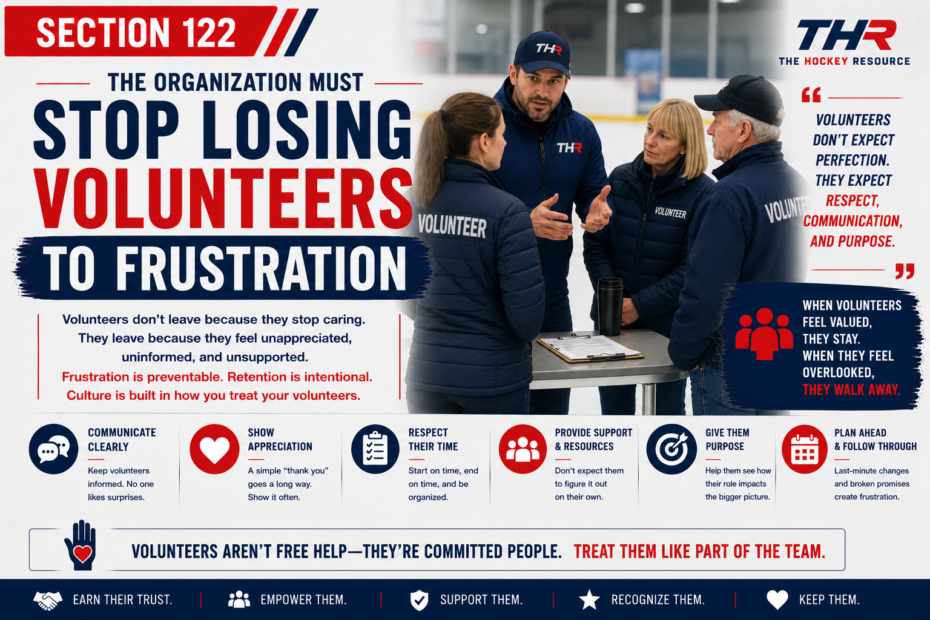
Volunteer shortages have become one of the biggest challenges facing hockey organizations.
Many associations spend significant time recruiting new volunteers.
Emails are sent.
Parents are encouraged to help.
Board members discuss ways to attract additional support.
While recruitment is important, many organizations overlook a more important question:
Why are existing volunteers leaving?
In many cases, volunteers are not leaving because they no longer care.
They are leaving because frustration has replaced enjoyment.
Strong organizations understand that retaining volunteers often begins by removing the barriers that make volunteering difficult.
Most Volunteers Start with Good Intentions
People rarely volunteer because they want recognition.
Most step forward because they want to help.
They care about players.
care about the community.
want to contribute something positive.
Unfortunately, enthusiasm can fade when the experience becomes consistently frustrating.
Poor communication.
Unclear expectations.
Excessive workloads.
Lack of support.
Over time, these issues can turn committed volunteers into former volunteers.
Frustration Is Often Preventable
Many volunteer frustrations are not caused by major organizational problems.
Instead, they result from smaller issues that accumulate over time.
Questions go unanswered.
Responsibilities are poorly defined.
Meetings feel unproductive.
Tasks continue expanding without additional support.
Although each issue may seem minor individually, the combined effect can become overwhelming.
Organizations that address these challenges early often experience significantly better volunteer retention.
People Need to Know Their Time Matters
Time is one of the most valuable resources volunteers provide.
Many are balancing careers, family commitments, and personal responsibilities.
Consequently, they want confidence that their efforts are making a difference.
Nothing creates frustration faster than feeling that time is being wasted.
Meetings without outcomes.
Projects without direction.
Repeated discussions without action.
Strong organizations respect volunteer time by communicating clearly, setting priorities, and focusing on results.
Support Matters More Than Leaders Realize
Volunteers should not feel isolated.
When people are asked to take on responsibilities, they should also receive the support necessary to succeed.
That support may include training.
It may include mentorship.
It may include access to information and resources.
Whatever form it takes, support demonstrates that leadership values both the volunteer and the work being performed.
Supported volunteers are more likely to remain engaged.
Recognition Helps Reduce Frustration
People want to feel appreciated.
That does not mean they expect constant praise.
However, genuine recognition reminds volunteers that their efforts matter.
A thank-you.
A personal conversation.
Public acknowledgment.
These small actions help reinforce a sense of purpose and belonging.
Organizations that consistently recognize contributions often create more positive volunteer experiences.
Leadership Must Pay Attention to Warning Signs
Volunteer burnout rarely occurs overnight.
Warning signs usually appear first.
Participation decreases.
Enthusiasm fades.
Meetings are missed.
Communication becomes less frequent.
Strong leaders watch for these signals.
More importantly, they initiate conversations before frustration becomes resignation.
Early intervention often prevents valuable volunteers from leaving.
A Positive Volunteer Experience Supports Growth
Organizations frequently focus on player retention.
Volunteer retention deserves equal attention.
Volunteers who enjoy their experience often recruit others.
They recommend involvement.
remain engaged longer.
contribute ideas and energy that strengthen the organization.
As a result, creating a positive volunteer experience becomes an important part of long-term organizational growth.
Final Leadership Reality
Most volunteers do not leave because they stop caring about hockey.
Many leave because the experience becomes more frustrating than rewarding.
Organizations that understand this reality gain an important advantage.
By reducing unnecessary frustrations, providing meaningful support, and respecting volunteer contributions, leadership can create an environment where people want to remain involved.
That stability benefits everyone.
One-Line Truth:
Volunteers usually leave in frustration long before they leave the game.
This article is part of the Foundations of Modern Hockey Leadership series.
About The Hockey Resource
The Hockey Resource exists to help players, parents, coaches, teams, leagues, tournaments, and hockey organizations make better decisions through education, leadership, and community-focused resources.
For additional hockey leadership articles, hockey parent resources, tournament information, and industry insights, visit:
The Hockey Resource – https://thehockeyresource.com
The Hockey Tournament Resource – https://thehockeytournamentresource.com
Mark Hetherman
Executive Director
The Hockey Resource

As always, thank you for being part of The Hockey Resource Community.
AMAZON Hockey
NEW Tournament Search APP
https://play.google.com/store/apps/details?id=com.hockeyresource.hockeytournamentapp&hl=en_CA&pli=1
NEW!!! The Hockey Moments Cards
GUMROAD – eBooks
https://thehockeyresource.gumroad.com
SEE My Interview with the Mental Health Academy
https://thehockeyresource.com/category/blog/hockey-career-starts-here
SEE My Interview on Podcast with Constant Sports
https://www.youtube.com/watch?v=_8VJUTfAGp
TheHockeyResource.com