
Every hockey organization wants growth.
ANSWER – More players.
volunteers.
community support.
Additional sponsorship opportunities.
Yet growth often begins with something much simpler:
Keeping good people involved.
Player recruitment receives significant attention across youth hockey.
Volunteer recruitment receives attention as well. ANSWER
However, retention is frequently overlooked despite being one of the most important indicators of organizational health.
When people enjoy their experience, they stay.
When they stay, organizations become stronger.
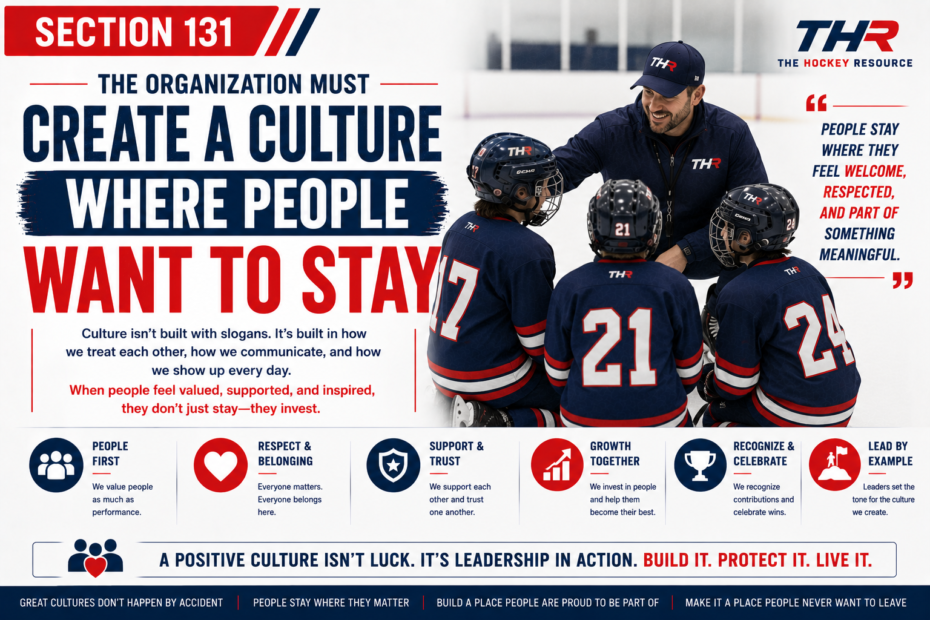
Retention Is a Reflection of Culture
Families rarely leave because of a single practice.
Volunteers rarely resign because of one meeting.
Coaches rarely step away because of one difficult day.
More commonly, people make decisions based on the overall experience they have within the organization.
Feeling respected matters.
supported matters.
connected matters.
Over time, these experiences shape whether someone wants to remain involved.
People Stay Where Relationships Matter
Strong organizations build more than hockey programs.
They build relationships.
A welcoming conversation with a new family can have a lasting impact.
Support from fellow volunteers can strengthen commitment.
Encouragement from leadership can help people navigate challenges.
These connections create a sense of belonging that extends beyond the game itself.
As relationships strengthen, retention often improves.
Recognition Influences Commitment
Most volunteers do not expect awards.
coaches do not expect constant praise.
parents simply want to know their efforts are appreciated.
A thoughtful thank-you can be powerful.
Personal recognition can be memorable.
Visible appreciation can reinforce positive behaviour.
Although recognition alone will not solve retention challenges, it often contributes to a healthier environment.
Consistency Builds Confidence
People are more likely to stay involved when they know what to expect.
Clear standards help.
Reliable communication helps.
Fair decision-making helps.
Predictability creates stability.
Stability creates confidence.
As confidence grows, members often become more invested in the organization and its future.
Listening Improves Retention
Feedback provides valuable information.
Concerns reveal opportunities.
Questions identify areas where communication may need improvement.
Leaders who listen gain insight that cannot be found in reports or statistics.
More importantly, people appreciate knowing their voices matter.
That feeling strengthens engagement and helps build stronger relationships throughout the organization.
Positive Experiences Create Ambassadors
Satisfied members often become advocates.
Families recommend programs.
Volunteers encourage others to get involved.
Coaches share positive experiences with colleagues.
This word-of-mouth support becomes one of the most effective forms of organizational growth.
A positive culture does not simply retain people.
It attracts new people as well.
Retention Reduces Organizational Stress
Replacing people requires effort.
Training new volunteers takes time.
Recruiting coaches requires planning.
Rebuilding relationships takes patience.
Organizations with strong retention experience fewer disruptions because knowledge, experience, and community connections remain in place.
That continuity strengthens every part of the operation.
Leadership Shapes the Experience
Culture is not created by accident.
Leadership decisions influence the environment people experience every day.
Communication style matters.
Accountability matters.
Respect matters.
When leaders focus on creating positive experiences, people are more likely to remain engaged through both successes and challenges.
Final Leadership Reality
Organizations often focus on attracting new members.
Strong organizations also focus on keeping the people they already have.
Retention is not simply about numbers.
It is about relationships, trust, and culture.
When individuals feel valued, respected, and connected, they are more likely to stay involved.
In the long run, creating a culture where people want to stay may be one of the most important leadership responsibilities of all.
One-Line Truth:
Organizations grow strongest when good people choose to stay year after year.
This article is part of the Foundations of Modern Hockey Leadership series.
About The Hockey Resource
The Hockey Resource exists to help players, parents, coaches, teams, leagues, tournaments, and hockey organizations make better decisions through education, leadership, and community-focused resources.
For additional hockey leadership articles, hockey parent resources, tournament information, and industry insights, visit:
The Hockey Resource – https://thehockeyresource.com
The Hockey Tournament Resource – https://thehockeytournamentresource.com
Mark Hetherman
Executive Director
The Hockey Resource
As always, thank you for being part of The Hockey Resource Community.
AMAZON Hockey
NEW Tournament Search APP
https://play.google.com/store/apps/details?id=com.hockeyresource.hockeytournamentapp&hl=en_CA&pli=1
NEW!!! The Hockey Moments Cards
GUMROAD – eBooks
https://thehockeyresource.gumroad.com
SEE My Interview with the Mental Health Academy
https://thehockeyresource.com/category/blog/hockey-career-starts-here
SEE My Interview on Podcast with Constant Sports
https://www.youtube.com/watch?v=_8VJUTfAGp