Hockey organizations naturally pay attention to results.
Standings are tracked.
Championships are celebrated.
Tournament banners are displayed.
Competitive success receives recognition.
There is nothing wrong with taking pride in achievement.
Problems arise when wins and losses become the primary measure of organizational success.
A championship season does not automatically mean an organization is healthy. Likewise, a difficult season does not automatically mean leadership has failed.
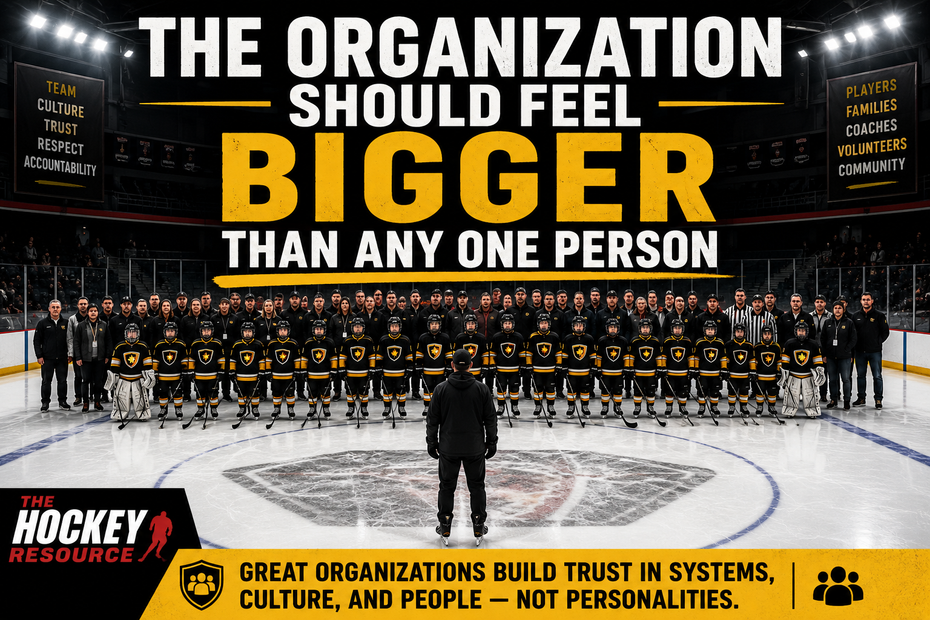
Strong organizations understand that meaningful success extends far beyond the scoreboard.
Player Development Tells a Bigger Story
A team can win games while failing to develop players.
At the same time, a team can lose games while creating tremendous growth.
Skill improvement matters.
Confidence matters.
Character development matters.
A player’s long-term progress often has far greater value than a short-term result.
Organizations committed to development recognize this distinction and evaluate success accordingly.
Retention Reveals Organizational Health
Families make choices every year.
Players decide whether to return.
Volunteers decide whether to continue helping.
Coaches decide whether to stay involved.
Those decisions provide valuable information.
Healthy organizations typically retain people because the overall experience is positive.
When retention declines, leadership should pay attention.
The issue may not appear in the standings, but it often appears in registration numbers.
Volunteer Engagement Matters
Without volunteers, most hockey organizations could not operate.
Board members contribute countless hours.
Team managers provide essential support.
Committee members help programs succeed.
A strong volunteer culture is a sign of organizational health.
High turnover may indicate challenges that deserve attention.
Meanwhile, strong engagement often reflects trust, communication, and effective leadership.
Parent Confidence Is an Important Metric
Success is not measured only by player outcomes.
Parent experiences matter as well.
Families evaluate communication.
They evaluate fairness.
They evaluate organizational culture.
Positive parent experiences often lead to stronger retention and stronger community support.
As a result, parent confidence should be viewed as a meaningful performance indicator.
Culture Influences Long-Term Results
Championships come and go.
Strong cultures endure.
Respectful environments encourage participation.
Healthy relationships encourage commitment.
Consistent leadership encourages trust.
Over time, culture becomes one of the most important predictors of organizational sustainability.
Organizations that ignore culture often discover that short-term success can hide long-term weaknesses.
Community Impact Deserves Recognition
Many hockey organizations contribute significantly to their communities.
Friendships are created.
Life skills are developed.
Young people gain confidence.
Families build lasting relationships.
These outcomes may not appear in league standings, yet they represent some of the most valuable contributions an organization can make.
Leadership should recognize and celebrate these successes.
Balanced Evaluation Creates Better Decisions
Focusing on a single metric can be misleading.
Winning matters.
Development matters.
Retention matters.
Volunteer engagement matters.
Community impact matters.
Considering multiple indicators creates a more complete understanding of organizational performance.
That broader perspective supports better decision-making and stronger long-term planning.
Final Leadership Reality
The scoreboard tells part of the story.
It never tells the entire story.
Organizations that define success exclusively through wins and losses often overlook factors that matter even more.
Player development.
Volunteer engagement.
Parent confidence.
Organizational culture.
Community impact.
These measures provide a deeper understanding of whether an organization is truly succeeding.
The strongest organizations know how to celebrate victories while also recognizing achievements that cannot be measured by the final score.
One-Line Truth:
The healthiest organizations measure success by the lives they impact, not just the games they win.
This article is part of the Foundations of Modern Hockey Leadership series.
About The Hockey Resource
The Hockey Resource exists to help players, parents, coaches, teams, leagues, tournaments, and hockey organizations make better decisions through education, leadership, and community-focused resources.
For additional hockey leadership articles, hockey parent resources, tournament information, and industry insights, visit:
The Hockey Resource – https://thehockeyresource.com
The Hockey Tournament Resource – https://thehockeytournamentresource.com
Mark Hetherman
Executive Director
The Hockey Resource