
Most hockey organizations begin with a simple objective.
Provide opportunities for players to participate in the game.
That goal remains important.
Ice time matters.
Development matters.
Competition matters.
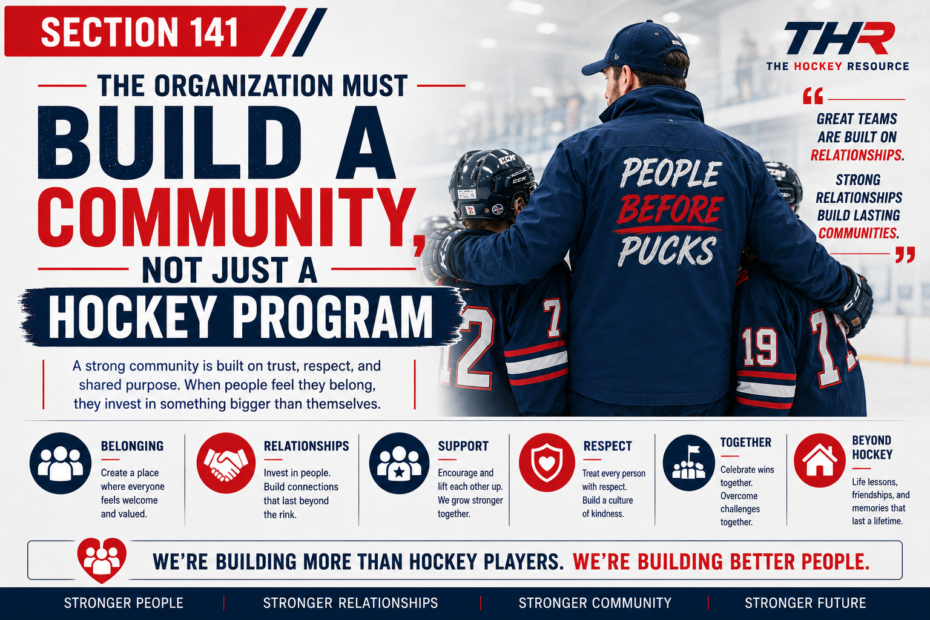
Yet the strongest organizations eventually realize they are building something much larger than a hockey program.
They are building a community.
This distinction is important because communities create loyalty, connection, and long-term sustainability in ways that programs alone cannot.
ORGANIZATION – People Return for More Than Hockey
A player may initially join because of the sport.
Families often remain because of the relationships.
Friendships develop.
Shared experiences are created.
Volunteers form connections.
Parents build support networks.
These relationships frequently become one of the most valuable parts of the hockey experience.
Organizations that recognize this reality are often better positioned to create lasting engagement.
Community Creates Belonging
Everyone wants to feel connected.
New families want to feel welcomed.
Volunteers want to feel appreciated.
Players want to feel included.
Coaches want to feel supported.
A sense of belonging strengthens commitment and encourages participation.
Without it, even strong hockey programs may struggle to retain members over time.
ORGANIZATION – Relationships Strengthen Resilience
Every organization faces challenges.
Disagreements occur.
Difficult decisions are made.
Unexpected problems arise.
Strong communities navigate these situations more effectively because trust already exists.
People are more likely to communicate constructively.
Families are more willing to extend patience.
Volunteers remain engaged during challenging periods.
Relationships create stability when circumstances become difficult.
Events Matter Beyond the Ice
Community is not built exclusively during games and practices.
Volunteer appreciation events help.
Parent information sessions help.
Fundraisers help.
Social gatherings help.
These opportunities allow people to connect in ways that extend beyond competition.
As those connections strengthen, organizational culture often improves as well.
Shared Purpose Creates Stronger Engagement
People become more invested when they understand the bigger picture.
A hockey organization is not simply a collection of teams.
It is a group of people working toward common goals.
Player development.
Community involvement.
Positive experiences.
Leadership growth.
When members recognize these shared objectives, engagement often increases.
Communication Helps Build Community
Strong communities require connection.
Connection requires communication.
Regular updates keep people informed.
Stories help people feel involved.
Recognition reinforces positive contributions.
Thoughtful communication creates opportunities for members to see themselves as part of something larger than their individual team or role.
Community Supports Retention
Programs attract participants.
Communities retain them.
Families are less likely to leave environments where meaningful relationships exist.
Volunteers are more likely to continue contributing where they feel connected.
Coaches are more likely to remain involved where they feel supported.
For that reason, community-building should be viewed as a strategic priority rather than a secondary activity.
Final Leadership Reality
Hockey programs provide structure.
Communities provide connection.
Both are important.
Organizations that focus only on schedules, teams, and operations may miss opportunities to create something far more valuable.
Strong leaders understand that people remember relationships long after they forget standings and scores.
That is why the best organizations build communities first and hockey programs second.
One-Line Truth:
People may join for hockey, but they often stay because of the community.
This article is part of the Foundations of Modern Hockey Leadership series.
About The Hockey Resource
The Hockey Resource exists to help players, parents, coaches, teams, leagues, tournaments, and hockey organizations make better decisions through education, leadership, and community-focused resources.
For additional hockey leadership articles, hockey parent resources, tournament information, and industry insights, visit:
The Hockey Resource – https://thehockeyresource.com
The Hockey Tournament Resource – https://thehockeytournamentresource.com
Mark Hetherman
Executive Director
The Hockey Resource