
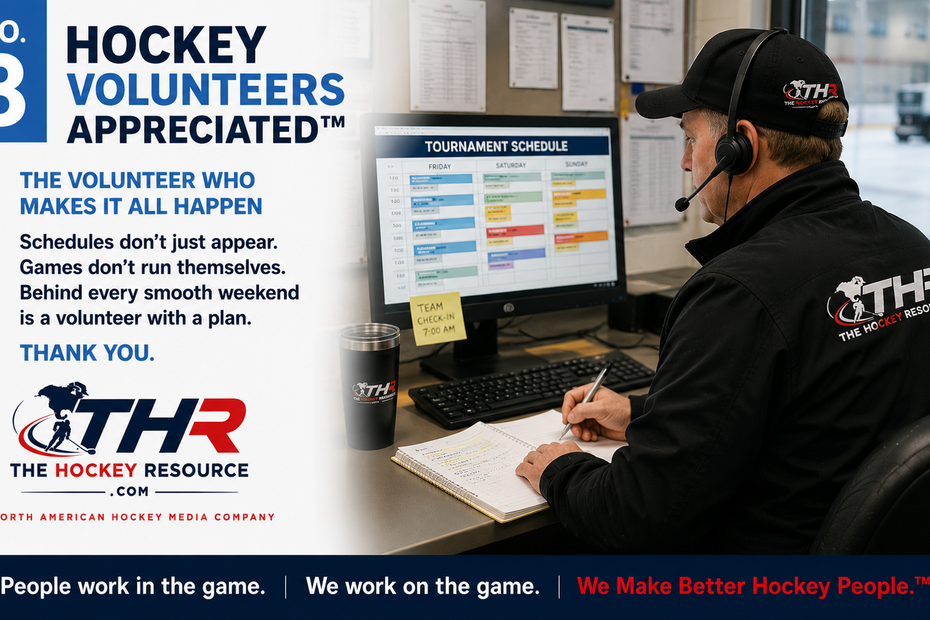
Every hockey organization depends on volunteers.
Ice schedules are created because someone donates their time.
Tournaments operate because volunteers step forward.
Teams function because parents, coaches, managers, and board members are willing to help.
Yet many organizations spend far more time recruiting volunteers than supporting them.
As a result, burnout becomes common and retention becomes difficult.
Good Volunteers Rarely Leave Because of the Work
Most volunteers understand that hockey requires effort.
They expect busy weekends.
expect occasional challenges.
understand there will be difficult situations.
What they do not expect is feeling unappreciated, unsupported, or ignored.
In many cases, volunteers do not leave because the workload is too large.
Instead, they leave because the experience becomes frustrating.
Therefore, leadership must pay attention to the volunteer experience just as carefully as it monitors the player experience.
Clear Expectations Reduce Frustration
Confusion creates unnecessary stress.
A volunteer who understands their responsibilities is far more likely to succeed.
Likewise, board members perform better when roles are clearly defined.
Without clarity, tasks are duplicated, deadlines are missed, and accountability becomes difficult.
For that reason, every volunteer position should have a clear description outlining responsibilities, authority, and expectations.
When people know what success looks like, confidence increases.
Training Creates Confidence
Many organizations assume volunteers will figure things out on their own.
Unfortunately, that approach often leads to mistakes and frustration.
Even experienced volunteers benefit from guidance.
A brief orientation, a simple handbook, or a mentoring relationship can make a significant difference.
Furthermore, training helps create consistency throughout the organization.
Instead of relying on guesswork, volunteers can follow established processes and proven practices.
Recognition Matters More Than Many Leaders Realize
Most volunteers are not looking for awards.
They are not expecting special treatment.
However, people do want to know their efforts matter.
A sincere thank-you.
public acknowledgment.
simple message of appreciation.
Small gestures often have a lasting impact.
Meanwhile, a lack of recognition can slowly erode motivation.
Consequently, organizations that celebrate contributions tend to retain volunteers longer.
Burnout Is an Organizational Issue
When the same people carry the workload year after year, burnout becomes inevitable.
At first, dedicated volunteers often step up without hesitation.
Over time, however, fatigue begins to appear.
Energy declines.
Enthusiasm fades.
Eventually, valuable people leave.
Rather than asking who can do more, leadership should ask how responsibilities can be shared more effectively.
Healthy organizations distribute the workload across many people instead of relying on a few.
Listening Strengthens Engagement
Volunteers often have valuable insights.
After all, they work directly with players, families, coaches, and community members.
Because of this, leadership should actively seek their feedback.
Questions create engagement.
Conversations create trust.
Most importantly, listening demonstrates respect.
Even when every suggestion cannot be implemented, people appreciate knowing their voice was heard.
Strong Volunteer Programs Create Strong Organizations
A positive volunteer experience creates a ripple effect.
Satisfied volunteers are more likely to stay involved.
They are more likely to recommend involvement to others.
They are more willing to accept future leadership roles.
As participation grows, organizational capacity grows as well.
That additional capacity allows the organization to provide better programs, stronger events, and improved experiences for families.
Final Leadership Reality
Volunteers are not simply filling positions.
They are helping shape the culture and future of the organization.
When leaders invest in volunteer support, training, communication, and recognition, the entire organization benefits.
The strongest organizations understand this.
They do not treat volunteers as a resource to be used.
They treat them as partners in the mission.
One-Line Truth:
People may volunteer their time, but they should never feel their contribution is taken for granted.
PRESENTED BY: thehockeyresource.com and thehockeytournamentresource.com – mark@thehockeyresource.com
As always, thank you for being part of The Hockey Resource community.
You can find all the cards at thehockeytournamentresource.com
GUMROAD – ALL HOCKEY EBOOKS
https://thehockeyresource.gumroad.com/
CLICK LINK FOR AWESOME HOCKEY PRODUCTS – https://thehockeyresource.com/discount-hockey-products-amazon/
CLICK TO SEE MARK ON PODCAST https://www.buzzsprout.com/1824112/episodes/13519482
Mark Hetherman
Executive Director
The Hockey Resource
mark@thehockeyresource.com
thehockeyresource.com
thehockeytournamentresource.com
As always, thank you for being part of The Hockey Resource Community.
AMAZON Hockey
NEW Tournament Search APP
https://play.google.com/store/apps/details?id=com.hockeyresource.hockeytournamentapp&hl=en_CA&pli=1
NEW!!! The Hockey Moments Cards
GUMROAD – eBooks
https://thehockeyresource.gumroad.com
SEE My Interview with the Mental Health Academy
https://thehockeyresource.com/category/blog/hockey-career-starts-here
SEE My Interview on Podcast with Constant Sports
https://www.youtube.com/watch?v=_8VJUTfAGp