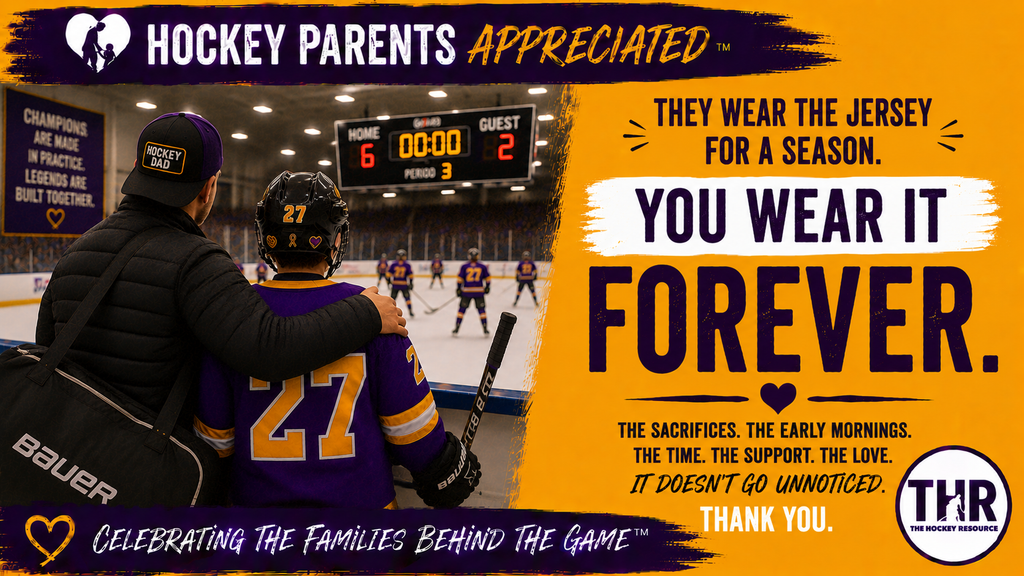

For many years, youth hockey organizations focused almost exclusively on the player experience.
That focus made sense.
Players are the reason the game exists.
Development matters.
Safety matters.
Enjoyment matters.
However, a reality has become increasingly clear in modern hockey.
A player’s experience is often heavily influenced by their parents’.
When families feel informed, respected, and connected, they are more likely to remain engaged. Conversely, frustration, confusion, and poor communication can affect the entire hockey journey.
As a result, organizations that ignore the parent experience often create unintended challenges.
Parents Are More Than Customers
Some organizations treat parents as customers.
Others view them primarily as volunteers.
Neither description fully captures their role.
Parents invest significant time, money, and emotional energy into youth sports. Early morning drives, tournament weekends, fundraising activities, equipment purchases, and countless hours of support become part of everyday life.
Because families make these commitments, they naturally develop expectations regarding communication, transparency, and organizational leadership.
Understanding those expectations helps create stronger relationships throughout the organization.
Communication Shapes Perception
Few issues influence parent satisfaction more than communication.
Families do not expect leaders to make perfect decisions.
Most understand that difficult situations arise throughout a season.
What creates frustration is uncertainty.
Questions without answers.
Changes without explanations.
Decisions without context.
When information is shared consistently and professionally, confidence tends to grow. Even challenging decisions become easier to understand when the reasoning behind them is communicated clearly.
Small Frustrations Often Become Larger Problems
Major conflicts rarely appear without warning.
In many cases, they begin as small concerns that go unaddressed.
A parent feels ignored.
A question goes unanswered.
A misunderstanding remains unresolved.
Over time, those experiences accumulate.
Eventually, a relatively minor issue becomes a much larger problem because frustration has been building beneath the surface.
Organizations that listen early often prevent larger challenges later.
Respect Should Never Depend on Agreement
Disagreements are inevitable.
Parents will occasionally question decisions.
Coaches will see situations differently.
Board members will face criticism from time to time.
These realities are part of organizational leadership.
Respectful treatment should remain constant regardless of whether people agree.
Families are more likely to accept outcomes they dislike when they feel they were treated fairly throughout the process.
For that reason, professionalism becomes one of the most important leadership tools available.
Engaged Parents Strengthen Organizations
Parents contribute far more than registration fees.
Many become volunteers.
Others support events, fundraising efforts, and community initiatives.
Some eventually become coaches, committee members, or board leaders.
When families feel connected to the organization, participation often increases.
That engagement creates stronger programs, a stronger culture, and stronger community relationships.
Consequently, improving the parent experience often benefits the entire organization.
Listening Creates Better Decisions
Leaders do not need to agree with every parent’s concern.
Nor should they attempt to satisfy every request.
However, listening remains important.
Parents experience the organization from a unique perspective. Their observations often reveal strengths, weaknesses, and opportunities that leadership may not immediately recognize.
By seeking input and remaining open to feedback, organizations gain valuable information that can support continuous improvement.
The Goal Is Partnership
The most successful organizations view parents as partners.
That partnership does not eliminate disagreements.
It does not remove challenges.
What it does create is a shared commitment to providing positive experiences for young athletes.
When organizations and families work together, players benefit.
When communication breaks down, players often feel the effects as well.
Keeping that partnership strong should remain a priority for every leadership team.
Final Leadership Reality
Players may be the reason organizations exist, but families are the foundation that supports the entire experience.
Without engaged parents, there are no volunteers.
Without supportive families, there are fewer opportunities for players to participate and grow.
Strong organizations understand this connection.
Rather than viewing parents as obstacles to manage, they view them as essential partners in the development of young athletes and healthy hockey communities.
One-Line Truth:
When organizations improve the parent experience, they often improve the player experience as well.
This article is part of the Foundations of Modern Hockey Leadership series.
About The Hockey Resource
The Hockey Resource exists to help players, parents, coaches, teams, leagues, tournaments, and hockey organizations make better decisions through education, leadership, and community-focused resources.
For additional hockey leadership articles, hockey parent resources, tournament information, and industry insights, visit:
The Hockey Resource – https://thehockeyresource.com
The Hockey Tournament Resource – https://thehockeytournamentresource.com
Mark Hetherman
Executive Director
The Hockey Resource
As always, thank you for being part of The Hockey Resource Community.
AMAZON Hockey
NEW Tournament Search APP
https://play.google.com/store/apps/details?id=com.hockeyresource.hockeytournamentapp&hl=en_CA&pli=1
NEW!!! The Hockey Moments Cards
GUMROAD – eBooks
https://thehockeyresource.gumroad.com
SEE My Interview with the Mental Health Academy
https://thehockeyresource.com/category/blog/hockey-career-starts-here
SEE My Interview on Podcast with Constant Sports
https://www.youtube.com/watch?v=_8VJUTfAGp