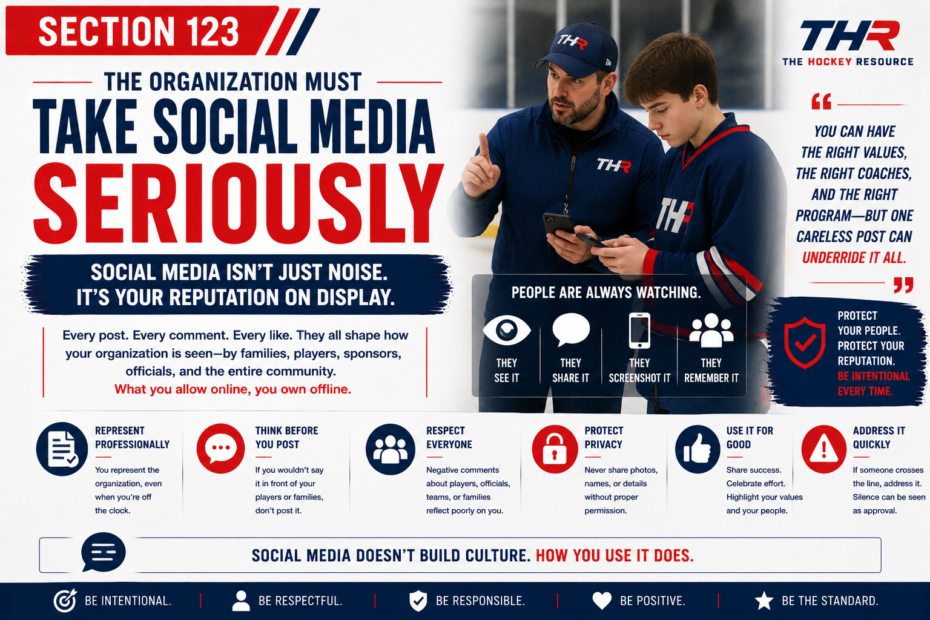
Twenty years ago, Social Media organizational communication looked very different.
Most information was shared through meetings, newsletters, phone calls, and conversations at the rink.
Today, a single social media post can reach hundreds or thousands of people within minutes.
A frustrated parent can influence public perception on social media
A positive story can strengthen community engagement.
An organizational mistake can become widely known almost instantly.
Because of this reality, social media is no longer simply a marketing tool.
It is a leadership issue.
Organizations that fail to recognize this often find themselves reacting to problems rather than managing them proactively.
Social Media Shapes Organizational Reputation
Whether leadership participates actively or not, conversations about the organization are happening online.
Parents discuss experiences.
Players share achievements.
Volunteers promote events.
Community members form opinions.
As these conversations occur, perceptions develop.
That perception becomes part of the organization’s reputation.
Strong organizations understand that reputation management now extends far beyond the rink.
Every Post Sends a Message
Social media is often viewed as a place to share schedules, scores, and announcements.
While those functions remain important, every post communicates something deeper.
What does the organization value?
How does it treat people?
What type of culture exists?
The content being shared provides answers to these questions.
Consequently, organizations should approach social media with the same level of professionalism they apply to other forms of communication.
Emotional Reactions Create Risk
One of the biggest dangers associated with social media is speed.
People can respond immediately.
Frustration can be shared instantly.
Emotions can influence decisions.
Unfortunately, posts created during emotional moments often create problems that are difficult to reverse.
Strong organizations establish expectations regarding online conduct.
Leaders model professionalism.
Volunteers understand boundaries.
Coaches recognize their responsibilities.
These standards help reduce unnecessary risk.
Policies Matter More Than Ever
Many organizations have detailed policies governing on-ice behaviour.
Fewer have clear expectations regarding online behaviour.
That gap can create challenges.
Social media policies help establish standards.
They clarify responsibilities.
They provide guidance during difficult situations.
Most importantly, they help protect players, families, volunteers, and the organization itself.
Clear expectations create greater consistency.
Positive Stories Strengthen Communities
Social media is not simply about risk management.
It also provides tremendous opportunities.
Player achievements can be celebrated.
Volunteers can be recognized.
Community partnerships can be highlighted.
Organizational successes can be shared.
These stories help strengthen engagement and reinforce positive culture.
Organizations that use social media intentionally often build stronger connections with their communities.
Leaders Must Understand the Digital Environment
Not every leader needs to become a social media expert.
However, every leader should understand its influence.
Online conversations affect organizational reputation.
Digital communication affects relationships.
Public perception is increasingly shaped through online interactions.
Ignoring this reality does not reduce its impact.
Understanding it helps organizations respond more effectively.
Transparency and Professionalism Remain Essential
The principles of good leadership do not change online.
Respect still matters.
Professionalism still matters.
Transparency still matters.
Organizations that apply these principles consistently across all communication channels tend to build stronger trust and credibility.
Social media should reinforce organizational values rather than undermine them.
Final Leadership Reality
Social media is now part of the leadership environment.
It influences reputation, communication, relationships, and community engagement.
Organizations that treat it casually often encounter unnecessary challenges.
Organizations that approach it strategically gain significant advantages.
The goal is not simply managing social media.
The goal is ensuring that online behaviour reflects the same standards and values expected everywhere else in the organization.
One-Line Truth:
In today’s hockey world, your online culture is part of your organizational culture.
This article is part of the Foundations of Modern Hockey Leadership series.
About The Hockey Resource
The Hockey Resource exists to help players, parents, coaches, teams, leagues, tournaments, and hockey organizations make better decisions through education, leadership, and community-focused resources.
For additional hockey leadership articles, hockey parent resources, tournament information, and industry insights, visit:
The Hockey Resource – https://thehockeyresource.com
The Hockey Tournament Resource – https://thehockeytournamentresource.com
Mark Hetherman
Executive Director
The Hockey Resource
As always, thank you for being part of The Hockey Resource Community.
AMAZON Hockey
NEW Tournament Search APP
https://play.google.com/store/apps/details?id=com.hockeyresource.hockeytournamentapp&hl=en_CA&pli=1
NEW!!! The Hockey Moments Cards
GUMROAD – eBooks
https://thehockeyresource.gumroad.com
SEE My Interview with the Mental Health Academy
https://thehockeyresource.com/category/blog/hockey-career-starts-here
SEE My Interview on Podcast with Constant Sports
https://www.youtube.com/watch?v=_8VJUTfAGp