
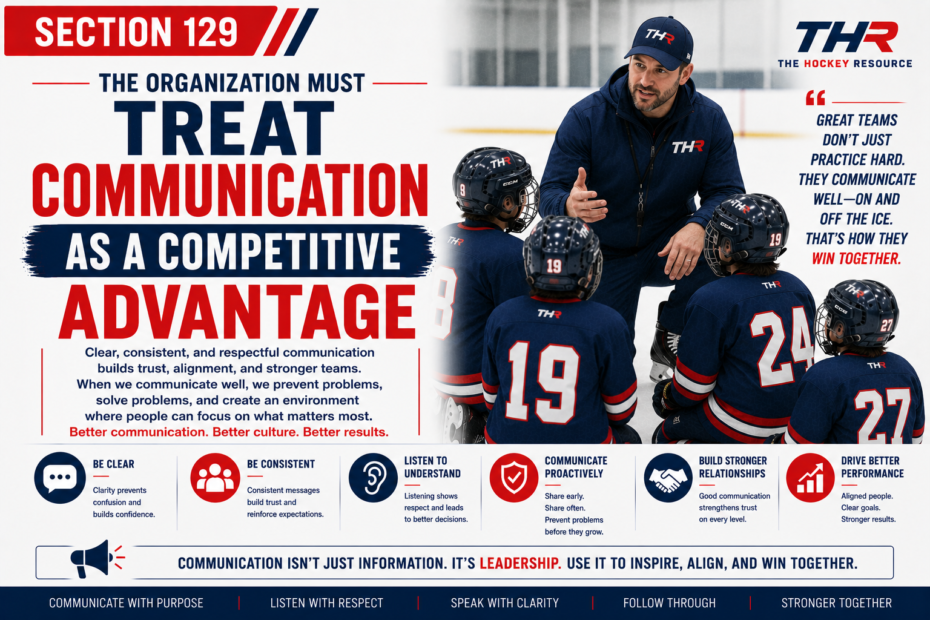
Most hockey organizations view communication as an administrative responsibility.
Emails are sent.
Schedules are posted.
Announcements are distributed.
Questions are answered.
These tasks are important.
However, strong organizations understand something many others miss.
Communication is not just an administrative function.
It is a competitive advantage.
Organizations that communicate effectively often experience higher retention, stronger volunteer engagement, greater parent confidence, and fewer conflicts.
Those benefits create a meaningful advantage over organizations that communicate poorly.
Families Judge Organizations by Communication
Parents do not see every board meeting.
They do not participate in every committee discussion.
They do not always understand the challenges leadership faces.
What they do experience is communication.
How quickly are questions answered?
clearly information is shared.
consistently are updates provided?
These interactions heavily influence how families perceive the organization.
Consequently, communication often becomes the lens through which leadership is evaluated.
Poor Communication Creates Avoidable Problems
Many organizational conflicts begin with information gaps.
Families do not know what is happening.
Volunteers are unsure of expectations.
Coaches receive inconsistent messages.
As uncertainty grows, assumptions begin to replace facts.
This process often creates frustration that could have been avoided.
Strong communication reduces confusion before it becomes conflict.
That alone makes it one of the most valuable leadership tools available.
Trust Grows When Information Flows
Trust is difficult to build and easy to lose.
Communication plays a major role in that process.
When information is shared regularly, people feel informed.
updates are timely, confidence increases.
leadership communicates openly, credibility grows.
These experiences strengthen relationships throughout the organization.
As trust increases, cooperation becomes easier and challenges become more manageable.
Communication Influences Volunteer Retention
Volunteers want to contribute.
They also want clarity.
Unclear expectations create frustration.
Poor coordination creates frustration.
Last-minute surprises create frustration.
Organizations that communicate effectively create a better volunteer experience.
That experience often leads to higher engagement and stronger retention.
Given the ongoing volunteer challenges facing many associations, this benefit alone is significant.
Strong Communication Supports Better Culture
Culture is shaped by daily interactions.
Every email matters.
meeting matters.
conversation matters.
The tone leadership uses becomes part of the organizational culture.
Respectful communication encourages respect.
Transparent communication encourages trust.
Consistent communication encourages stability.
Over time, communication helps define the environment people experience.
Technology Is Not the Solution
Many organizations invest in apps, websites, and communication platforms.
These tools can be valuable.
However, technology does not automatically improve communication.
A confusing message remains confusing regardless of the platform.
A delayed response remains delayed regardless of the software being used.
The quality of communication always matters more than the technology delivering it.
Organizations should focus on clarity first and tools second.
Great Organizations Communicate Proactively
Reactive communication occurs after problems emerge.
Proactive communication helps prevent problems from emerging in the first place.
Families appreciate updates before they need to ask.
Volunteers appreciate clear expectations before confusion develops.
Coaches appreciate guidance before challenges appear.
This proactive approach reduces uncertainty and creates a stronger overall experience.
As a result, organizations spend less time managing frustration and more time supporting their mission.
Final Leadership Reality
Many organizations offer similar programs.
have similar facilities.
operate within similar budgets.
Communication often becomes the difference.
Organizations that communicate effectively build stronger trust, healthier cultures, and better relationships.
Those advantages accumulate over time.
Eventually, communication stops being an administrative task and becomes a competitive advantage.
The strongest organizations understand that reality and invest accordingly.
One-Line Truth:
Organizations that communicate well solve fewer problems because they prevent more problems.
This article is part of the Foundations of Modern Hockey Leadership series.
About The Hockey Resource
The Hockey Resource exists to help players, parents, coaches, teams, leagues, tournaments, and hockey organizations make better decisions through education, leadership, and community-focused resources.
For additional hockey leadership articles, hockey parent resources, tournament information, and industry insights, visit:
The Hockey Resource – https://thehockeyresource.com
The Hockey Tournament Resource – https://thehockeytournamentresource.com
Mark Hetherman
Executive Director
The Hockey Resource
As always, thank you for being part of The Hockey Resource Community.
AMAZON Hockey
NEW Tournament Search APP
https://play.google.com/store/apps/details?id=com.hockeyresource.hockeytournamentapp&hl=en_CA&pli=1
NEW!!! The Hockey Moments Cards
GUMROAD – eBooks
https://thehockeyresource.gumroad.com
SEE My Interview with the Mental Health Academy
https://thehockeyresource.com/category/blog/hockey-career-starts-here
SEE My Interview on Podcast with Constant Sports
https://www.youtube.com/watch?v=_8VJUTfAGp