Related Leadership Articles
- Section 11 — Trust, Credibility & Organizational Reputation
- Section 5 — Communication & Organizational Trust
- Section 25 — Leadership Credibility Is Built Daily
- Section 48 — The Organization Should Feel Bigger Than Any One Person
Most hockey organizations believe their greatest assets are:
- players
- coaches
- facilities
- sponsors
- finances
- or competitive reputation
They are important.
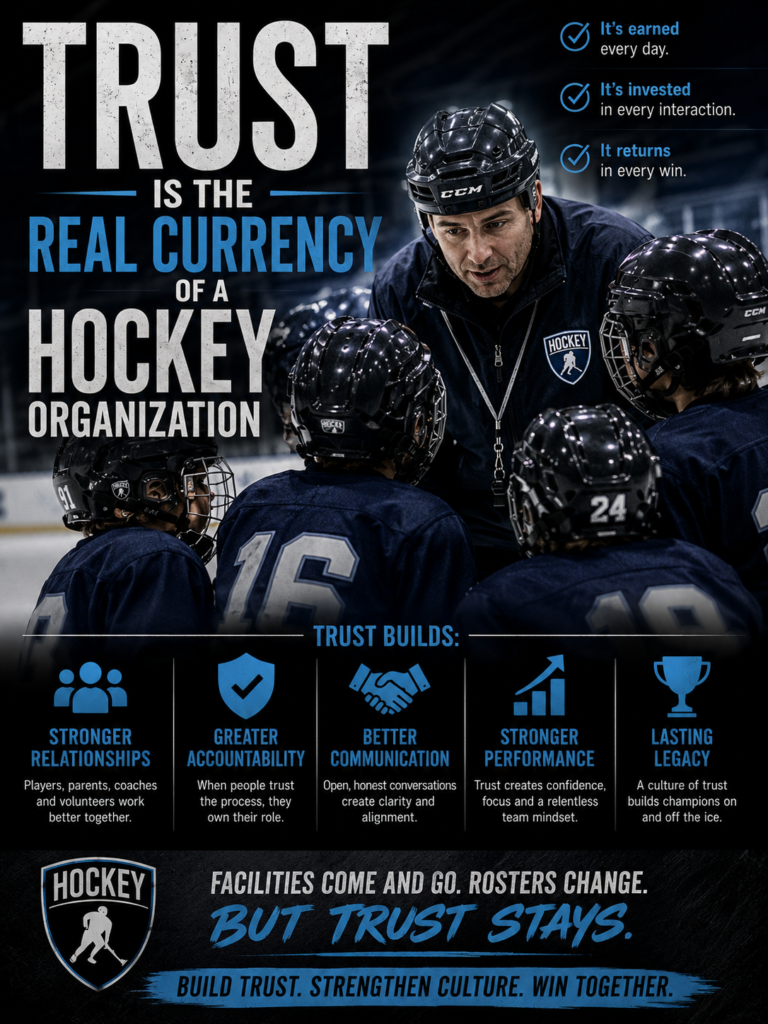
But the true currency of a healthy hockey organization is:
trust.
Without trust:
- communication weakens
- conflict increases
- politics grow
- leadership credibility declines
- and culture becomes unstable
With trust:
organizations become:
- calmer
- stronger
- more resilient
- and more sustainable
This section is critical because:
many organizations spend enormous energy:
trying to control outcomes,
while unintentionally damaging trust along the way.
Trust determines whether organizations stay healthy long-term.
WHAT ORGANIZATIONAL TRUST ACTUALLY MEANS
Trust means:
people believe:
- leadership is fair
- standards are real
- communication is honest
- process matters
- and the organization genuinely cares about people
Trust creates:
emotional safety.
Without trust:
everything becomes:
- political
- emotional
- defensive
- and unstable
IN SIMPLE TERMS
Trust means:
people believe the organization operates honestly and consistently.
THE BIGGEST TRUST FAILURE IN HOCKEY
Most trust is not destroyed by:
one major event.
Trust usually weakens slowly through:
- inconsistent behavior
- emotional leadership
- unclear communication
- favoritism
- broken promises
- political decision-making
- and leadership instability
People stop believing:
the organization operates fairly.
That is where culture damage begins.
IMPORTANT REALITY
People can survive:
disappointment.
What they struggle to survive is:
feeling:
- misled
- ignored
- politically manipulated
- or emotionally unsafe
Trust matters more than many organizations realize.
TRUST IS BUILT THROUGH CONSISTENCY
Strong organizations build trust through:
- predictable standards
- calm communication
- visible fairness
- emotional discipline
- and reliable process
Trust grows when people repeatedly experience:
- professionalism
- accountability
- and consistency
Trust weakens when:
leadership behavior changes emotionally under pressure.
THE ROLE OF FAIRNESS IN TRUST
Nothing builds trust faster than:
visible fairness.
Nothing destroys trust faster than:
perceived favoritism.
Examples:
- inconsistent accountability
- protected individuals
- political exceptions
- emotional decision-making
- or leadership treating people differently based on influence
Strong organizations understand:
fairness must be:
- operational
AND - visible
People need to SEE consistency.
IN SIMPLE TERMS
People trust organizations when:
rules feel equal for everyone.
THE ROLE OF COMMUNICATION IN TRUST
Communication either:
strengthens trust
or
weakens it.
Strong communication:
- explains process
- reduces confusion
- reinforces expectations
- and remains respectful during conflict
Weak communication creates:
- uncertainty
- assumptions
- rumors
- and emotional escalation
Trust grows inside:
clear communication environments.
TRUST REQUIRES FOLLOW-THROUGH
Organizations lose trust quickly when:
- commitments are not honored
- standards are ignored
- accountability disappears
- or leadership says one thing and does another
People judge organizations primarily through:
behavior patterns.
Not:
mission statements.
Strong organizations follow through consistently.
THE ROLE OF EMOTIONAL STABILITY
Emotionally unstable leadership damages trust rapidly.
Examples:
- reactive decisions
- emotional emails
- public arguments
- sarcasm
- gossip
- panic leadership
- or inconsistent standards under pressure
People trust organizations that feel:
emotionally grounded.
Calm leadership creates:
organizational confidence.
IMPORTANT REALITY
Trust is emotional.
People feel:
whether leadership is stable or unstable.
Even when leadership believes:
everything appears professional externally.
TRUST AND PLAYER DEVELOPMENT
Players develop best inside:
trust-based environments.
Players need to trust:
- coaches
- communication
- accountability
- and leadership intentions
Fear-based environments may create:
short-term compliance.
Trust-based environments create:
- confidence
- communication
- resilience
- and long-term growth
This matters enormously in development.
THE ROLE OF PARENTS IN TRUST
Parents do not need:
every decision to go their way.
But they DO need to believe:
- process exists
- leadership is honest
- communication is respectful
- and standards are applied fairly
Organizations that consistently build parent trust:
reduce:
- politics
- emotional escalation
- and rumor culture dramatically.
TRUST REQUIRES TRANSPARENCY
Transparency does not mean:
sharing confidential information publicly.
It means:
people understand:
- expectations
- process
- philosophy
- and organizational direction clearly
Strong organizations reduce:
unnecessary secrecy and confusion.
Confusion weakens trust quickly.
THE DANGER OF “IMAGE MANAGEMENT”
Some organizations prioritize:
appearing successful
instead of:
being trustworthy.
Examples:
- hiding problems
- protecting reputation at all costs
- avoiding accountability publicly
- or protecting influential individuals
Short-term image protection often damages:
long-term trust.
Strong organizations prioritize:
organizational integrity over public appearance.
TRUST IS BUILT MOST DURING DIFFICULT MOMENTS
This is critical.
People watch leadership most carefully during:
- conflict
- complaints
- losing seasons
- adversity
- accountability situations
- and emotional pressure
Strong organizations protect:
professionalism and fairness during pressure.
That is where real trust is built.
IN SIMPLE TERMS
Trust grows when:
People see leaders behave properly during difficult situations.
THE ROLE OF ACCOUNTABILITY IN TRUST
Organizations that avoid accountability:
eventually lose credibility.
People need to believe:
- standards matter
- unhealthy behavior gets addressed
- and leadership protects the organization fairly
Without accountability:
trust weakens rapidly.
Because people stop believing:
the organization protects healthy culture.
THE ROLE OF CULTURE
Culture determines:
whether trust grows or weakens.
Healthy cultures reinforce:
- professionalism
- respect
- fairness
- communication
- and emotional safety
Toxic cultures reinforce:
- fear
- politics
- gossip
- and emotional instability
Trust cannot survive long-term inside:
toxic environments.
THE DANGER OF LEADERSHIP GOSSIP
Nothing weakens trust faster than:
leaders participating in:
- gossip
- side conversations
- emotional alliances
- or political behavior
Leadership must model:
discretion and professionalism consistently.
People trust leaders who:
protect confidentiality and organizational integrity.
TRUST TAKES TIME
Strong trust grows slowly through:
- repeated
- professionalism
- consistency
- fairness
- repeated emotional discipline
But trust can weaken:
very quickly through:
- emotional overreaction
- inconsistency
- or visible unfairness
Leadership must protect trust intentionally every season.
THE MOST IMPORTANT TRUST QUESTION
Leadership should constantly ask:
“Would people inside this organization describe leadership as trustworthy, fair, and emotionally stable?”
That question reveals:
organizational health quickly.
THE HARD TRUTH ABOUT TRUST
Many organizations lose:
families,
volunteers,
coaches,
and good leaders
quietly —
not because:
people stopped loving hockey.
But because:
they stopped trusting the environment emotionally.
Trust loss is often silent before it becomes visible.
HOW STRONG ORGANIZATIONS BUILD TRUST
Strong organizations:
- communicate clearly
- reinforce fairness
- follow through consistently
- remain calm under pressure
- protect standards
- and prioritize integrity over politics
Over time:
people begin feeling:
“This organization operates the right way.”
That becomes:
organizational credibility,
stability,
and long-term strength.
FINAL PRINCIPLE — TRUST IS THE REAL CURRENCY
Strong hockey organizations understand:
every leadership behavior either:
builds trust
or
weakens it.
Because ultimately:
trust determines:
- whether
- families stay
- volunteers return
- players feel safe
- coaches align
- and whether the organization remains healthy long after individual seasons end.
And once trust becomes deeply established,
organizations become:
stronger,
calmer,
more resilient,
and far harder to destabilize.
Presented by: thehockeyresource.com – thehockeytournamentresource.com – mark@thehockeyresource.com