
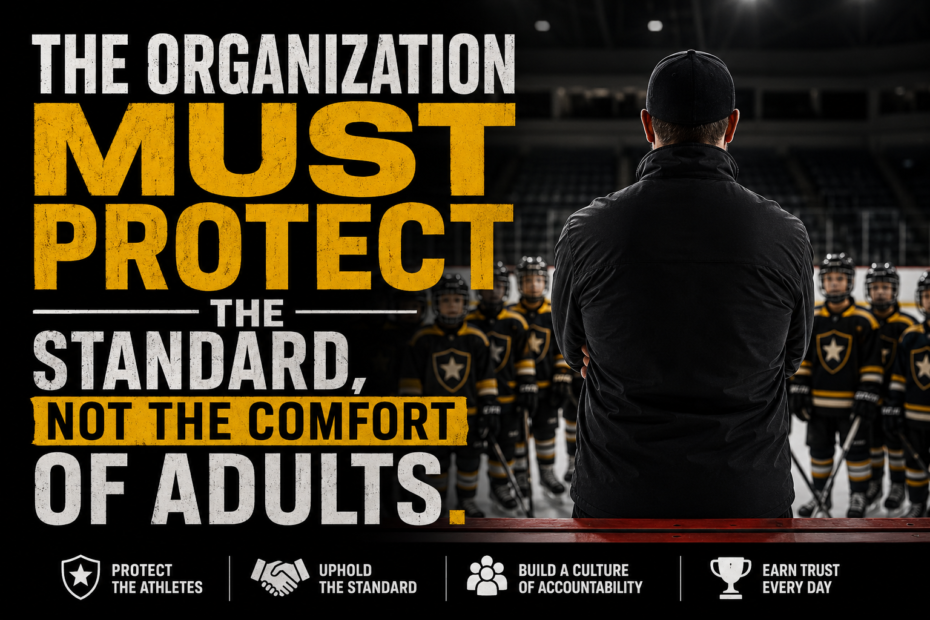

One of the hardest realities in hockey leadership:
protecting standards will eventually make some adults uncomfortable.
That is unavoidable.
Strong organizations understand:
leadership is not about:
keeping every adult emotionally comfortable.
Leadership is about:
protecting:
- culture
- standards
- fairness
- accountability
- and organizational health
even when:
difficult conversations become necessary.
Weak organizations often drift because:
leadership prioritizes:
comfort over standards.
This slowly weakens:
- trust
- culture
- accountability
- and organizational credibility.
WHAT “PROTECTING THE STANDARD” ACTUALLY MEANS
Protecting the standard means:
leadership consistently reinforces:
- behavioral expectations
- communication expectations
- professionalism
- accountability
- emotional discipline
- and organizational values
Not:
only when convenient.
Not:
only when easy.
Standards only become real when:
they are protected consistently during pressure.
IN SIMPLE TERMS
A standard that disappears during conflict was never truly:
a standard.
THE BIGGEST LEADERSHIP FAILURE IN HOCKEY
Many organizations avoid:
difficult accountability because:
leaders fear:
- upsetting people
- volunteer loss
- criticism
- emotional reactions
- or conflict escalation
So unhealthy behavior slowly becomes:
normalized.
Examples:
- toxic communication
- emotional outbursts
- disrespect
- gossip
- favoritism
- political pressure
- or leadership inconsistency
Every tolerated behavior eventually becomes:
part of organizational culture.
IMPORTANT REALITY
What leadership allows repeatedly becomes:
the real organizational standard.
Not:
what leadership writes in policies.
THE ROLE OF LEADERSHIP COURAGE
Protecting standards requires:
leadership courage.
Strong leaders must sometimes:
- say difficult things
- enforce accountability
- resist emotional pressure
- and address unhealthy behavior directly
Weak leadership often:
avoids discomfort temporarily.
But avoidance usually creates:
larger organizational problems later.
THE DANGER OF “KEEPING THE PEACE”
Some organizations confuse:
avoiding tension
with
healthy leadership.
Avoiding every difficult conversation creates:
- resentment
- confusion
- inconsistency
- and weakening standards
Strong organizations understand:
temporary discomfort sometimes protects:
long-term organizational health.
IN SIMPLE TERMS
Strong leadership protects:
the environment.
Weak leadership protects:
short-term comfort.
THE ROLE OF CONSISTENCY
Standards must apply:
consistently.
Not:
emotionally.
Not:
politically.
Not:
based on influence or relationships.
The moment standards become:
selective,
trust begins weakening.
Consistency creates:
organizational credibility.
Inconsistency creates:
politics and emotional instability.
THE ROLE OF COACHES IN STANDARD PROTECTION
Coaches reinforce organizational standards daily through:
- communication
- accountability
- emotional behavior
- and player treatment
Strong coaches:
- challenge players respectfully
- maintain discipline
- and reinforce professionalism consistently
Weak coaches often:
- react emotionally
- create fear
- ignore unhealthy behavior selectively
- or prioritize personal control over development
Organizations must protect:
coaching standards intentionally.
IMPORTANT REALITY
Players learn:
what behavior is acceptable
by watching:
what adults tolerate repeatedly.
THE ROLE OF PARENTS IN STANDARD CULTURE
Healthy organizations establish:
clear parent expectations.
Examples:
- communication behavior
- respect standards
- spectator expectations
- and emotional conduct
Strong organizations address:
unhealthy parent behavior early —
before it spreads culturally.
Weak organizations ignore:
small unhealthy patterns until:
the environment becomes emotionally unstable.
THE DANGER OF EXCEPTION CULTURE
One of the fastest ways to weaken standards:
creating emotional exceptions.
Examples:
- ignoring behavior from successful coaches
- protecting influential families
- relaxing accountability during pressure
- or allowing repeated disrespect because:
“they help the organization”
This teaches:
standards are negotiable.
That damages:
organizational trust rapidly.
IN SIMPLE TERMS
Standards only matter if:
they survive pressure and influence.
THE ROLE OF LEADERSHIP MODELING
Leadership behavior teaches:
organizational expectations.
If leadership:
- gossips
- reacts emotionally
- avoids accountability
- or behaves inconsistently
the organization absorbs:
those habits immediately.
Strong leaders model:
- professionalism
- emotional control
- communication maturity
- and accountability
People copy:
what leadership normalizes.
THE ROLE OF DOCUMENTED EXPECTATIONS
Strong organizations define:
- communication standards
- behavioral expectations
- accountability systems
- and leadership conduct clearly
Undefined standards create:
organizational confusion.
People cannot consistently follow:
standards that were never clearly explained.
Clarity strengthens:
accountability.
THE DANGER OF “WE NEED THEM TOO MUCH”
Some organizations avoid accountability because:
they fear losing:
- coaches
- volunteers
- influential families
- or leadership members
But organizations slowly weaken when:
unhealthy behavior becomes protected because:
someone is considered:
“too important.”
No person should become:
larger than organizational culture.
IMPORTANT REALITY
Strong organizations protect:
culture first.
Not:
individual influence.
THE ROLE OF ACCOUNTABILITY IN STANDARD PROTECTION
Accountability protects:
organizational integrity.
Without accountability:
standards slowly become:
suggestions instead of expectations.
Strong accountability remains:
- fair
- calm
- consistent
- and respectful
Not:
emotional or retaliatory.
Healthy accountability stabilizes organizations.
THE ROLE OF EMOTIONAL DISCIPLINE
Leadership must protect standards WITHOUT becoming:
emotionally reactive.
Strong leaders:
- remain calm
- communicate clearly
- and reinforce expectations professionally
Weak leaders:
either:
- avoid accountability entirely
OR - escalate emotionally during conflict
Both weaken:
organizational trust.
IN SIMPLE TERMS
Strong leadership protects standards calmly.
Not emotionally.
THE ROLE OF ORGANIZATIONAL IDENTITY
Organizations eventually become known for:
what behavior they tolerate.
Examples:
- emotionally healthy organizations
- political organizations
- fear-based organizations
- development-focused organizations
- gossip-driven organizations
- professionally led organizations
Leadership shapes:
that identity through:
daily standard enforcement.
THE ROLE OF CULTURE
Culture is:
repeated behavior reinforced over time.
Healthy cultures reinforce:
- professionalism
- fairness
- communication
- accountability
- and emotional stability
Toxic cultures reinforce:
- fear
- emotional inconsistency
- politics
- gossip
- and avoidance of difficult accountability
Standards shape:
culture directly.
IMPORTANT REALITY
Every ignored unhealthy behavior quietly teaches:
“This is acceptable here.”
THE ROLE OF LONG-TERM THINKING
Strong organizations ask:
- What culture are we building?
- What behavior are we normalizing?
- What leadership habits are spreading?
- What standards are weakening quietly?
Healthy organizations protect:
long-term organizational integrity —
not short-term emotional comfort.
THE MOST IMPORTANT STANDARD QUESTION
Leadership should constantly ask:
“Are we protecting healthy standards consistently —
or protecting adult comfort at the expense of culture?”
That question reveals:
organizational strength immediately.
THE HARD TRUTH ABOUT STANDARD PROTECTION
Many organizations slowly weaken because:
leadership avoids:
- difficult accountability
- uncomfortable conversations
- and emotionally difficult decisions
Not because:
leadership lacks caring.
But because:
leadership fears discomfort more than:
organizational drift.
Strong organizations recognize:
healthy culture requires:
consistent protection.
HOW STRONG ORGANIZATIONS PROTECT STANDARDS
Strong organizations:
- reinforce expectations clearly
- apply accountability consistently
- address unhealthy behavior early
- resist emotional pressure
- protect professionalism
- and prioritize culture over convenience
Over time:
people begin understanding:
“This organization truly stands for something.”
That becomes:
organizational trust,
stability,
and long-term credibility.
FINAL PRINCIPLE — PROTECT THE STANDARD
Strong hockey organizations understand:
leadership is not simply about:
keeping adults comfortable.
Leadership is about:
protecting the emotional,
behavioral,
and cultural standards
that create healthy environments for:
- players
- families
- coaches
- volunteers
- and the future of the organization itself.
Because ultimately:
organizations do not become healthy accidentally.
They become healthy because:
leadership consistently protects standards —
even when doing so becomes uncomfortable.
PRESENTED BY: thehockeyresource.com – thehockeytournamentresource.com – mark@thehockeyresource.com
CLICK LINK FOR AWESOME HOCKEY PRODUCTS – https://thehockeyresource.com/discount-hockey-products-amazon/