
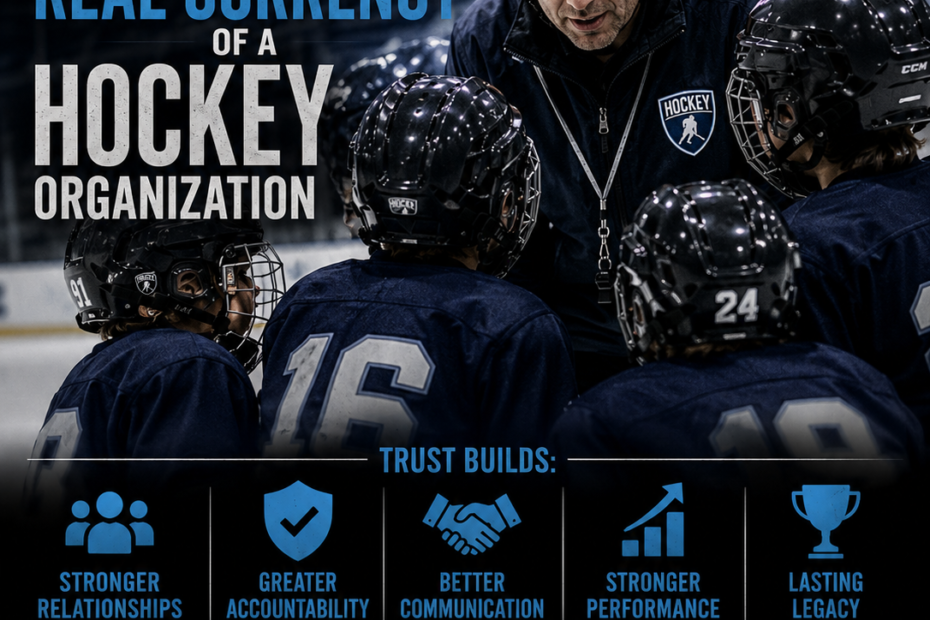
Many hockey organizations believe:
trust is built through:
major announcements
championship seasons
big speeches
successful tryouts
or public messaging
In reality:
organizational trust is usually built quietly through thousands of small daily interactions.
Examples:
how emails are answered
how concerns are handled
how people are greeted at the rink
how leadership behaves under stress
how mistakes are addressed
and how consistently people feel respected
Strong organizations understand:
culture and trust are rarely created through:
one dramatic moment.
They are built through:
small repeated experiences over time.
WHAT THIS ACTUALLY MEANS
People form trust gradually by asking internally:
Does leadership behave consistently?
Do I feel respected here?
Does communication feel honest?
Do standards actually matter?
Do people feel emotionally safe?
Does leadership remain stable under pressure?
Each small interaction either:
strengthens trust
or
weakens it quietly.
Strong organizations pay attention to:
small moments because:
small moments become:
organizational reputation.
IN SIMPLE TERMS
People trust organizations because of:
what they experience repeatedly —
not what the organization says publicly.
THE BIGGEST TRUST BUILDING FAILURE IN HOCKEY
Many organizations focus heavily on:
external image
while ignoring:
daily internal experience.
Examples:
promoting culture publicly while leadership behaves emotionally privately
advertising player development while communication feels unhealthy
promoting family atmosphere while volunteers feel exhausted
or talking about respect while accountability feels inconsistent
People eventually believe:
daily experience more than:
public branding.
Strong organizations align:
organizational behavior with organizational messaging.
IMPORTANT REALITY
Trust weakens fastest when:
organizational language and organizational behavior do not match.
THE ROLE OF DAILY LEADERSHIP BEHAVIOR
Leadership builds trust through:
daily consistency.
Examples:
staying calm during stress
responding respectfully
reinforcing standards fairly
listening professionally
and communicating clearly
Most trust-building moments appear:
small externally.
But emotionally:
they matter enormously.
People remember:
patterns.
Not isolated statements.
THE ROLE OF COACHES
Coaches build or weaken trust:
every practice,
every meeting,
every correction,
and every conversation.
Players constantly evaluate:
fairness
emotional stability
communication tone
consistency
and psychological safety
Trust grows when:
players feel:
respected
challenged fairly
emotionally safe
and understood
Trust weakens when:
the environment feels:
unpredictable
humiliating
political
or emotionally unstable
IN SIMPLE TERMS
Players trust coaches who feel:
consistent,
fair,
and emotionally steady.
THE ROLE OF SMALL COMMUNICATION MOMENTS
Trust is heavily influenced by:
communication quality.
Examples:
answering concerns respectfully
acknowledging messages
following through on commitments
clarifying expectations
and communicating calmly during conflict
Poor communication may seem:
small in the moment.
But repeated poor communication slowly creates:
organizational distrust.
Strong communication builds:
emotional reliability.
IMPORTANT REALITY
People remember:
how communication consistently feels emotionally.
THE ROLE OF FOLLOW-THROUGH
Trust grows when:
leadership follows through consistently.
Examples:
commitments are honored
timelines are respected
standards remain stable
and promises are realistic
Weak follow-through creates:
organizational doubt quickly.
People stop trusting:
future communication when:
past communication repeatedly failed.
Strong organizations protect:
credibility carefully.
THE ROLE OF RESPECT
Small respectful behaviors create:
large cultural impact.
Examples:
listening fully
speaking professionally
showing appreciation
greeting people positively
and protecting dignity during difficult conversations
Respect compounds culturally over time.
So does:
disrespect.
Organizations often underestimate:
how deeply small disrespectful moments affect:
trust and emotional atmosphere.
IN SIMPLE TERMS
People feel organizational culture through:
small interactions every day.
THE ROLE OF CONSISTENCY
Trust requires:
repeated consistency.
People trust organizations more when:
leadership behavior stays stable
accountability remains fair
communication feels predictable
and emotional standards remain steady
One strong speech cannot overcome:
months of inconsistent experience.
Trust grows through:
steady repetition over time.
THE ROLE OF VOLUNTEERS
Volunteers often decide whether to stay involved based on:
small emotional experiences.
Examples:
feeling appreciated
feeling included
feeling respected
feeling supported
and feeling emotionally safe
Volunteers rarely leave only because:
of workload.
Many leave because:
the emotional experience slowly became:
draining,
frustrating,
or unhealthy.
Strong organizations protect:
daily volunteer experience intentionally.
IMPORTANT REALITY
Small positive moments often keep good people involved longer.
THE ROLE OF PARENTS
Parents evaluate organizations through:
small observations constantly.
Examples:
leadership tone
communication professionalism
treatment of players
emotional atmosphere
and visible organizational consistency
Families quietly decide:
whether the organization feels:
healthy,
safe,
and trustworthy.
These judgments develop gradually over:
many repeated experiences.
THE DANGER OF “BIG MOMENT LEADERSHIP”
Some leaders focus heavily on:
large visible moments:
speeches
meetings
public messaging
emotional presentations
while neglecting:
daily behavioral consistency.
Strong organizations understand:
culture is mostly built in:
ordinary moments.
Not:
special events.
IN SIMPLE TERMS
Organizations are remembered more for:
daily experience
than:
special presentations.
THE ROLE OF EMOTIONAL MEMORY
Small moments create:
long-term emotional memory.
Examples:
how someone was corrected
whether leadership stayed calm
whether concerns felt heard
whether communication felt respectful
and whether people felt valued consistently
These experiences quietly shape:
organizational identity.
People remember:
emotional patterns.
IMPORTANT REALITY
People often decide whether they trust leadership based on:
hundreds of tiny observations combined together.
THE ROLE OF CULTURE
Healthy cultures reinforce:
small healthy habits repeatedly.
Examples:
professionalism
calm communication
gratitude
emotional discipline
accountability
and respect
Toxic cultures reinforce:
small unhealthy habits repeatedly.
Examples:
sarcasm
gossip
emotional inconsistency
dismissiveness
and political behavior
Culture grows from:
small repeated behaviors becoming:
normal.
THE ROLE OF ORGANIZATIONAL SELF-AWARENESS
Strong organizations ask:
What daily experience are people actually having?
Are small moments reinforcing trust or weakening it?
Does communication feel emotionally healthy consistently?
Are people experiencing respect operationally?
Does leadership behavior match organizational values daily?
These questions create:
organizational maturity.
IN SIMPLE TERMS
Healthy organizations pay attention to:
small moments because:
small moments become culture.
THE ROLE OF LONG-TERM REPUTATION
Reputation is built gradually.
Eventually hockey communities begin saying:
“Leadership there feels professional.”
“People are treated respectfully.”
“Communication feels healthy.”
“The environment feels stable.”
“The culture feels trustworthy.”
Or:
the opposite.
Reputation reflects:
accumulated small experiences over time.
THE MOST IMPORTANT TRUST-BUILDING QUESTION
Leadership should constantly ask:
“What are the small daily experiences teaching people about this organization?”
That question reveals:
organizational culture immediately.
THE HARD TRUTH ABOUT TRUST IN HOCKEY ORGANIZATIONS
Many organizations unintentionally weaken:
trust,
culture,
and retention
not through:
one major mistake.
But through:
hundreds of small unhealthy moments repeated over time.
Strong organizations understand:
small moments matter enormously.
HOW STRONG ORGANIZATIONS BUILD TRUST THROUGH SMALL MOMENTS
Strong organizations:
reinforce respectful communication
maintain emotional consistency
follow through reliably
appreciate people regularly
protect dignity
and align daily behavior with organizational values
Over time:
people begin experiencing the organization as:
trustworthy
stable
emotionally healthy
and professionally led
That becomes:
long-term organizational credibility.
FINAL PRINCIPLE — TRUST IS BUILT THROUGH THOUSANDS OF SMALL MOMENTS
Strong hockey organizations understand:
trust is not built through:
speeches,
slogans,
or occasional leadership performances.
Trust is built through:
small repeated moments where people consistently experience:
respect
honesty
emotional stability
fairness
communication clarity
and healthy leadership behavior.
Because ultimately:
people believe organizations not because:
the organization says it has strong culture.
They believe it because:
they experience that culture repeatedly in:
small everyday moments over time.
PRESENTED BY: thehockeyresource.com and thehockeytournamentresource.com – mark@thehockeyresource.com
As always, thank you for being part of The Hockey Resource community.
CLICK LINK FOR AWESOME HOCKEY PRODUCTS – https://thehockeyresource.com/discount-hockey-products-amazon/
CLICK TO SEE MARK ON PODCAST https://www.buzzsprout.com/1824112/episodes/13519482
Mark Hetherman
Executive Director
The Hockey Resource
thehockeytournamentresource.com
As always, thank you for being part of The Hockey Resource Community.
AMAZON Hockey
NEW Tournament Search APP
https://play.google.com/store/apps/details?id=com.hockeyresource.hockeytournamentapp&hl=en_CA&pli=1
NEW!!! The Hockey Moments Cards
GUMROAD – eBooks
https://thehockeyresource.gumroad.com
SEE My Interview with the Mental Health Academy
https://thehockeyresource.com/category/blog/hockey-career-starts-here
SEE My Interview on Podcast with Constant Sports
https://www.youtube.com/watch?v=_8VJUTfAGp