
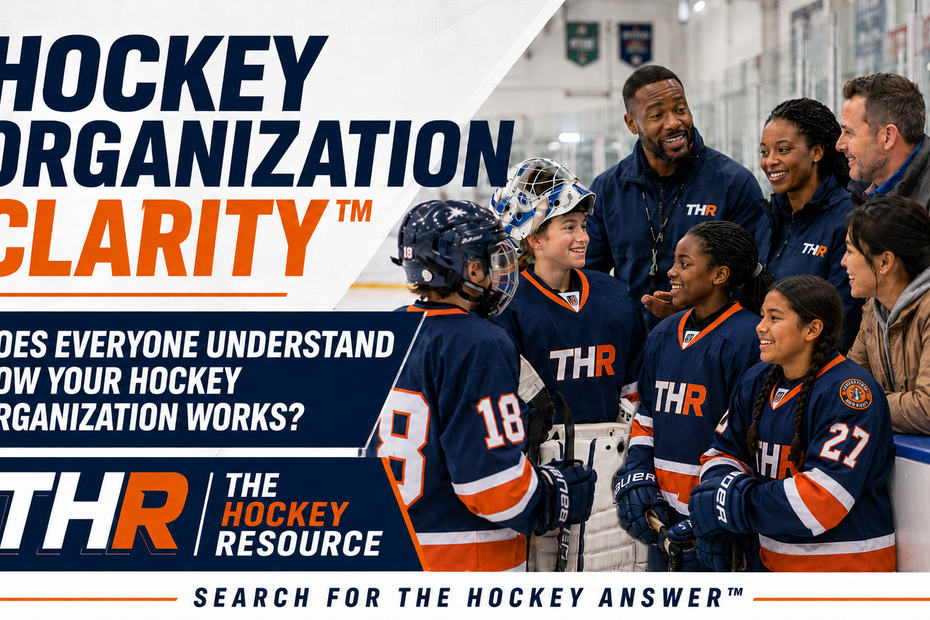
One of the deepest human needs inside any hockey organization:
belonging.
Not simply:
participation.
Belonging.
People stay connected to organizations when they feel:
valued
included
respected
emotionally safe
and genuinely part of the environment
Strong organizations understand:
belonging is not:
a soft emotional concept.
Belonging directly affects:
retention
culture
leadership development
volunteer sustainability
player confidence
and long-term organizational health
Organizations weaken when:
people feel:
replaceable,
ignored,
politically excluded,
or emotionally disconnected.
WHAT “BELONGING” ACTUALLY MEANS
Belonging means:
people feel:
welcomed
emotionally safe
respected
connected
and included in the organizational environment
This applies to:
players
parents
volunteers
coaches
staff
and leadership
Belonging does NOT mean:
everyone agrees constantly.
It means:
people still feel:
they matter as human beings inside the organization.
IN SIMPLE TERMS
People stay connected longer to environments where:
they feel they genuinely matter.
THE BIGGEST BELONGING FAILURE IN HOCKEY
Many organizations unintentionally create:
transactional environments.
Examples:
players feeling valued only when performing well
volunteers feeling useful but not appreciated
parents feeling tolerated instead of welcomed
coaches feeling isolated
or leadership becoming emotionally inaccessible
People slowly disconnect emotionally when:
they stop feeling:
seen,
valued,
or connected.
Strong organizations intentionally create:
human connection —
not just hockey operations.
IMPORTANT REALITY
People rarely stay emotionally committed to environments where:
they feel invisible.
THE ROLE OF PLAYERS
Players need:
more than instruction and competition.
They need:
encouragement
emotional safety
connection
healthy mentorship
and belief from adults
Belonging strengthens:
confidence
resilience
communication
and long-term love of the game
Players who feel emotionally disconnected often become:
withdrawn
anxious
hesitant
or eventually leave the environment entirely
Healthy organizations intentionally create:
player belonging.
THE ROLE OF COACHES
Coaches strongly influence:
whether players feel:
included
or
emotionally isolated.
Strong coaches:
learn player personalities
communicate respectfully
create emotional trust
and reinforce team connection
Weak coaching environments often create:
fear,
division,
or emotional exclusion.
Players thrive when:
they feel:
they are part of something supportive and meaningful.
IN SIMPLE TERMS
Players work harder for adults who make them feel:
valued and connected.
THE ROLE OF PARENTS
Parents also need:
healthy organizational connection.
Strong organizations create:
welcoming communication
respectful interaction
inclusion
and emotional professionalism
Weak organizations often create:
political separation
emotional tension
cliques
and distrust
Parents who feel disconnected or emotionally unsafe often:
withdraw,
become reactive,
or leave the organization entirely.
Healthy parent belonging strengthens:
community stability.
IMPORTANT REALITY
Families stay longer where:
the environment feels emotionally healthy and welcoming.
THE ROLE OF VOLUNTEERS
Volunteers especially need:
belonging and appreciation.
Many volunteers sacrifice:
significant time,
energy,
and emotional investment.
If volunteers feel:
ignored
excluded
politically isolated
or emotionally undervalued
burnout accelerates quickly.
Strong organizations intentionally create:
volunteer connection,
recognition,
and inclusion.
People continue helping environments where:
they feel respected and appreciated.
THE ROLE OF LEADERSHIP ACCESSIBILITY
Leadership should not feel:
emotionally distant or politically unreachable.
Strong leaders create:
approachable,
respectful,
emotionally stable communication environments.
People feel stronger belonging when:
leadership feels:
human,
present,
and genuinely invested in people.
Emotionally unavailable leadership weakens:
organizational connection.
IN SIMPLE TERMS
People trust organizations more when:
leadership feels accessible and respectful.
THE ROLE OF TEAM CULTURE
Team culture strongly affects:
belonging.
Healthy team cultures reinforce:
inclusion
encouragement
accountability
emotional support
and mutual respect
Toxic team cultures often reinforce:
exclusion
fear
politics
favoritism
or social division
Players emotionally experience:
belonging through:
daily team interaction.
IMPORTANT REALITY
Children remember deeply:
whether they felt accepted by the environment around them.
THE ROLE OF COMMUNICATION
Communication strongly affects:
belonging.
Healthy communication feels:
respectful
responsive
welcoming
and emotionally safe
Poor communication creates:
distance and emotional disconnection.
People begin feeling:
they are not truly part of the organization emotionally.
Strong communication strengthens:
connection and trust.
THE DANGER OF CLIQUE CULTURE
Some organizations unintentionally create:
clique-based environments.
Examples:
insider groups
political circles
social exclusion
leadership favoritism
or emotionally divided parent groups
This damages:
organizational unity and emotional safety quickly.
Strong organizations intentionally reduce:
exclusive culture.
Healthy organizations feel:
welcoming —
not socially territorial.
IN SIMPLE TERMS
Organizations should feel:
open and inclusive —
not emotionally divided into groups.
THE ROLE OF RECOGNITION
People need to feel:
seen.
Strong organizations intentionally recognize:
effort
contribution
growth
leadership
volunteer work
and positive culture behavior
Recognition reinforces:
belonging and emotional connection.
People remain connected longer where:
their contribution feels meaningful.
THE ROLE OF EMOTIONAL SAFETY
Belonging requires:
emotional safety.
People cannot feel:
true connection inside environments filled with:
fear
humiliation
politics
emotional instability
or disrespect
Healthy organizations create:
psychological safety for:
communication,
participation,
and growth.
Emotional safety strengthens:
organizational loyalty.
IMPORTANT REALITY
People belong more deeply where:
they feel emotionally safe to be themselves.
THE ROLE OF ORGANIZATIONAL ATMOSPHERE
Atmosphere shapes:
belonging.
Healthy atmospheres feel:
welcoming
respectful
calm
connected
and emotionally manageable
Toxic atmospheres feel:
tense
cold
political
judgmental
or emotionally exhausting
People emotionally evaluate:
whether they belong almost immediately through:
atmosphere.
THE ROLE OF CULTURE
Healthy cultures reinforce:
inclusion
connection
respect
appreciation
emotional safety
and shared purpose
Toxic cultures reinforce:
exclusion
status
politics
fear
and emotional isolation
Culture determines:
whether people feel:
connected
or
emotionally alone inside the organization.
IN SIMPLE TERMS
Belonging is created through:
how people consistently experience the environment emotionally.
THE ROLE OF LONG-TERM RETENTION
Organizations with strong belonging retain:
more players
more volunteers
more coaches
and healthier families long-term
Why?
Because people emotionally attach to:
healthy environments.
Organizations without belonging often experience:
constant turnover,
burnout,
and disconnection.
Belonging creates:
organizational sustainability.
IMPORTANT REALITY
People stay committed longer to:
communities —
not just programs.
THE ROLE OF LEADERSHIP SELF-AWARENESS
Strong leaders ask:
Do people feel welcomed here?
Do people feel emotionally safe?
Are people becoming more connected or more isolated?
Does this environment strengthen belonging?
Would new families feel included quickly?
These questions create:
healthier organizations.
THE MOST IMPORTANT BELONGING QUESTION
Leadership should constantly ask:
“Do people inside this organization genuinely feel they matter here beyond simply what they produce or achieve?”
That question reveals:
organizational culture immediately.
THE HARD TRUTH ABOUT BELONGING IN HOCKEY
Many organizations unintentionally weaken:
retention,
culture,
trust,
and player experience
because:
they focused heavily on:
operations and performance —
while neglecting:
human connection and emotional belonging.
Strong organizations intentionally protect:
both.
HOW STRONG ORGANIZATIONS CREATE BELONGING
Strong organizations:
welcome people intentionally
reinforce emotional safety
appreciate contribution
reduce clique culture
support healthy communication
create inclusive environments
and prioritize human connection alongside hockey development
Over time:
people feel:
valued
connected
respected
emotionally safe
and proud to belong to the organization
That becomes:
organizational strength and long-term sustainability.
FINAL PRINCIPLE — PEOPLE NEED TO FEEL THEY BELONG
Strong hockey organizations understand:
people are not simply:
roster spots,
volunteer positions,
customers,
or operational resources.
They are human beings looking for:
connection,
purpose,
respect,
and belonging.
Because ultimately:
the healthiest organizations are not organizations where:
people simply participate temporarily.
They are organizations where:
people feel:
connected,
valued,
supported,
and proud to remain part of the community for years to come.
PRESENTED BY: thehockeyresource.com and thehockeytournamentresource.com – mark@thehockeyresource.com
As always, thank you for being part of The Hockey Resource community.
CLICK LINK FOR AWESOME HOCKEY PRODUCTS – https://thehockeyresource.com/discount-hockey-products-amazon/
CLICK TO SEE MARK ON PODCAST https://www.buzzsprout.com/1824112/episodes/13519482
Mark Hetherman
Executive Director
The Hockey Resource