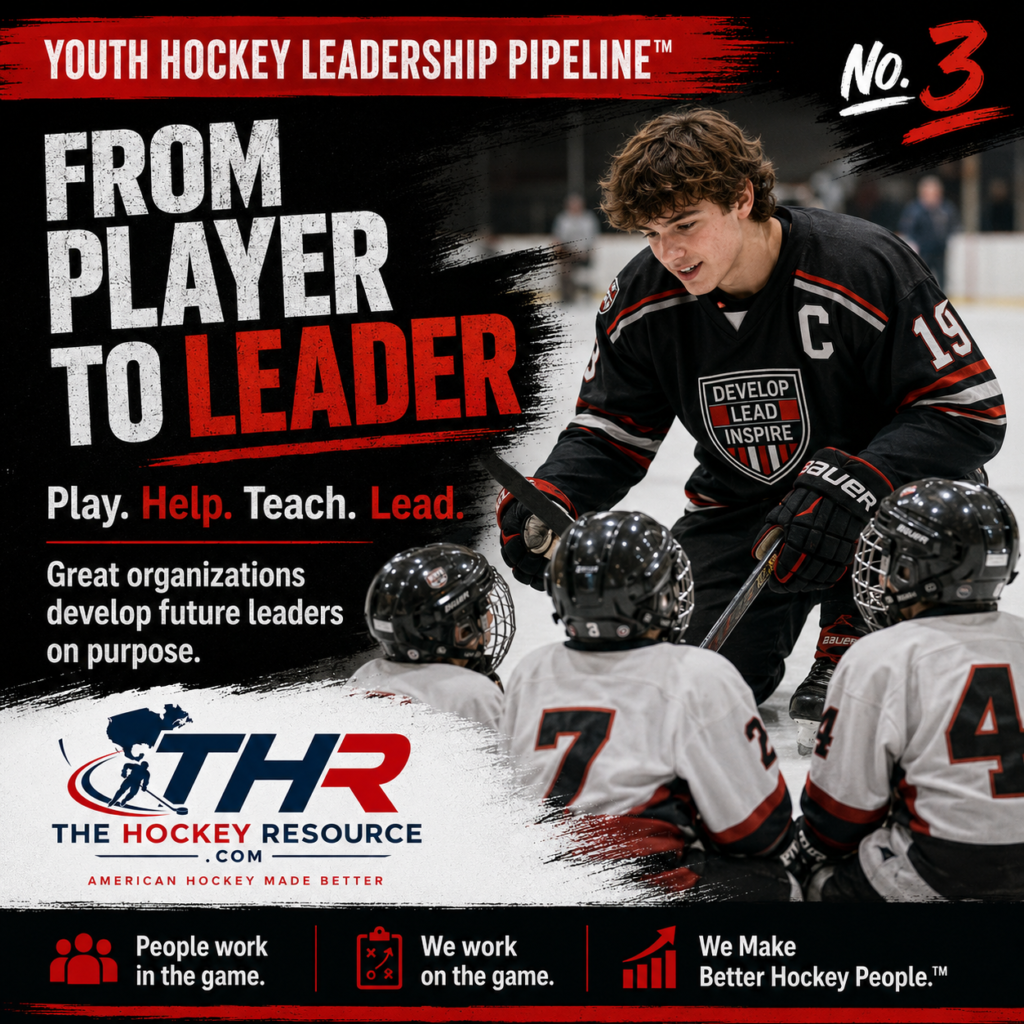
One of the most common mistakes in amateur hockey leadership is waiting too long to think about succession.
A president resigns.
registrar steps away.
tournament director retires.
Suddenly, an organization begins searching for someone to fill an important role.
Unfortunately, leadership development rarely works well under pressure. When a vacancy appears unexpectedly, organizations often focus on finding a replacement instead of preparing the next leader.
The strongest organizations take a different approach. Rather than reacting to leadership changes, they prepare for them years in advance.
Leadership Vacancies Should Never Be Surprises
Every leadership position eventually changes hands.
Some transitions happen because volunteers move away. Others occur because children age out of the organization. Occasionally, personal or professional circumstances create unexpected changes.
Regardless of the reason, turnover is a normal part of organizational life.
Because leadership transitions are inevitable, planning for them should become a routine responsibility rather than an emergency response. Organizations that prepare early are often able to maintain momentum, preserve knowledge, and avoid unnecessary disruption.
Future Leaders Are Often Already Present
Many associations spend considerable time searching for leadership outside the organization while overlooking the people already contributing inside it.
The next president may currently be coaching a team.
A future committee chair might already be helping with events.
Someone capable of leading a major initiative could be volunteering quietly behind the scenes.
For that reason, leadership development should begin with observation. Identifying individuals who demonstrate reliability, communication skills, and a willingness to contribute creates opportunities to build a stronger leadership pipeline.
Experience Remains One of the Best Teachers
Leadership cannot be learned entirely from books, presentations, or meetings.
Real growth occurs through experience.
Managing a project teaches accountability.
Leading a committee develops communication skills.
Coordinating an event creates opportunities to solve problems and work with others.
As individuals gain experience, confidence grows alongside it. Consequently, organizations should look for meaningful ways to involve emerging leaders before major positions become available.
Small responsibilities often become stepping stones to larger opportunities.
Mentorship Accelerates Development
Many successful leaders can identify someone who helped guide them early in their journey.
Advice matters.
Feedback matters.
Encouragement matters.
A strong mentor can shorten the learning curve while helping future leaders avoid common mistakes.
More importantly, mentorship enables the transfer of valuable organizational knowledge before a transition occurs. Rather than losing experience when a volunteer leaves, the organization retains and strengthens it.
Leadership Development Protects Stability
Organizations often invest heavily in player development.
Coaches work to improve skills, confidence, and performance.
Leadership development deserves a similar commitment.
When future leaders are identified and supported, transitions become smoother. Programs continue operating effectively. Relationships remain strong. Strategic goals stay on track.
Without a leadership pipeline, even successful organizations can struggle when key individuals leave.
The Goal Is Continuity, Not Cloning
Developing future leaders does not mean creating people who think exactly the same way as current leaders.
Fresh ideas are valuable.
Different perspectives strengthen decision-making.
New approaches often lead to innovation.
What matters is ensuring future leaders understand the organization’s mission, values, and responsibilities while bringing their own strengths to the role.
A healthy organization balances continuity with growth.
Strong Leadership Creates More Leadership
Some leaders become indispensable.
Others make themselves replaceable.
The second approach creates far greater long-term value.
When leaders share knowledge, delegate responsibility, and encourage participation, they help create future leaders throughout the organization.
As a result, leadership becomes less dependent on individuals and more embedded within the culture itself.
That foundation supports stability long after any single volunteer moves on.
Final Leadership Reality
Every hockey organization will experience leadership transitions.
The question is whether those transitions create disruption or opportunity.
Organizations that invest in future leaders tend to navigate change with confidence. They preserve knowledge, maintain momentum, and continue moving forward regardless of who occupies a particular role.
Ultimately, leadership is not just about serving today.
It is also about preparing others to lead tomorrow.
One-Line Truth:
The best leaders are remembered not only for what they accomplished, but for the leaders they helped develop.
This article is part of the Foundations of Modern Hockey Leadership series.
About The Hockey Resource
The Hockey Resource exists to help players, parents, coaches, teams, leagues, tournaments, and hockey organizations make better decisions through education, leadership, and community-focused resources.
For additional hockey leadership articles, hockey parent resources, tournament information, and industry insights, visit:
The Hockey Resource – https://thehockeyresource.com
The Hockey Tournament Resource – https://thehockeytournamentresource.com
Mark Hetherman
Executive Director
The Hockey Resource
As always, thank you for being part of The Hockey Resource Community.
AMAZON Hockey
NEW Tournament Search APP
https://play.google.com/store/apps/details?id=com.hockeyresource.hockeytournamentapp&hl=en_CA&pli=1
NEW!!! The Hockey Moments Cards
GUMROAD – eBooks
https://thehockeyresource.gumroad.com
SEE My Interview with the Mental Health Academy
https://thehockeyresource.com/category/blog/hockey-career-starts-here
SEE My Interview on Podcast with Constant Sports
https://www.youtube.com/watch?v=_8VJUTfAGp