Every hockey organization wants success.
Championships create excitement.
Winning seasons generate energy.
Strong registration numbers build confidence.
Positive financial results provide stability.
While those achievements matter, they are not what ultimately determine the long-term health of an organization.
Culture does.
In fact, culture often determines whether success can be sustained in the first place.
Success Can Hide Problems
A winning team can mask leadership issues.
Strong registration numbers can hide communication problems.
Financial stability can create the illusion that everything is working well.
Unfortunately, organizations sometimes become so focused on results that they stop paying attention to the environment being created behind the scenes.
When that happens, cultural problems often go unnoticed until they become much more difficult to address.
For that reason, leaders should regularly evaluate the organization’s health beyond the scoreboard and the balance sheet.
Every Organization Has a Culture
Some cultures develop intentionally.
Others develop by accident.
Either way, a culture exists.
It influences how people communicate, how decisions are made, and how conflicts are handled. It shapes the experience of players, parents, coaches, volunteers, and board members.
Because culture affects so many areas of organizational life, leadership cannot afford to leave it to chance.
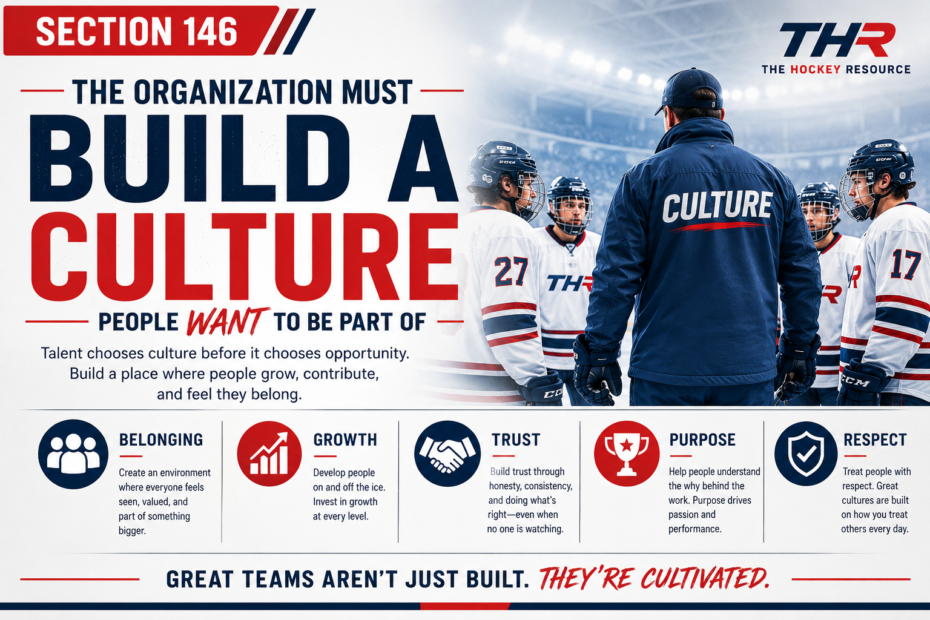
The strongest organizations actively define the behaviors and values they want to see throughout the community.
People Pay Attention to What Leadership Tolerates
Values posted on a website are important.
Daily behavior is even more important.
If disrespect is ignored, people notice.
When favoritism appears, people notice.
Should accountability apply to some individuals but not others? People notice that as well.
Over time, members begin to understand what the organization truly stands for.
Consequently, leadership decisions shape culture far more than slogans ever will.
A Strong Culture Creates Stability During Difficult Times
Every organization faces challenges.
Disagreements occur.
Unexpected problems emerge.
Leadership transitions happen.
During those moments, culture often becomes the difference between resilience and dysfunction.
Organizations with strong cultures tend to work through challenges more effectively because trust already exists. Communication remains productive, and members are more likely to support solutions rather than contribute to conflict.
As a result, difficult periods become easier to navigate.
Recruiting the Right People Matters
Talent is valuable.
Character is essential.
Whether selecting coaches, appointing volunteers, or recruiting board members, organizations should consider cultural fit alongside skills and experience.
A highly capable individual can contribute significantly to success.
However, someone who consistently undermines the organization’s values may create damage that outweighs their strengths.
Healthy cultures are built one person at a time.
Protecting that culture requires thoughtful leadership decisions.
Culture Influences Retention
Families often stay with organizations because they feel connected.
Volunteers remain involved because they enjoy the environment.
Coaches continue contributing because they believe in the mission.
While wins and losses may influence satisfaction, culture frequently determines loyalty.
When people feel respected, supported, and valued, they are far more likely to remain part of the community.
That reality makes culture one of the most important retention tools available to leadership.
Building Culture Requires Consistency
Creating a positive culture is not a one-time project.
Rather, it is an ongoing process that requires attention throughout every season.
Communication standards must be reinforced.
Expectations must remain clear.
Leaders must model the behaviors they expect from others.
Over time, consistency transforms values from words into habits.
Eventually, those habits become culture.
Final Leadership Reality
Many organizations focus on protecting success.
Strong leaders focus on protecting culture.
After all, success can rise and fall from season to season. Culture, however, influences every player, parent, coach, volunteer, and leader who passes through the organization.
When culture remains strong, success becomes easier to achieve and far easier to sustain.
That is why culture should never be viewed as a secondary priority.
In reality, it is the foundation upon which everything else is built.
One-Line Truth:
Championships may define a season, but culture defines an organization.
This article is part of the Foundations of Modern Hockey Leadership series.
About The Hockey Resource
The Hockey Resource exists to help players, parents, coaches, teams, leagues, tournaments, and hockey organizations make better decisions through education, leadership, and community-focused resources.
For additional hockey leadership articles, hockey parent resources, Tournament information, and industry insights, visit:
The Hockey Resource – https://thehockeyresource.com
The Hockey Tournament Resource – https://thehockeytournamentresource.com
Mark Hetherman
Executive Director
The Hockey Resource
As always, thank you for being part of The Hockey Resource Community.
AMAZON Hockey
NEW Tournament Search APP
https://play.google.com/store/apps/details?id=com.hockeyresource.hockeytournamentapp&hl=en_CA&pli=1
NEW!!! The Hockey Moments Cards
GUMROAD – eBooks
https://thehockeyresource.gumroad.com
SEE My Interview with the Mental Health Academy
https://thehockeyresource.com/category/blog/hockey-career-starts-here
SEE My Interview on Podcast with Constant Sports
https://www.youtube.com/watch?v=_8VJUTfAGp