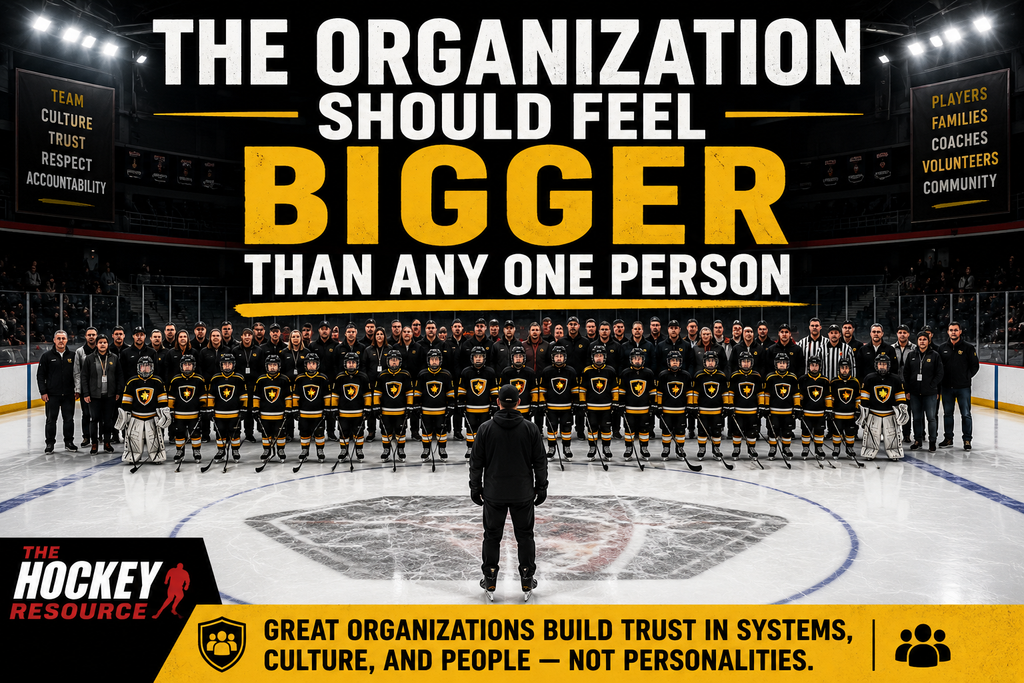
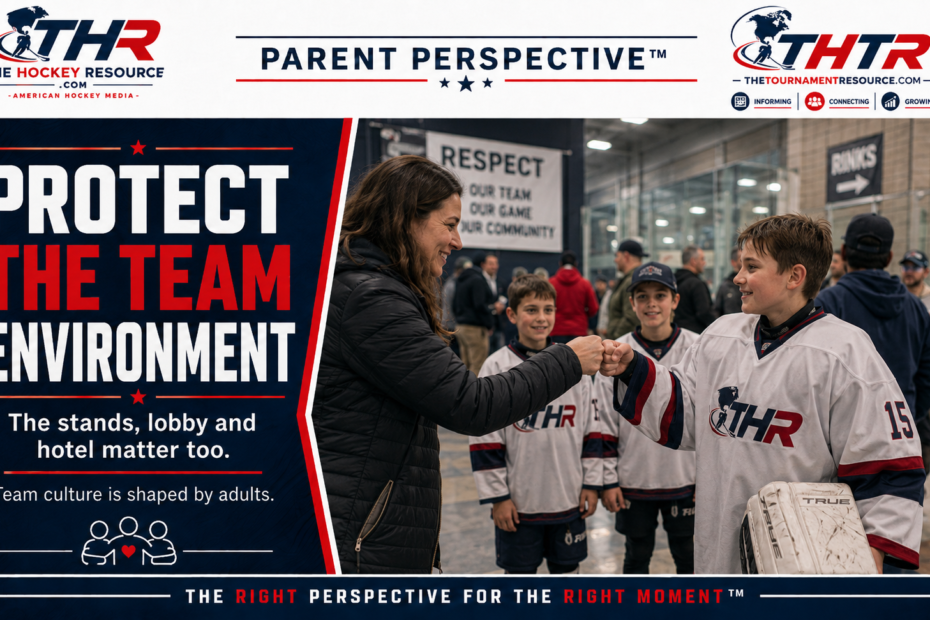
Every hockey organization develops a reputation.
Some earn recognition for strong player development.
Others become known for outstanding communication, community involvement, or leadership. Unfortunately, some organizations become remembered for conflict, inconsistency, or poor decision-making.
Regardless of whether leadership actively manages it, a reputation is always being formed.
The important question is simple:
What story is the community telling about your organization when you are not in the room?
Reputation Is Built One Experience at a Time
Many leaders think reputation comes from marketing.
Marketing certainly influences awareness.
However, reputation is shaped primarily through experience.
Parents remember how concerns were handled.
Volunteers remember whether they felt appreciated.
Players remember how they were treated during both success and adversity.
Meanwhile, coaches often evaluate an organization based on leadership, communication, and support.
Over time, these experiences become conversations. Those conversations eventually become the organization’s reputation.
Short-Term Wins Can Create Long-Term Damage
Pressure often tempts organizations to focus on immediate results.
A difficult issue may be ignored to avoid conflict.
An exception may be granted to satisfy a vocal group.
A decision may prioritize convenience over fairness.
Although these choices can appear helpful in the moment, they sometimes create larger problems down the road.
Strong leaders understand that protecting reputation occasionally requires making difficult decisions today in order to preserve trust tomorrow.
Every Interaction Matters
A reputation is not shaped only by major events.
Daily interactions play an equally important role.
The way emails are answered.
The way volunteers are treated.
The way coaches communicate with families.
The way leadership responds when mistakes occur.
Each interaction contributes to the overall perception of the organization.
Consequently, maintaining a positive reputation requires consistent attention to both large and small details.
Community Trust Takes Time to Build
Most organizations spend years earning credibility.
Positive experiences accumulate gradually.
Relationships strengthen over time.
Families begin recommending the organization to others.
As confidence grows, reputation becomes one of the organization’s greatest assets.
Unfortunately, trust can weaken much faster than it develops.
That reality makes reputation management an ongoing responsibility rather than a one-time achievement.
Leadership Is Always on Display
People often learn more from leadership behaviour than leadership statements.
Mission statements are valuable.
Organizational values are important.
Yet members pay closest attention to actions.
When leaders demonstrate fairness, accountability, and professionalism, credibility grows. Conversely, inconsistent behaviour can create doubts that are difficult to overcome.
For that reason, leadership should always recognize that its actions influence how the organization is perceived.
A Strong Reputation Creates Opportunities
Families are naturally drawn to organizations they trust.
Volunteers are more willing to contribute.
Sponsors often prefer organizations with positive community standing.
Even recruiting coaches becomes easier when an organization is respected.
As a result, a strong reputation creates benefits that extend well beyond public perception.
It becomes a strategic advantage.
Looking Beyond the Current Season
Many organizations evaluate success one season at a time.
While annual results are important, reputation develops over much longer periods.
The decisions made today may influence community perceptions for years.
Therefore, leaders should approach every challenge with a long-term perspective.
Protecting reputation is not about avoiding difficult conversations. It is about ensuring that decisions consistently reflect the organization’s values and purpose.
Final Leadership Reality
A hockey organization’s reputation is one of its most valuable assets.
Unlike facilities, equipment, or budgets, it cannot be replaced easily once damaged.
Strong leaders understand this reality.
They recognize that reputation is built through everyday actions, strengthened through consistency, and protected through principled decision-making.
Ultimately, the goal is not simply to have a good season.
The goal is to build an organization that people respect for many years to come.
One-Line Truth:
People may forget individual seasons, but they rarely forget how an organization made them feel.
This article is part of the Foundations of Modern Hockey Leadership series.
About The Hockey Resource
The Hockey Resource exists to help players, parents, coaches, teams, leagues, tournaments, and hockey organizations make better decisions through education, leadership, and community-focused resources.
For additional hockey leadership articles, hockey parent resources, tournament information, and industry insights, visit:
The Hockey Resource – https://thehockeyresource.com
The Hockey Tournament Resource – https://thehockeytournamentresource.com
Mark Hetherman
Executive Director
The Hockey Resource
As always, thank you for being part of The Hockey Resource Community.
AMAZON Hockey
NEW Tournament Search APP
https://play.google.com/store/apps/details?id=com.hockeyresource.hockeytournamentapp&hl=en_CA&pli=1
NEW!!! The Hockey Moments Cards
GUMROAD – eBooks
https://thehockeyresource.gumroad.com
SEE My Interview with the Mental Health Academy
https://thehockeyresource.com/category/blog/hockey-career-starts-here
SEE My Interview on Podcast with Constant Sports
https://www.youtube.com/watch?v=_8VJUTfAGp